Renting a car in Iceland: what to know before you sign
The Ring Road needs no special car. The highlands, the wind, the gravel and the rivers are another matter — and most of what goes wrong on an Icelandic rental is decided by the contract before you leave the car park.
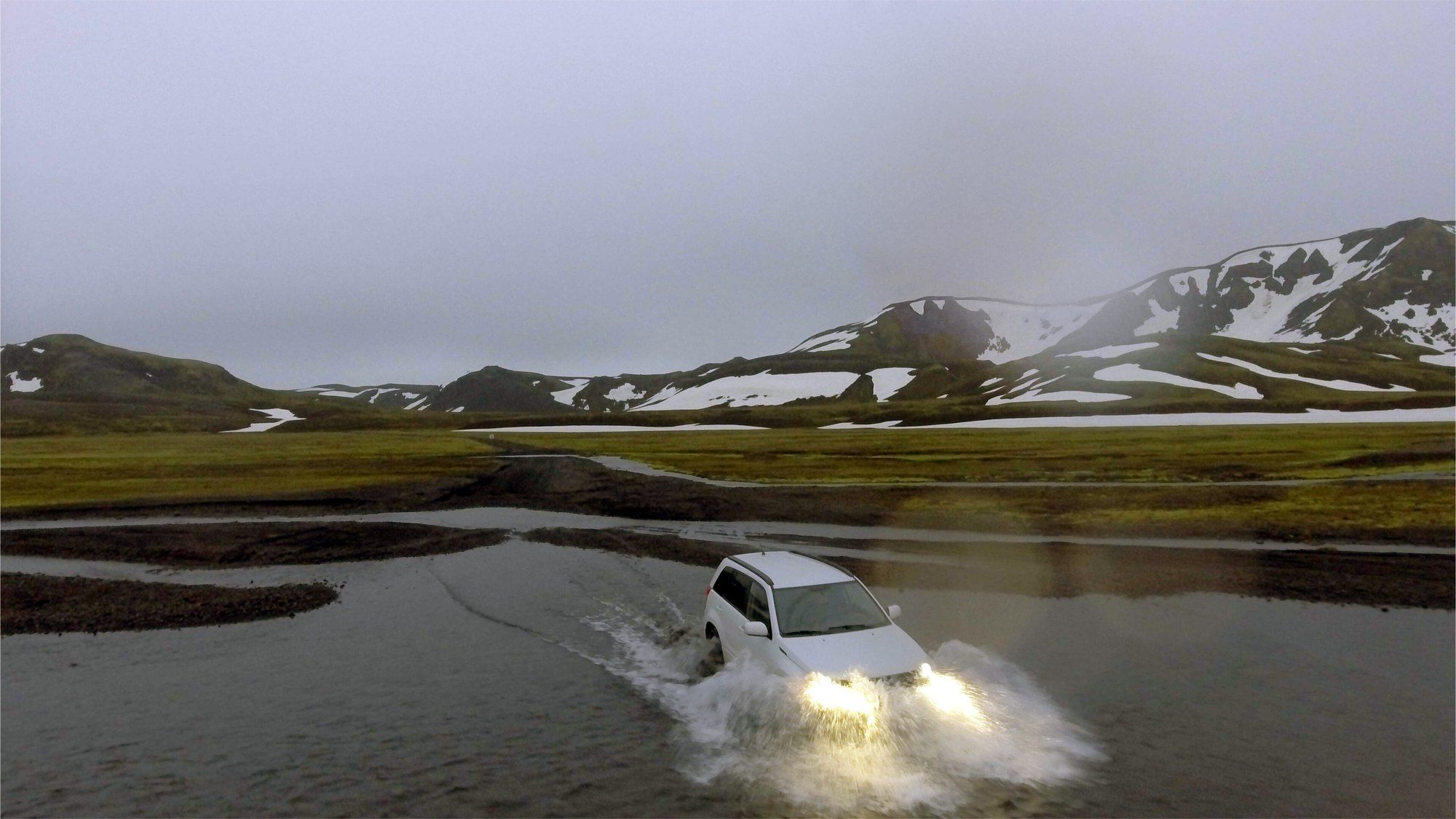
Most of Iceland can be driven in an ordinary small car. The Ring Road is mostly paved and two-lane, and needs no special vehicle. What catches visitors out is everything around it: gravel that chips glass, wind that catches car doors, rivers that no insurance will touch, a fuel pump that wants a PIN, and a toll you are expected to pay online. Most of it is settled before you drive away.
Choose the car for the roads you will actually drive
Start with the route, not the price. For the Ring Road itinerary in summer, a two-wheel-drive car is enough. Hertz Iceland’s own guide recommends its small 2WD cars for Reykjavík, the Golden Circle and short summer Ring Road trips, and its 4x4 and AWD SUVs for the Westfjords, gravel passes and winter.
The highlands are a different question. F-roads — the mountain roads with an F before the number — are open to four-wheel-drive vehicles only, and rental companies such as Blue Car Rental and Hertz state that this is the law. Their contracts go further. Hertz’s list of damage that its collision cover does not reduce includes damage to a passenger car driven on any F-road, and also on Kjölur (road 35), Kaldidalur (road 550) and the roads to Landmannalaugar (208). That matters for the Kjölur crossing: the Icelandic Road and Coastal Administration (IRCA) says Kjölur has lost its F-road designation after improvements, but at least one major rental company still treats it as 4x4 country.
Not every 4x4 is equal. SafeTravel, the safety service run by Iceland’s search and rescue association, says some F-roads are fine for a Dacia Duster-sized car, others need something like a Toyota Land Cruiser, and some need a modified super-jeep. The F249 into Þórsmörk and the F88 to Askja are large-4x4 routes with real fords.
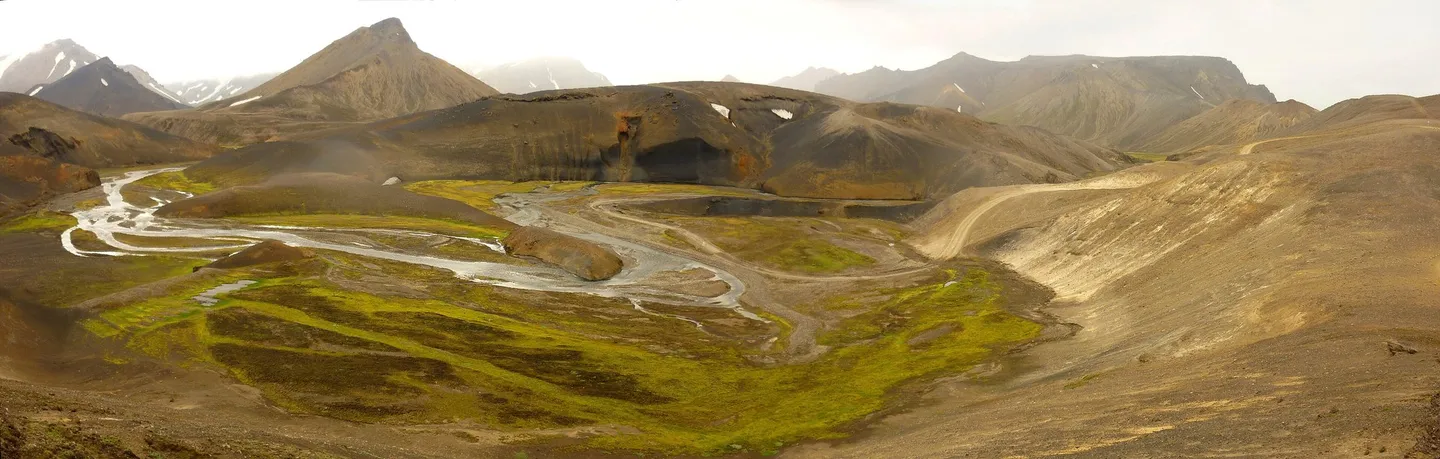
Then the gearbox: check whether each offer is manual or automatic, and if you only drive automatics, filter for one from the start. When you compare car rental prices on DiscoverCars.com, set the transmission, the drive type and the pick-up point first, and only then sort by price.
When the F-roads open
The IRCA says mountain roads open in spring or early summer depending on the weather, and that the snowpack is the main factor; wet roads can also delay an opening. It publishes a highlands map, updated as roads open. SafeTravel says the F-roads are usually closed from mid-September until June or July. If your trip depends on one particular highland road, check the map before you pay for a 4x4.
Off-road driving — leaving the marked road or track — is forbidden. The IRCA says it can bring prosecution, substantial fines or even imprisonment under the Nature Conservation Act.
Rivers: the risk is yours
SafeTravel is blunt: no insurance covers any damage to a vehicle while it is crossing a river, and the damage can cost thousands of euros or dollars. Hertz’s terms say the same: the underbody, damage from river or water crossings and off-road driving are “NOT covered at any time”. Practice does vary, though. Blue Car Rental’s top-tier Liability Waiver does list water damage and damage to the underside among the things it covers — except, its terms say, where the damage comes from negligence or from driving where driving is prohibited. Read the clause in your own contract.
SafeTravel’s advice for the ford itself: if you are unsure, don’t cross — turn round, or wait for other travellers. Plan your line first, go slowly in the lowest gear without changing gear in the water, and angle downstream rather than against the current.
Gravel, sand, ash — and wind
Iceland’s roads damage cars in ways basic collision cover ignores. Two companies’ published terms show the pattern:
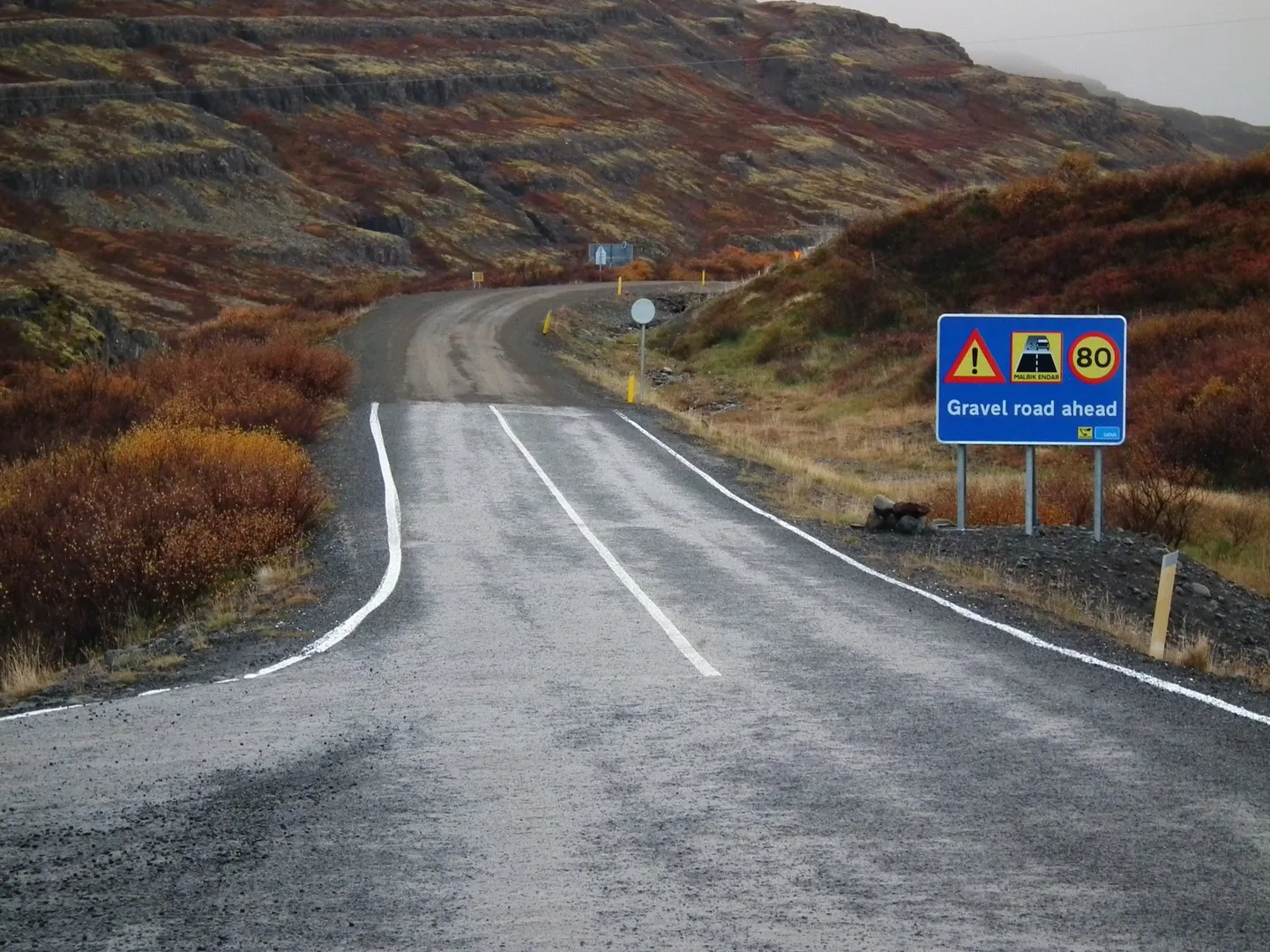
- Gravel. Hertz’s collision cover excludes the windscreen, glass, underbody and tyres; its Windshield Protection covers gravel damage to the windscreen and headlights, but not sand or ash damage. At Blue Car Rental, Gravel Protection is included and covers the windscreen, headlights and mirrors with an excess of ISK 40,000. Blue says chipped paint at the front of the car is normal and you will not be charged for it.
- Sand and ash. Hertz says damage from ash, sand or other material blown against the car is covered by no other protection unless you buy Sand and Ash Protection. Blue says sand damage is very common, especially on the south coast, and can cost between ISK 500,000 and 1,500,000 to repair.
- Wind. Hertz advises watching for gusts on open stretches and when you open the doors. Blue’s Liability Waiver lists “wind blowing up the doors” among the damage it adds to the basic covers — a clue that, without it, a door caught by the wind is your bill.
Check the excess, too — the amount you still pay after insurance. Blue states ISK 350,000 if you keep only the basic collision cover; Hertz says the excesses are set by its price list and applies a non-waivable amount to every rental. Blue adds that its insurances can only be added before the rental starts. If you plan to rely on your credit card’s cover, Hertz recommends reading its terms carefully first, and Blue asks to be told in advance. When you shop around on DiscoverCars.com or anywhere else, look at what each quote includes and what the excess is, not just the daily rate.
Before you drive off
Walk round the car and photograph every scratch, chip and dent, plus the windscreen, wheels and the fuel gauge, and make sure the damage sheet matches what you see. Find the spare wheel or repair kit and the jack before you need them: at Hertz, damage affecting only wheels and tyres is excluded from collision cover; at Blue, tyre damage is excluded unless you have the Liability Waiver or roadside cover.
At Keflavík, Hertz has a desk in the arrivals hall; other suppliers may instead meet you at a shuttle to a rental lot outside the terminal, so read the pick-up notes on your booking before you land. If your first days are in Reykjavík, consider collecting the car later in the city — Hertz, for one, also has offices there. SafeTravel warns that drivers arriving on overnight flights from America are often drowsy, and suggests resting for a few hours before driving.
On the road
Speed limits. SafeTravel gives 50 km/h in towns, 80 km/h on rural gravel roads and 90 km/h on rural paved roads, unless signs say otherwise. The limit is for the best conditions, it adds; slow down where asphalt turns to gravel, because the tyres lose grip.
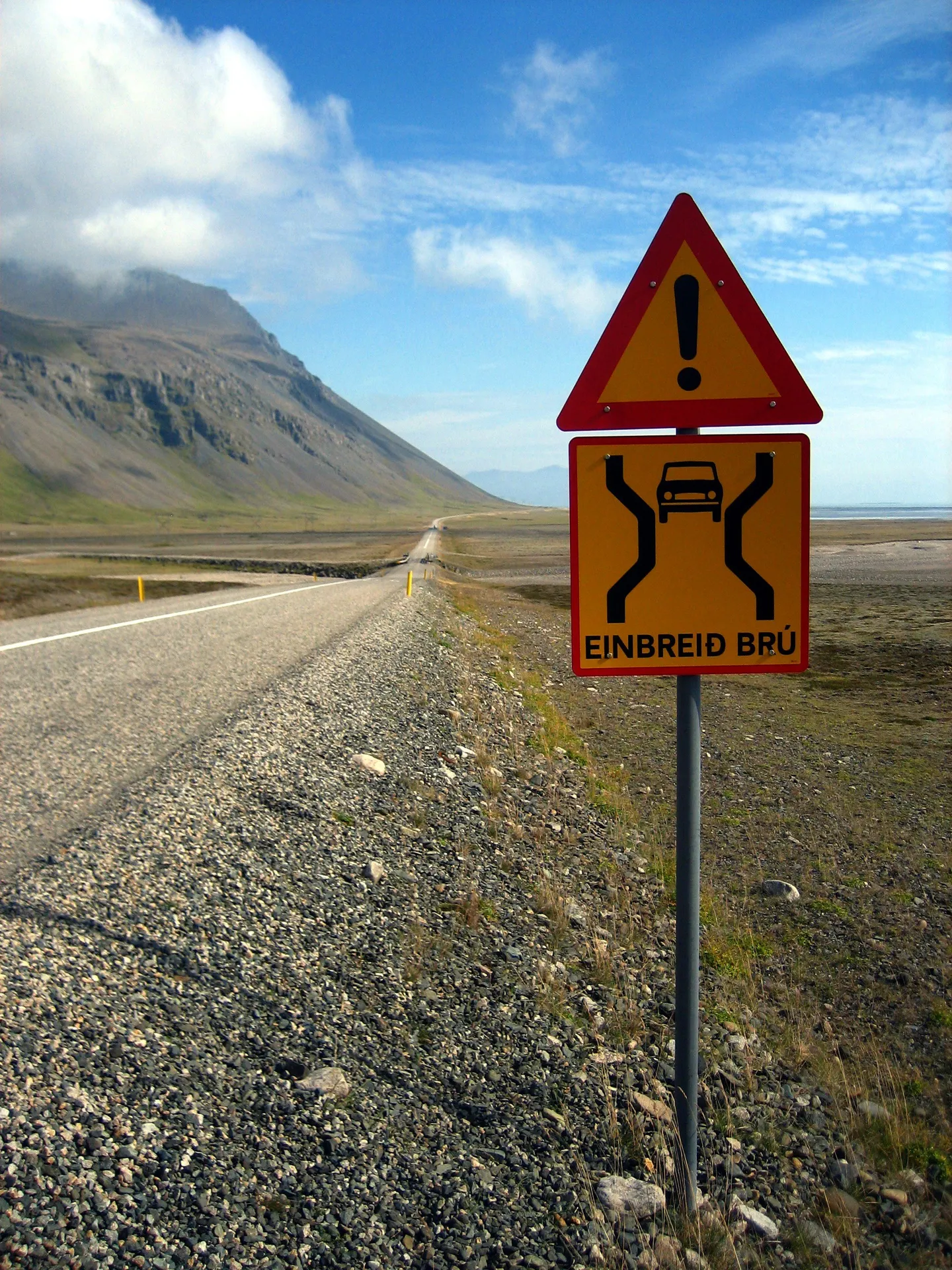
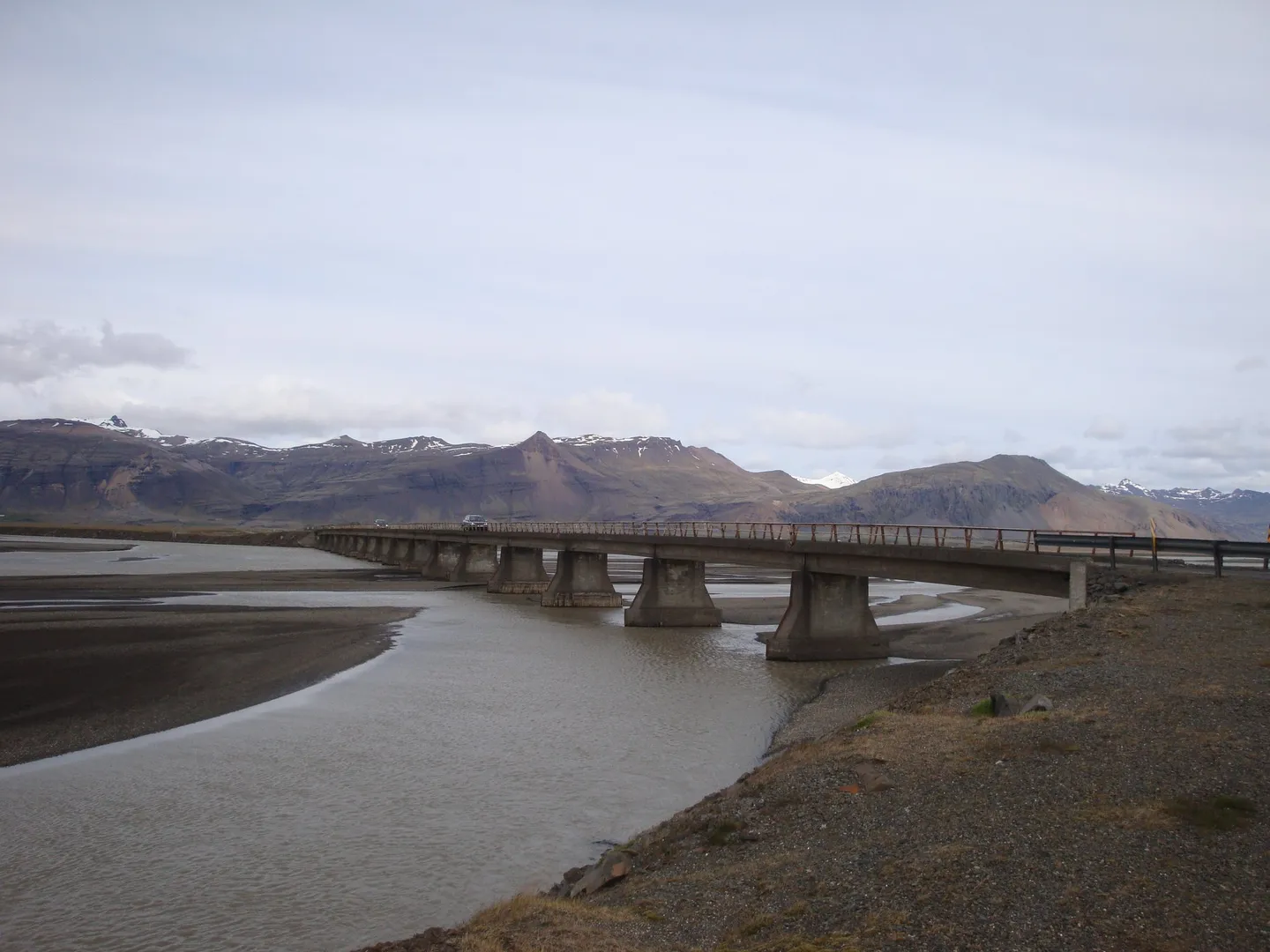
Single-lane bridges. The sign reads einbreið brú. SafeTravel puts the speed limit across them at 50 km/h, and says the car that gets to the bridge first has the right of way — if in doubt, let the other car go. There are fewer every year: the Icelandic news site Vísir reported in July 2026 that when the new bridge over Hornafjarðarfljót opened, the number on the Ring Road fell from 29 to 26, with more than 600 left in the country as a whole.
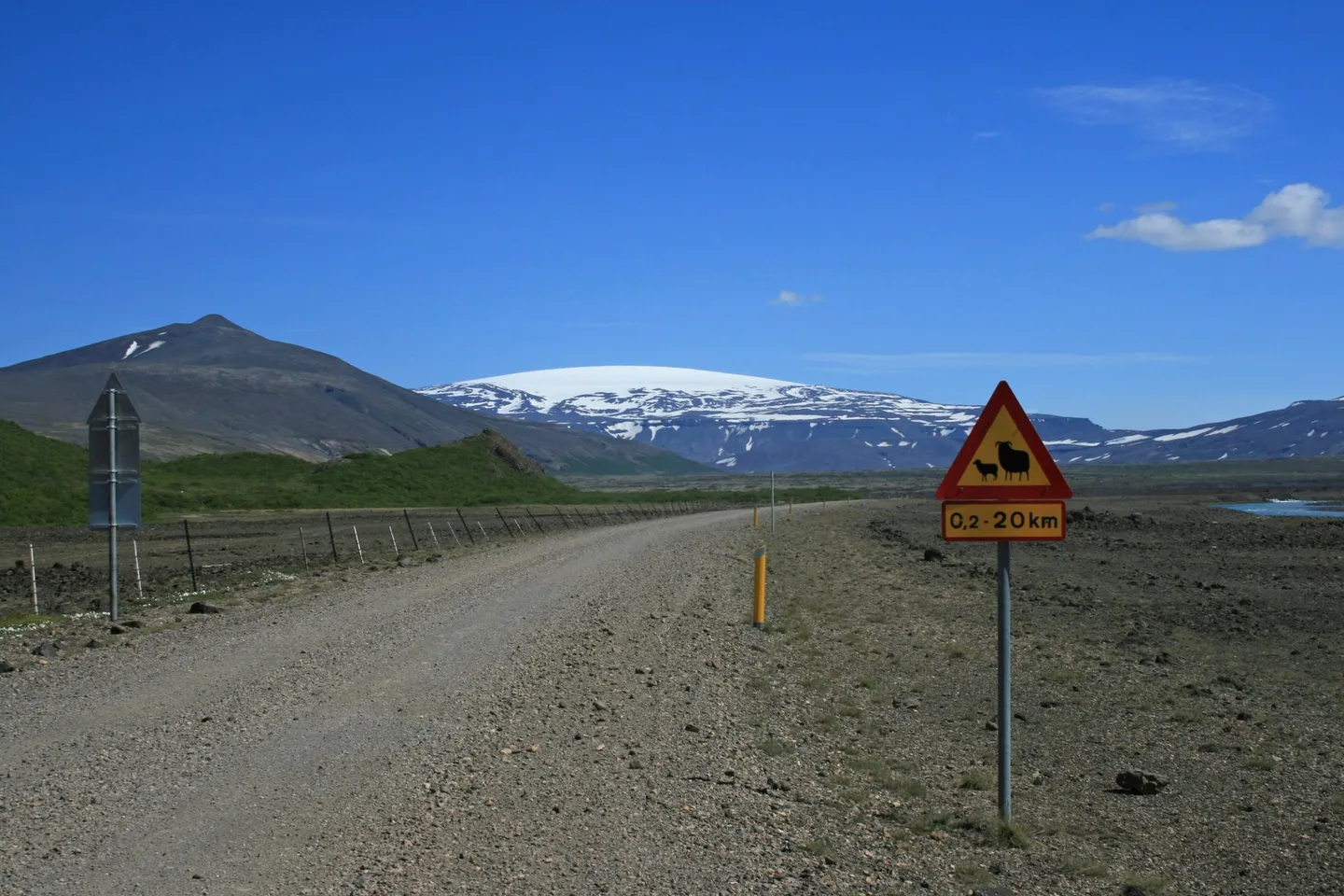
Sheep. Expect them on or beside the road, SafeTravel says, and sometimes horses or cows. A lamb on one side and a ewe on the other means one of them is about to cross.
Other rules. Headlights on at all times, all year, and seatbelts for everyone. SafeTravel puts the blood-alcohol limit at 0.2‰ — not even one drink.
Weather. Check the road conditions on umferdin.is — the IRCA’s traffic site, where road.is now leads — and the forecast and warnings on vedur.is in the morning, and again during the day. “Lokað” on a sign means closed, and SafeTravel says closed means no driving at all.
Fuel, tolls and parking
Fuel. N1, which has the largest network of stations, says its automated pumps need a card with a four-digit PIN. If yours has none, it suggests a debit card, or buying an N1 prepaid card inside a staffed station; it says Apple Pay and contactless cards generally work too. Fill up before you leave the Ring Road for the interior: Blue Car Rental says there are no fuel stations once you are inside the highlands, and Hertz warns that distances between services can be long.
Vaðlaheiði tunnel. For the 7.5 km tunnel near Akureyri, pay at tunnel.is, up to 24 hours before or after you drive through; since 2 March 2026 a single trip in a car under 3.5 tonnes costs 2,216 ISK. If you don’t pay, the operator says, the rental company is notified and charges your card the toll plus its own service fee.
Hornafjörður. New this autumn: from 1 September 2026 the new section of the Ring Road in Hornafjörður, near Höfn, is tolled at 1,500 ISK per trip for vehicles under 3.5 tonnes. Cameras read the number plate and the bill goes to the registered owner — for a rental car, the rental company. Spölur, which collects the toll, lets you pay a single trip on spolur.is within 24 hours. Ask your rental company how it passes the charge on; Blue lists tunnel fees among the charges and handling fees no insurance covers.
Parking. At Þingvellir a car with five seats or fewer pays 1,000 ISK, valid for the day in the park’s P1, P2 and P5 car parks; cameras read the plate, and you pay at the machines or on Checkit.is. In Vatnajökull National Park, a regional fee is collected at the Skaftafell and Jökulsárlón car parks, valid until midnight on the day you pay, and payable in the Parka app.
Winter
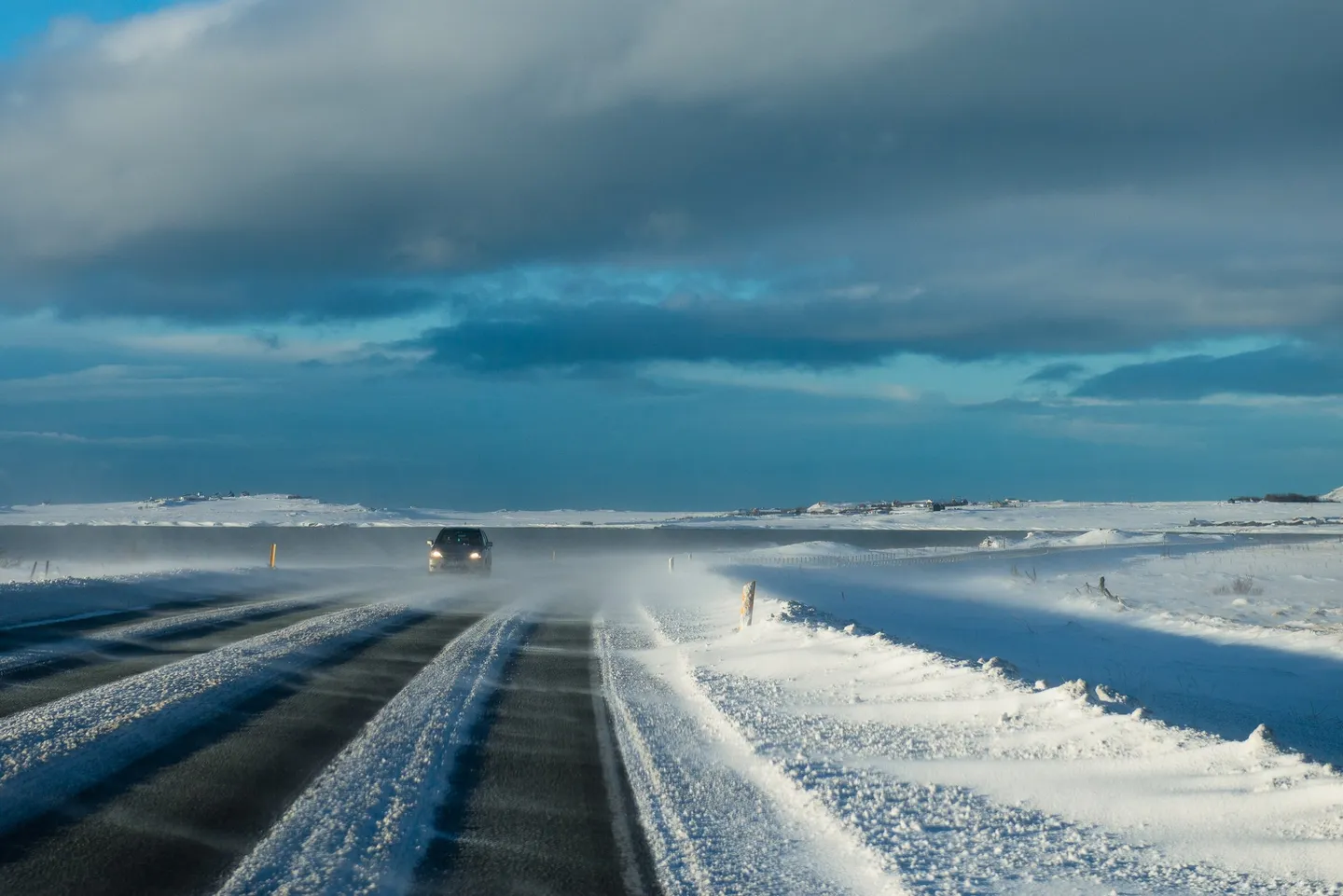
Winter conditions can come in spring and autumn as well, SafeTravel warns, and roads close when they have to — the Ring Road itself included. In February 2022, Iceland Review reported Route 1 closed over Hellisheiði, between Reykjavík and South Iceland, with dozens of vehicles stranded. Hertz includes season-appropriate tyres in its rentals; Reykjavík City says studded tyres are not banned from 1 November to 15 April, though it discourages them in town. Above all, leave slack in the plan for a day when the road is shut.
Age and licence
Requirements are set by each company. Hertz says its smallest 2WD cars can be rented from 20, many 4x4 and premium cars need the driver to be 23 to 25, and every driver must have held a licence for at least a year. It asks for a credit card in the main driver’s name, and an International Driving Permit if your licence is not in Latin letters. Check the age band for your category before you book.
The short version
Match the car to the route, read the exclusions before the price, photograph the car, carry a PIN card, pay the tolls online and check the roads and wind every morning. If you are still choosing, compare Iceland rental offers on DiscoverCars.com with those filters set — then read the supplier’s own terms before you pay.
Drive it yourself
The day-by-day route, real costs and where to sleep are in the itinerary. The planner draws it on the map from wherever you start.
Sources
- SafeTravel (ICE-SAR) — How to drive in Iceland
- SafeTravel — Top 12 tips for driving
- SafeTravel — Highland driving (F-roads)
- SafeTravel — Road signs
- Icelandic Road and Coastal Administration — Mountain roads
- Icelandic Road and Coastal Administration — The Icelandic highland interior
- Icelandic Road and Coastal Administration — Hornafjörður Ring road tolls collected from September 1st onwards (31 August 2026)
- Umferdin.is — IRCA traffic and road conditions
- Spölur — Hornafjörður toll, single-trip payment
- Vaðlaheiðargöng — Prices and payment methods
- Vaðlaheiðargöng — Rental cars
- Þingvellir National Park — Parking service
- Vatnajökull National Park — Payment of camping and regional fees
- Icelandic Met Office — forecasts and warnings
- Reykjavík City — Studded tires
- Vísir — Einbreiðar brýr við Berufjörð og Reyðarfjörð líklega næstar (18 July 2026)
- Iceland Review — Route One closed between Reykjavík and South Iceland (23 February 2022)
- N1 — Your guide to N1 services
- Blue Car Rental — Car rental insurance in Iceland
- Blue Car Rental — What are F-roads in Iceland
- Hertz Iceland — Car rental insurances and coverage
- Hertz Iceland — Rent a car in Iceland: tips on rental and driving
- Discover Cars — Car rental in Iceland
Every fact in this story comes from the sources above. Where they disagree, the text says so. Found a mistake? Write to hello@roadcutco.com.