When the Alpine passes close: crossing the Alps by car in winter
From late autumn the famous high roads shut one by one: the Grossglockner, the Stelvio, the Furka, the Iseran. The Alps do not close with them. A handful of passes are kept open all winter, and the rest of the traffic goes through the mountain, by road tunnel or on a car train.
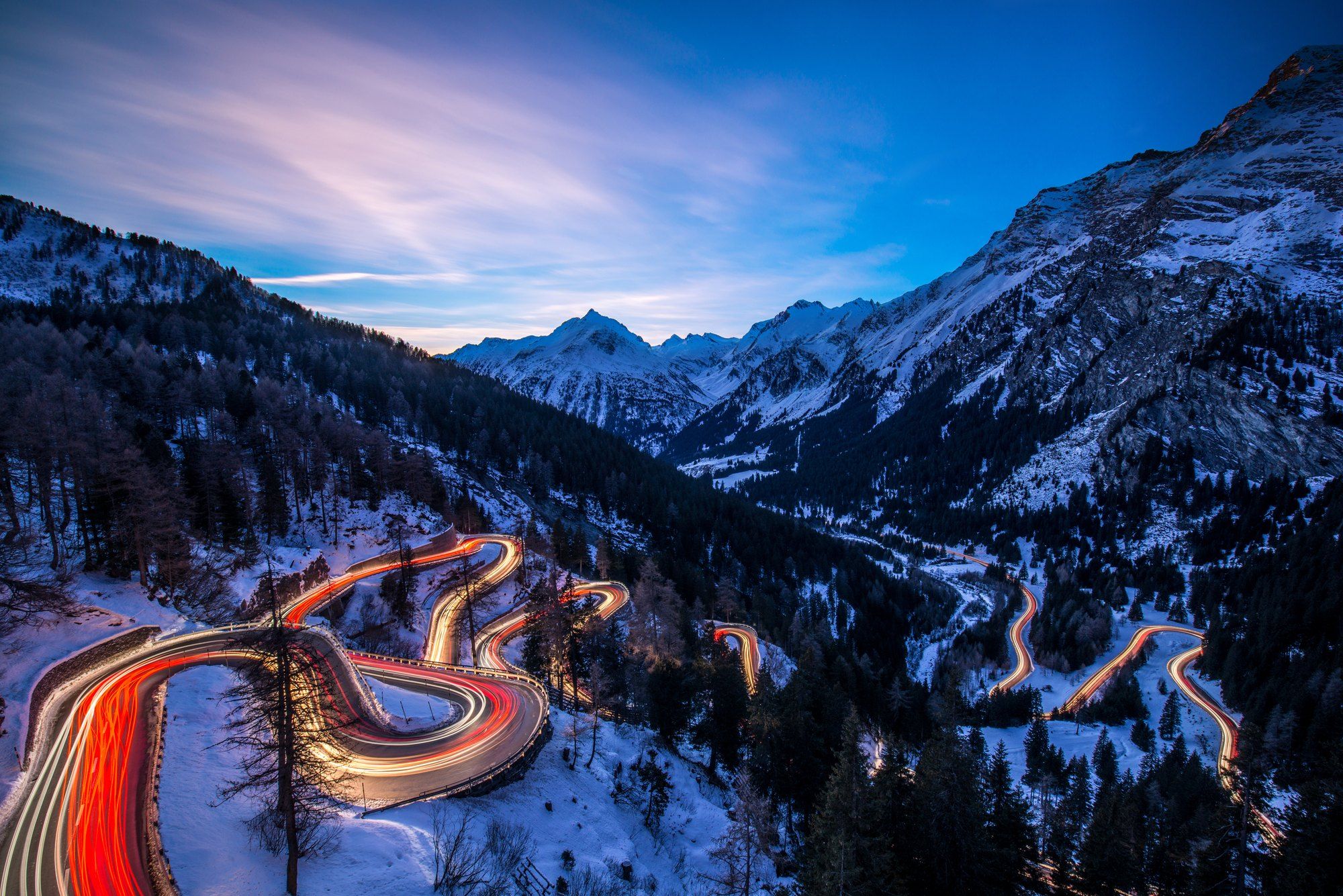
The roads that make the Alps famous are summer roads. The Grossglockner, the Stelvio, the Furka and the Iseran climb to between 2,400 and 2,800 metres, and at that height the snow comes in October and stays until May or June. Clearing it all winter, and keeping the slopes above safe from avalanches, would be neither possible nor worth it. So the operators close the gates, and the high roads sleep.
The Alps do not close with them. Lorries, skiers and people visiting family still cross all winter. They use a short list of passes that are kept open, a handful of long road tunnels, and two kinds of train that carry cars through the mountain. Knowing which is which is most of the planning.
Why the high roads shut
There is no single closing day. Each road authority decides when the first serious snow arrives, and the date moves by weeks from year to year. The Canton of Uri publishes the opening and closing dates of its passes every year since 2000, and the spread is wide. The Furka has closed as early as 21 October and as late as 2 December. Over the same years the Gotthard pass road has closed between 29 October and 1 December. The one exception was 2001, when it stayed open until 21 December because of the fire in the Gotthard road tunnel.
What decides it is the snow, not the calendar. A warm autumn keeps a road open; one heavy fall can close it overnight. When the Province of Bolzano closed the Stelvio in November 2024, it noted that the passes had stayed open longer than usual because the season had been warm. For the roads Roadcut follows, our winter pass closures page lists the usual windows and the dated closures as they come in.
The big ones that close
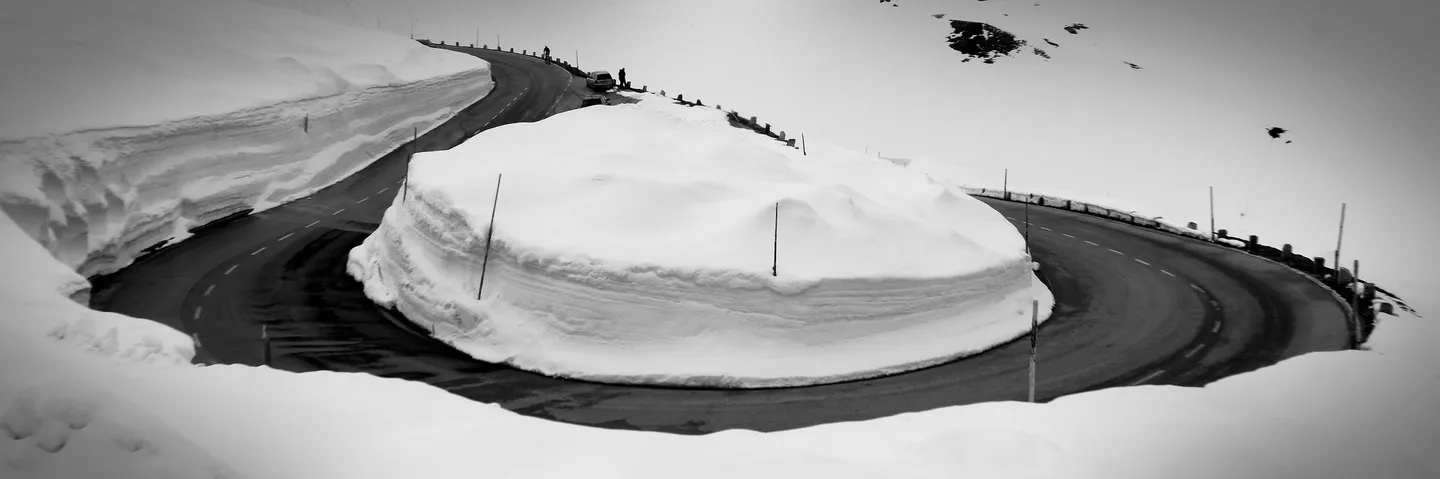
Grossglockner High Alpine Road (Austria). The operator, GROHAG, gives the season as the start of May to the start of November: “in the winter months the High Alpine Road is closed since it is impassable due to the amount of snow.” Its site currently shows a winter closure until early May 2027. Even in season, there is an official ban on driving at night, outside the opening hours. Our Grossglockner story covers the road itself.
Stelvio and Timmelsjoch (Italy and Austria). In 2024 the Province of Bolzano closed the Stelvio (SS38, 2,758 m) on the afternoon of 18 November, and the Timmelsjoch, Passo del Rombo in Italian (SS44, 2,509 m), had already been impassable since that morning. No reopening date is given in autumn; the snow decides that in spring.
Furka, Susten and Gotthard (Switzerland). In Uri’s record since 2000, the Furka has opened between 7 May and 21 June and closed between 21 October and 2 December. The Susten has closed between 18 October and 17 November. The Gotthard pass road, the old road over the top rather than the motorway tunnel below, has opened between 30 April and 7 June. In 2025 the canton closed the Furka on 27 October and the Gotthard on 7 November.
Grimsel, Nufenen and the Great St Bernard pass (Switzerland). Valais tourism lists all three, with the Furka, as passes open in summer. None has a fixed closing date. The ADAC puts the usual Swiss closure at between October or November and April or May.
Col de l’Iseran and Col du Galibier (France). The Savoie department calls the Iseran, at 2,770 metres the highest pass in Savoie, traditionally the last to be cleared. Work starts at the end of May and the road reopens in mid-June. The Galibier, at 2,645 metres, is cleared earlier in the same spring campaign. Both are on our Route des Grandes Alpes, which is a summer drive for exactly this reason.
What stays open
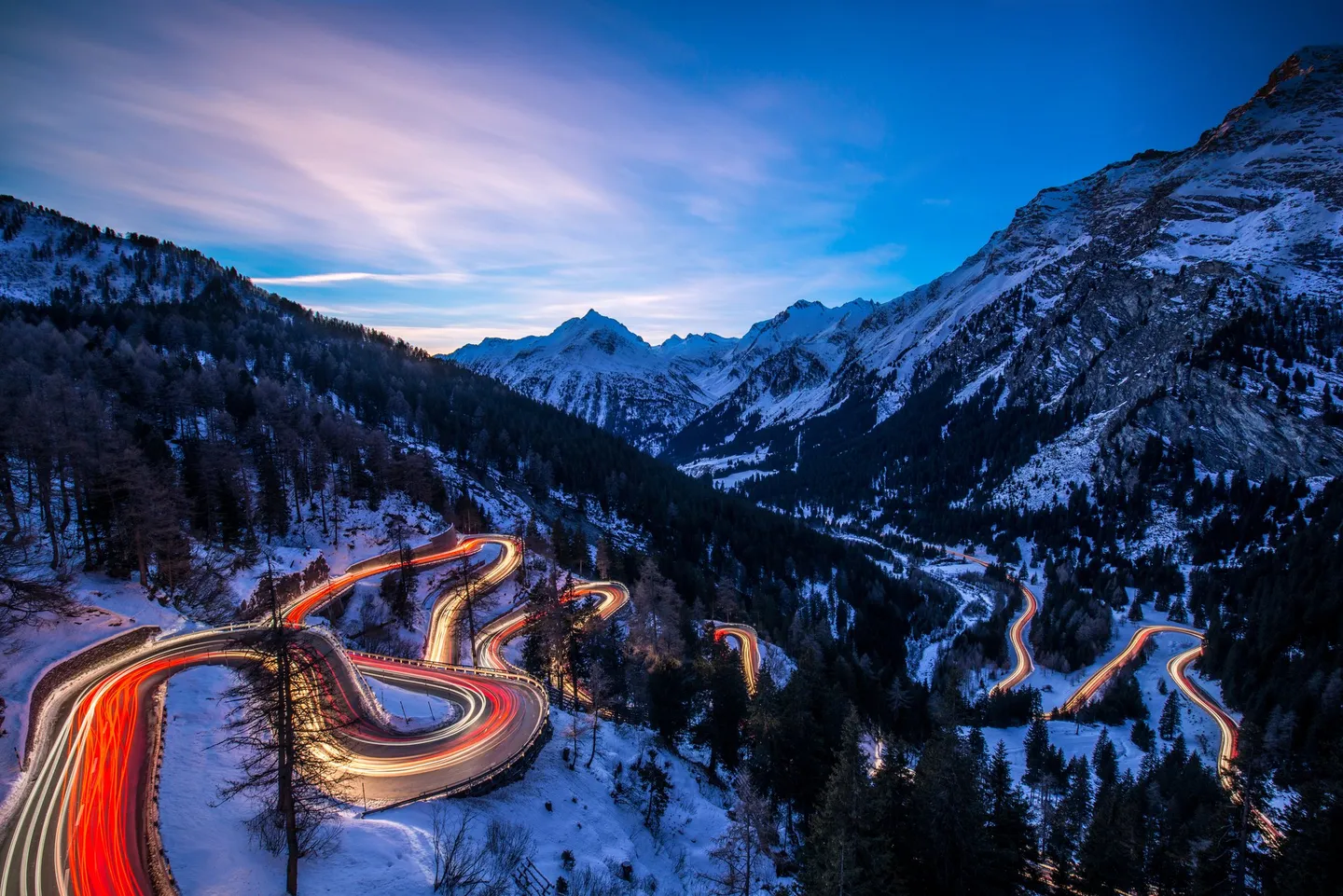
A shorter list of passes is kept open all winter. They are not always the lowest. They are the ones that matter most to the people who live along them.
In Graubünden, the cantonal road office says that the Bernina, Julier, Lukmanier, Maloja and Ofen passes stay open all year. The canton’s other seven pass roads are closed by November or December at the latest. The Bernina, which tops out at 2,328 metres, was usually closed in winter until the 1960s. From 1965 the municipalities of Brusio and Poschiavo were allowed to keep it open all year for motor traffic. Our St Moritz to Tirano drive crosses it.
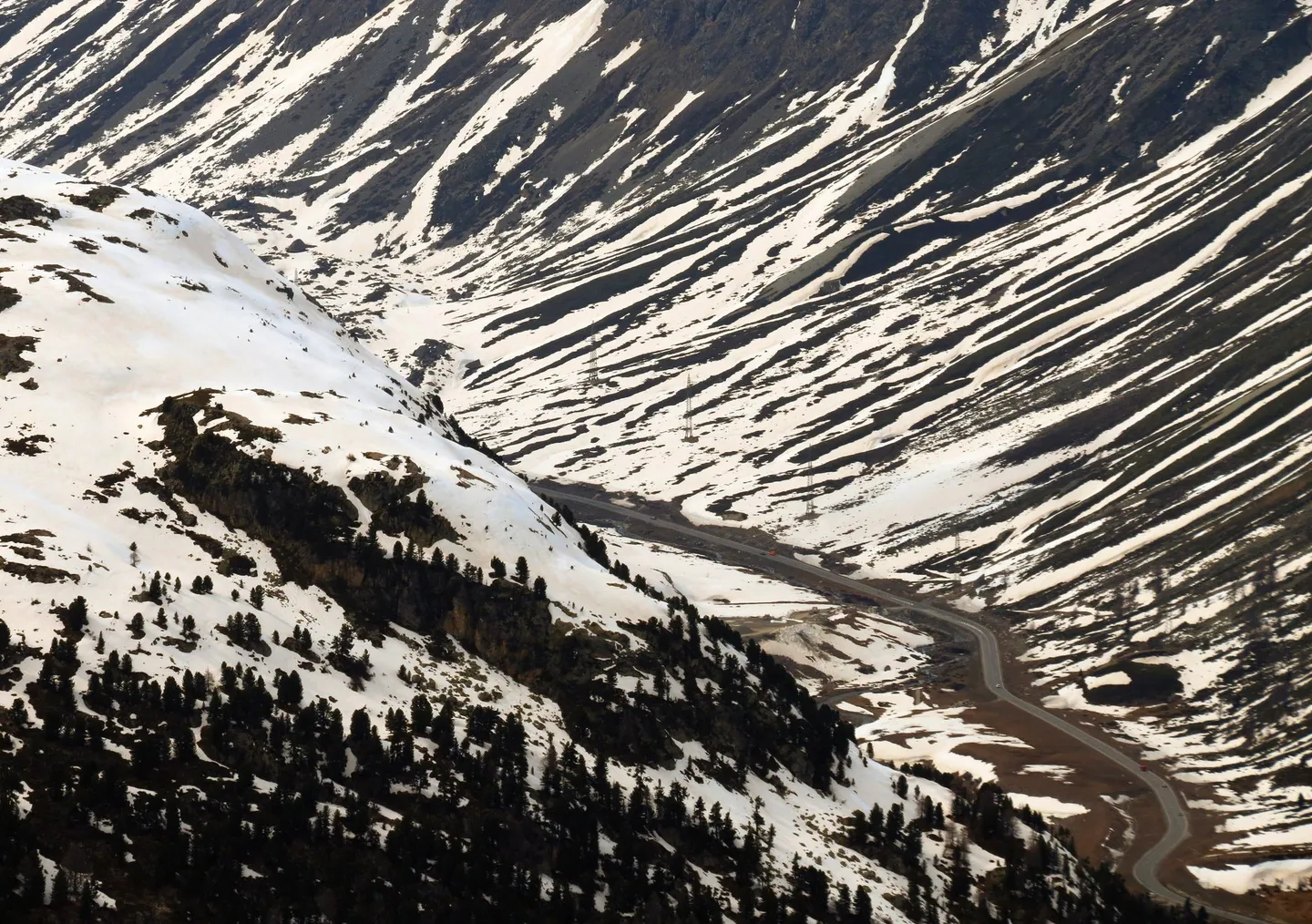
In Valais, the Simplon pass road is listed as open all year, alongside the Col de la Forclaz, the Pas de Morgins and the road tunnel under the Great St Bernard.
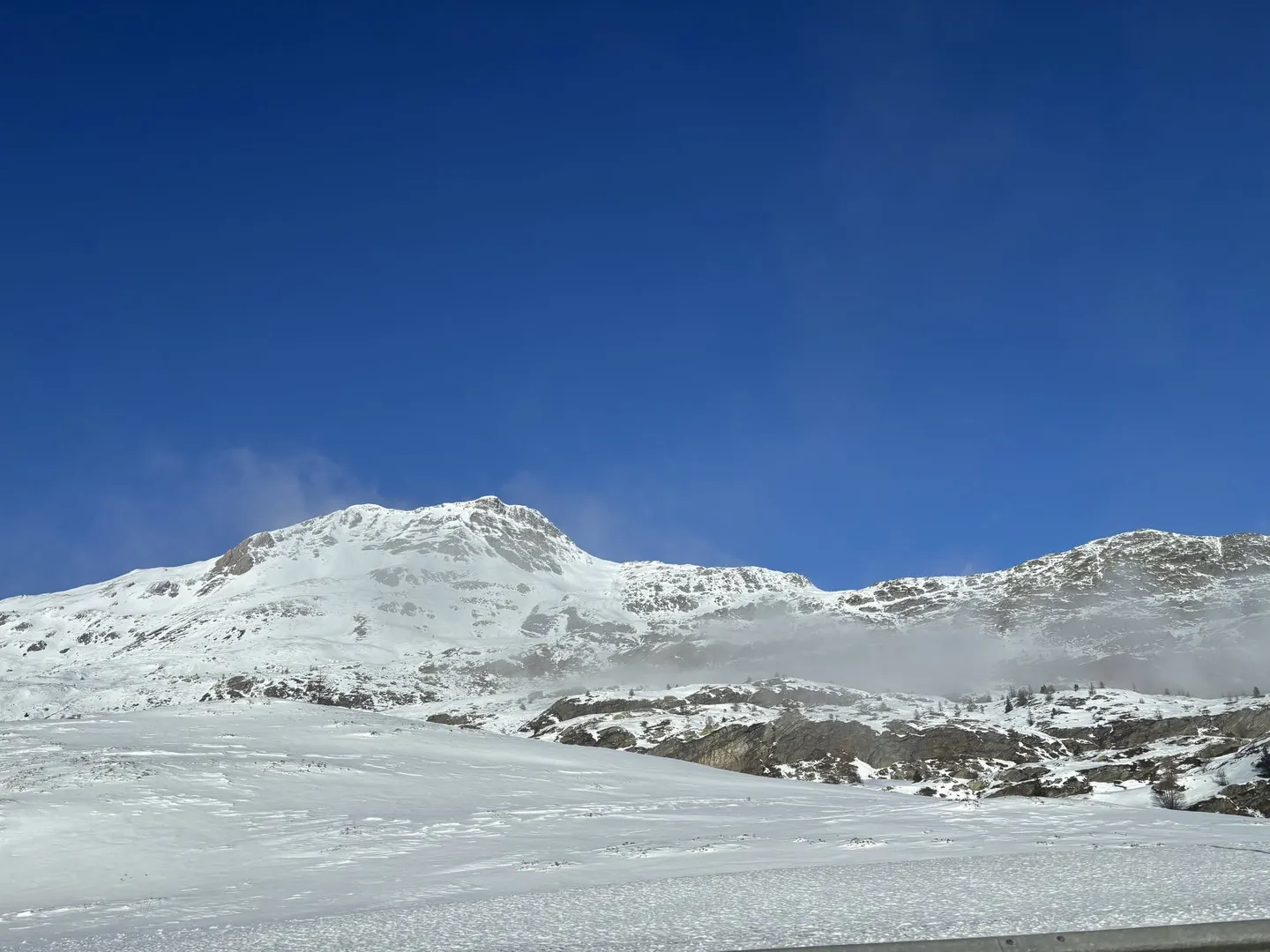
Between Austria and Italy, the ADAC lists the Brenner, both the old pass road and the motorway, and the Reschen as crossable all year. Gotthard and San Bernardino are on its list too, as tunnels rather than passes. Open all year does not mean open every hour. These roads can still close for a while after heavy snow, and chains can be made compulsory where signs say so.
One thing to check this autumn: the Reschen. On the Austrian side, the B180 between Pfunds and Nauders is closed on weekdays until Friday 27 November 2026, from 7.30 to 18.00 Monday to Thursday and from 7.30 to 14.00 on Fridays. Land Tirol is finishing a rockfall gallery there, the Kanzelgalerie. Traffic is diverted over the B185 and B184 through Switzerland. Trailers over 6.5 metres and buses over 13 metres may not use that road. Further north, the ADAC reports that ASFINAG has fully closed the Landeck tunnel on the A12 from 12 October to 7 December 2026, with a diversion through Zams and Landeck.
Through the mountain: road tunnels
For most winter crossings the answer is a tunnel. They are motorways or major roads, and none depends on a pass being open.
Gotthard. The road tunnel opened in 1980 and carries the A2 between Göschenen and Airolo. A second tube is being built and is due to open in 2032. After that, each tube will carry one lane in each direction, as the federal Alpine-protection rules require, so capacity will not grow.
San Bernardino. The tunnel on the A13 opened on 1 December 1967, and the canton describes it as the answer to the old demand for a road over the San Bernardino that could be used all year.
Great St Bernard. Opened on 19 March 1964, it was the first road tunnel through the Alps. It is a toll tunnel between Valais and the Aosta Valley, and the pass road above it closes for the winter.
Mont Blanc and Fréjus. These two link France and Italy. At the Mont Blanc tunnel, the operator, TMB-GEIE, closes the tunnel periodically for maintenance and safety drills, normally at night, and publishes a calendar of planned closures (the current one runs October to December 2026). The Fréjus tunnel, 12.87 km long and in service since 1980, also lists night closures on its operator’s site. Both are toll roads, and the prices change; check the operator before you go.
On the train: Furka, Vereina, Lötschberg
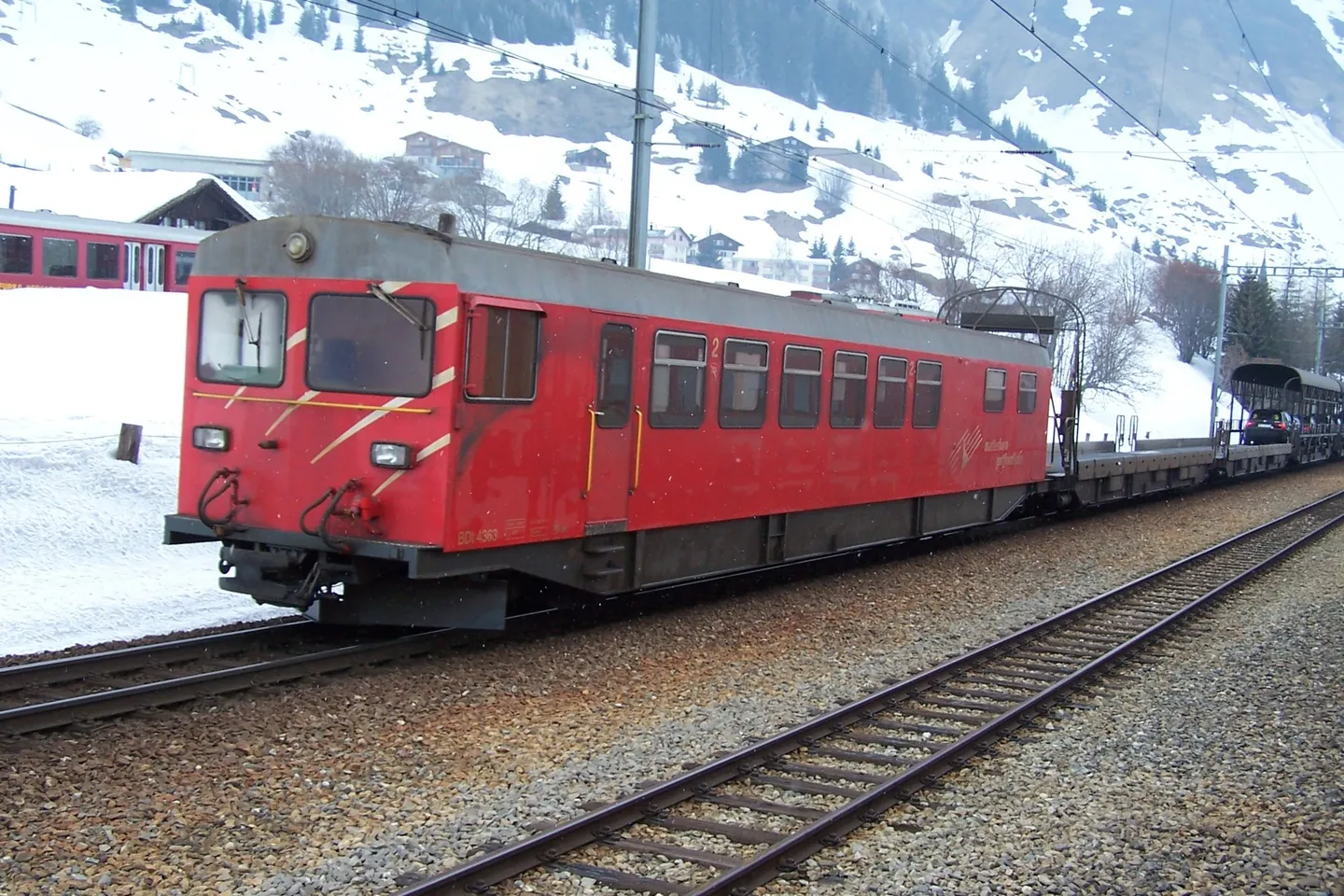
Switzerland has a solution the other Alpine countries mostly do not: you drive onto a flat railway wagon, stay in your car, and the train takes you through a tunnel the road does not have.
Furka (Oberwald–Realp). When the Furka pass closes, the Matterhorn Gotthard Bahn’s car train runs through the Furka tunnel from Oberwald in Valais to Realp in Uri. The railway says the trains run all year round and the trip takes barely 20 minutes, about 45 minutes quicker than driving over the pass. Its current timetable runs from 31 October 2026 to 13 June 2027.
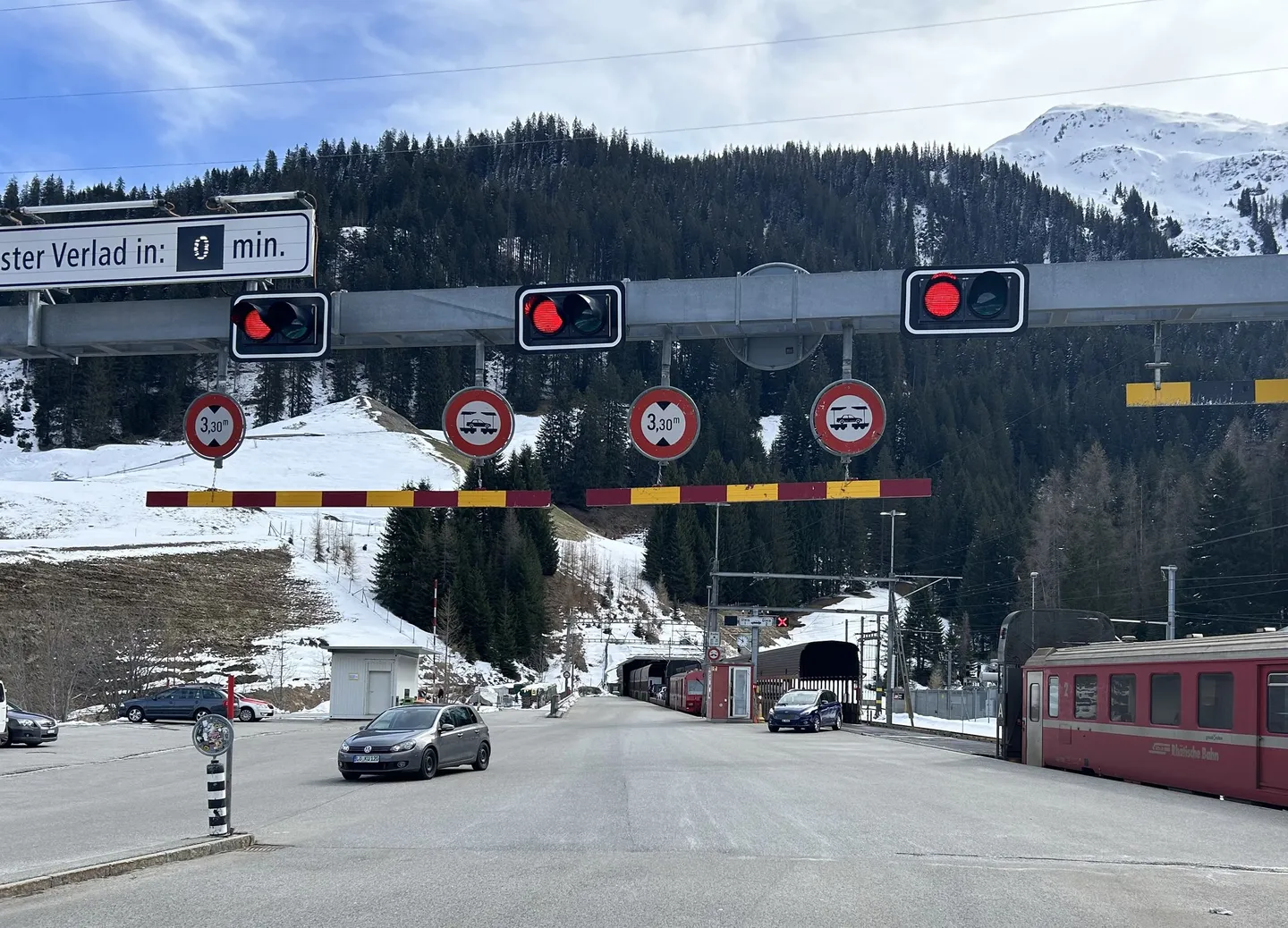
Vereina (Klosters–Sagliains). The Rhaetian Railway carries cars through the 19 km Vereina tunnel between Klosters in the Prättigau and Sagliains in the Engadine in 18 minutes. In the winter timetable, from 1 December 2026 to 30 April 2027, trains leave Klosters every 30 minutes until 20.50, with additional later trains. Reservations are not possible; you queue and board the next train.
Lötschberg (Kandersteg–Goppenstein) and Simplon (Brig–Iselle). BLS runs the Lötschberg car train in about 15 minutes, every 30 minutes or more often when needed. From Brig, a second car train crosses the Simplon to Iselle in Italy in 20 minutes, every 90 minutes (every 60 minutes Friday to Sunday). Neither can be reserved. Seasonal direct trains from Kandersteg to Iselle do require a reservation.
Fares on all of these change; check the railway’s own page before you travel.
Tyres, chains and tolls
Austria. From 1 November to 15 April, cars must have winter tyres on all wheels whenever there is snow, slush or ice on the road, the ÖAMTC says. Chains on at least two drive wheels may replace them only where the road is fully or almost fully covered with snow or ice.
Switzerland. There is no explicit rule requiring winter tyres, the Swiss Council for Accident Prevention (BFU) says. But a driver whose car is not fit for the conditions can be fined. Where the “snow chains compulsory” sign is posted, chains are required.
Italy. There is no national date. Road owners require winter tyres, or chains on board, by local ordinance and signs, and the usual window is 15 November to 15 April. The ADAC gives the same window for South Tyrol.
France. From 1 November 2026 to 31 March 2027, in mountain communes listed by 34 departments, a car needs four winter tyres marked 3PMSF or must carry chains or snow socks, Service-Public.fr says. The zones are signposted at the entry and exit.
All four countries, with their sources, are on our winter driving rules page.
Vignettes and tolls. Swiss motorways need a vignette. It costs CHF 40, the federal customs office says, and is sold as a sticker or as an e-vignette linked to your number plate at e-vignette.ch. Each year’s vignette is valid from 1 December of the previous year to 31 January of the following year. Austria has a vignette and, on some routes, a separate section toll. According to ASFINAG, the A13 Brenner motorway, the A9 Pyhrn, the A10 Tauern, the A11 Karawanken and the S16 Arlberg charge by section, and no vignette is needed between their toll stations. The A12 Inn valley motorway that leads to the Brenner does need one. Prices are on our driving costs page.
Before you go
Check the road on the day. Where the operators publish live status: grossglockner.at; the Canton of Uri at ur.ch/strasseninfos; Graubünden at strassen.gr.ch; Savoie at savoie-route.fr; ASFINAG for Austrian motorways; tunnelmb.net and sftrf.fr for the French–Italian tunnels. The car trains post waiting times on their own sites.
Do not route through a closed pass. Navigation apps do not always know a pass is shut for the season. If the fastest route crosses the Furka, Grimsel, Susten, Nufenen or Gotthard pass between November and May, look for the tunnel or the car train instead.
Pack for a queue. The Vereina and Lötschberg car trains cannot be booked, and the Mont Blanc operator’s traffic forecasts have a category for waits of more than two hours. Leave with a full tank, warm clothes and the chains in the boot, not in the garage.
Take the open pass for the view. The Bernina, Maloja and Julier are open all winter. With the right tyres and a clear day, they show the high Alps in snow as no summer road can.
Drive it yourself
The day-by-day route, real costs and where to sleep are in the itinerary. The planner draws it on the map from wherever you start.
Sources
- GROHAG — Prices and opening times
- Kanton Uri — Öffnungs- und Schliessungsdaten der Pässe 2000–2025
- Valais/Wallis Promotion — Anreise mit dem Auto (passes, tunnels and car trains)
- Provincia di Bolzano — Chiusura invernale per i passi Stelvio, Rombo e Stalle (November 2024)
- Département de la Savoie — Top départ du déneigement des grands cols de Savoie (April 2026)
- Kanton Graubünden, Tiefbauamt — Passstrassen erwachen aus dem Winterschlaf (2019)
- Kanton Graubünden, Tiefbauamt — Stützpunkt Bernina (2018)
- Kanton Graubünden, Tiefbauamt — TBA-Info 76: 40 Jahre San-Bernardino-Tunnel
- ADAC — Wintersperren: Wann welche Alpenpässe schließen (March 2026)
- Land Tirol — Kanzelgalerie: Bauarbeiten gehen in die Endphase (August 2026)
- ADAC — A12 Inntalautobahn: Lange Vollsperrung im Tunnel Landeck (October 2026)
- UVEK — Gotthard-Strassentunnel
- Great St Bernard Tunnel — The tunnel
- TMB-GEIE — Mont Blanc Tunnel: closures and forecasts
- SFTRF — Fréjus road tunnel
- Matterhorn Gotthard Bahn — Autoverlad Furka
- Rhaetian Railway — Vereina car transporter
- BLS — Car transport Lötschberg and Simplon
- ASFINAG — Section toll
- Federal Office for Customs and Border Security (BAZG) — E-vignette and adhesive vignette
- ÖAMTC — Winterausrüstungspflicht für Pkw
- BFU — Winterreifen
- Service-Public.fr — Winter equipment in mountain areas, 2026/27
Every fact in this story comes from the sources above. Where they disagree, the text says so. Found a mistake? Write to hello@roadcutco.com.