Driving across the frozen Baltic: Estonia's ice roads
In a hard winter, the sea between mainland Estonia and its islands freezes thick enough to drive on, and the state marks out official roads across it. Seat belts off, no stopping, never between 25 and 40 km/h. In most recent winters, though, there has been no ice road at all.
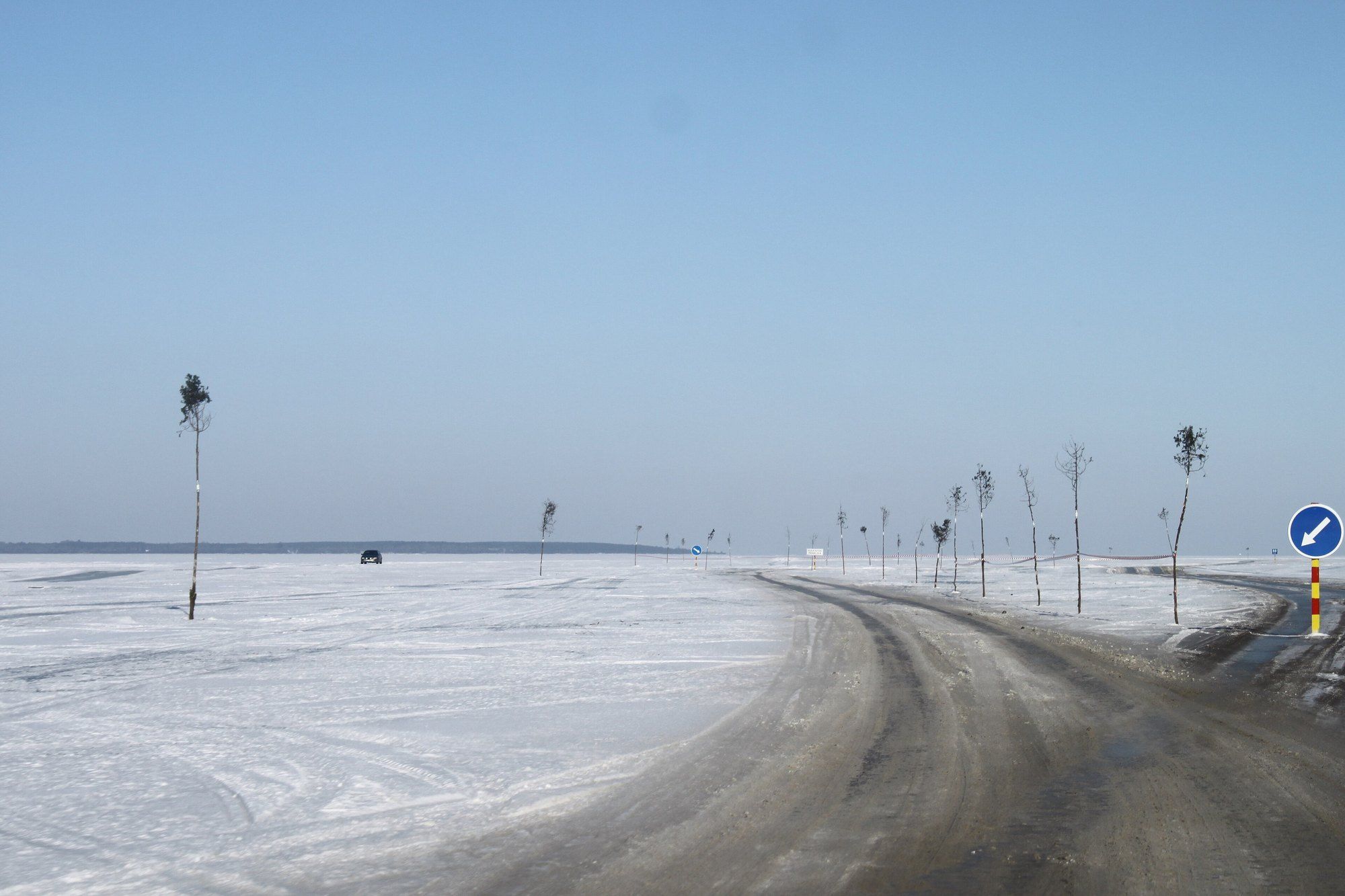
On the morning of 8 February 2026, at nine o’clock, the Estonian Transport Administration opened a road that had not been there a week earlier. It ran 17 kilometres across the frozen sea between Tärkma on Hiiumaa and Triigi on Saaremaa, the country’s two largest islands. By early afternoon, ERR News reported, about 20 cars were waiting to cross on the Hiiumaa side and about 60 on the Saaremaa side.
Less than three weeks earlier, the same agency had said there would be no ice roads at all that winter. That is the first thing to understand about Estonia’s ice roads, the jääteed. They are real public roads, with signs, rules and patrols, but they exist only when the sea and the budget both allow it, and in most recent winters neither has.
Seven routes on paper
The Transport Administration (Transpordiamet) lists seven official ice roads: Heltermaa–Rohuküla, Kuivastu–Virtsu, Sõru–Triigi, Rohuküla–Sviby, Lao–Kihnu, Haapsalu–Noarootsi and Laaksaare–Piirissaare. In plain geography, that is the mainland to Hiiumaa, the Virtsu–Kuivastu crossing that carries traffic between the mainland, Muhu and Saaremaa, Hiiumaa to Saaremaa, the mainland to Vormsi, the mainland to Kihnu in the Gulf of Riga, a short cut across Haapsalu Bay to the Noarootsi peninsula, and, far to the east, the small island of Piirissaar on Lake Peipus.
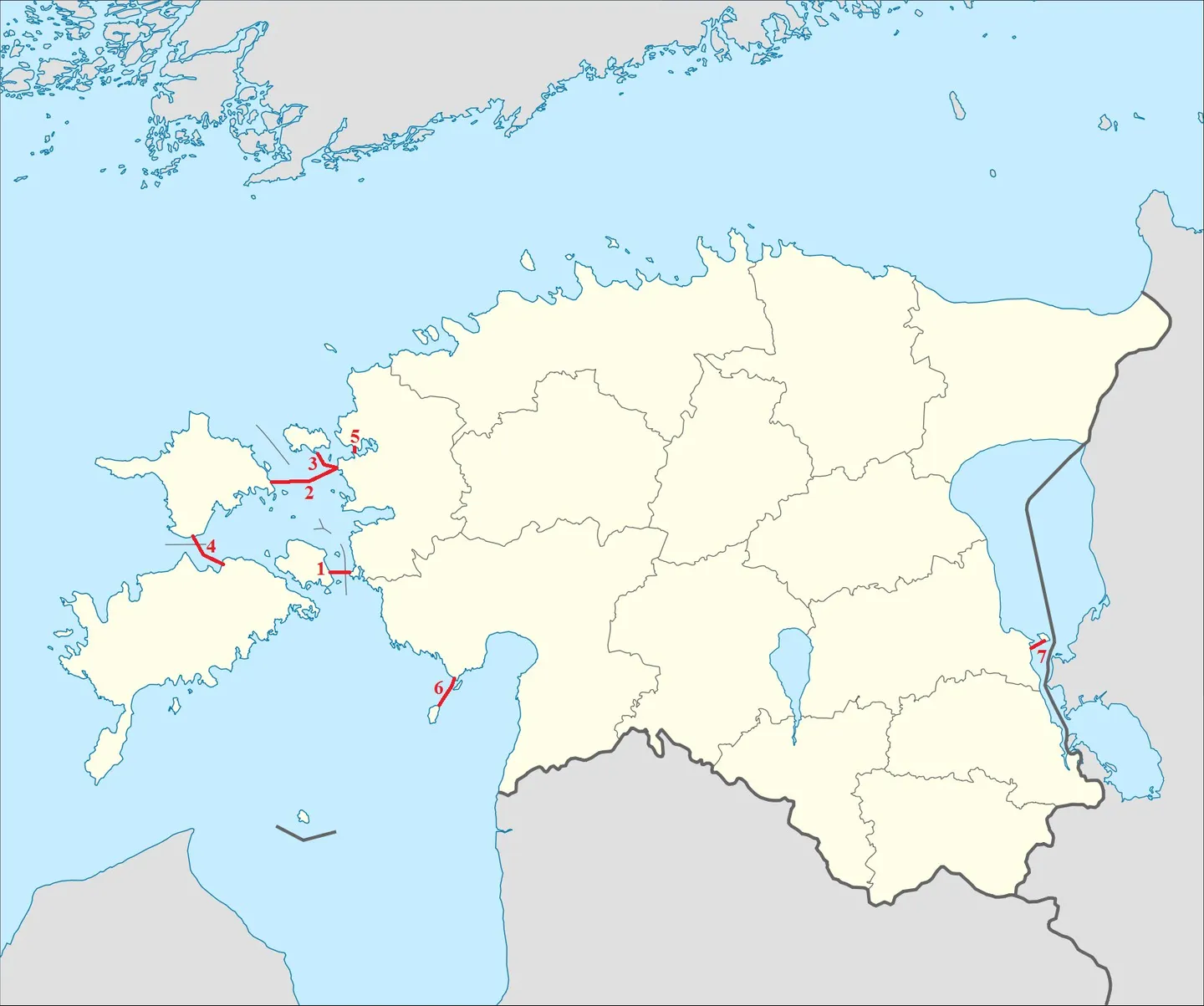
The agency does not build them itself. It orders each road from a contractor, which surveys the ice, builds and maintains the track, manages the traffic, patrols it and reports on its condition; the agency supervises the contract. In 2026 the contractor was Verston Eesti OÜ.
The longest of the seven is the crossing from Rohuküla on the mainland to Heltermaa on Hiiumaa. When Hiiu Teed OÜ, which had built and maintained it since December 2002, opened it in March 2011, it measured 25.6 km, and its parent company Nordecon called it the longest ice road for public use in Europe. Its length depends on the ice: over the years it has been anywhere between 25 and 29 km, the company said.
Some winters, not most
A list of seven routes gives the wrong impression. The roads open only when the ice is good enough, and even in a cold winter not all of them do.
The winter of 2011 was a generous one: six ice roads opened, according to Postimees. In 2013 there were three, to Kihnu (12 km), to Vormsi (9.6 km) and across Haapsalu Bay to Noarootsi (3.9 km). In 2017 only the Peipus road and the Haapsalu–Noarootsi road opened, from 23 January and 10 February, and both closed again when cracks and a layer of water appeared on the ice; the road to Vormsi was marked out but never opened to vehicles. In March 2018 a 16.7 km road between Triigi and Tärkma became the fourth ice road of that winter, while the Road Administration said it would not open Heltermaa–Rohuküla, Lao–Kihnu or Virtsu–Kuivastu at all.
After that the ice roads largely stopped. The Peipus road to Piirissaar ran in 2019 and again in February 2021, when an 8 km track opened with a two-tonne limit and a 30 km/h limit on bumpy ice; ERR counted more than 200 car trips in its first two days. On the sea, nothing. In January 2026, Hannes Vaidla, head of the Transport Administration’s western region, told ERR that the agency had no budget for ice roads, that the weather would not allow one anyway, and that the need had changed: all the ferries are now ice-class and run year-round.
Then the cold came. Sea ice and low water on the Rohuküla–Heltermaa route disrupted the ferries, residents had already driven dozens of cars over the frozen Soela Strait on their own, and the state paid for an official road. ERR put the cost at around €120,000.
How a road is made
Before anyone drives on it, the ice is drilled. On the Hiiumaa–Saaremaa road in 2026, engineers drilled again and again to gauge the thickness and structure of the ice, ERR News reported, reading its colour, its fractures and signs of water moving underneath. The weak places were tested more densely. Surveys had found stretches where the ice was under 20 centimetres thick, which the agency regarded as dangerously thin. When the Haapsalu–Noarootsi road was being planned in 2018, ERR reported that the ice had to be at least 24 centimetres thick along the whole route.
Then the route is marked, from both shores at once. That took hundreds of markers and traffic-control equipment in 2026, with branches lining the track. Where the ice cracks, crews lay temporary bridges across the gap; the Hiiumaa–Saaremaa road had one at the 2.8 km mark on its opening day.
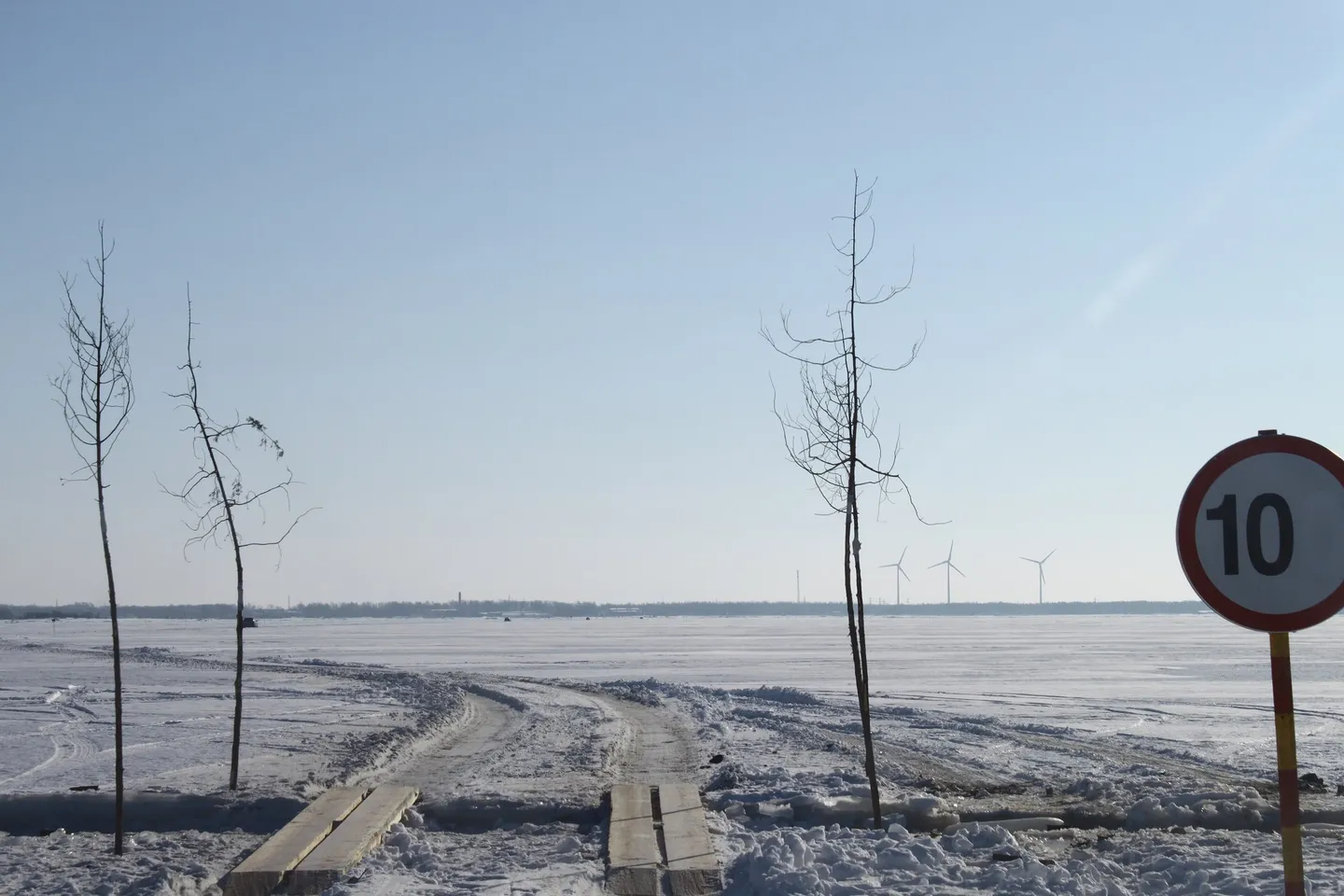
None of it is permanent. The Transport Administration checks the ice every morning and announces through its Traffic Management Centre which roads will open that day. A road can close at short notice if the weather or the ice changes, and the agency’s warning on its own page is blunt: do not drive onto an ice road that has not been officially opened.
The rules on the ice
The rules are posted on boards at each entry point, and the Transport Administration publishes them in full. They are short, and every one of them matters.
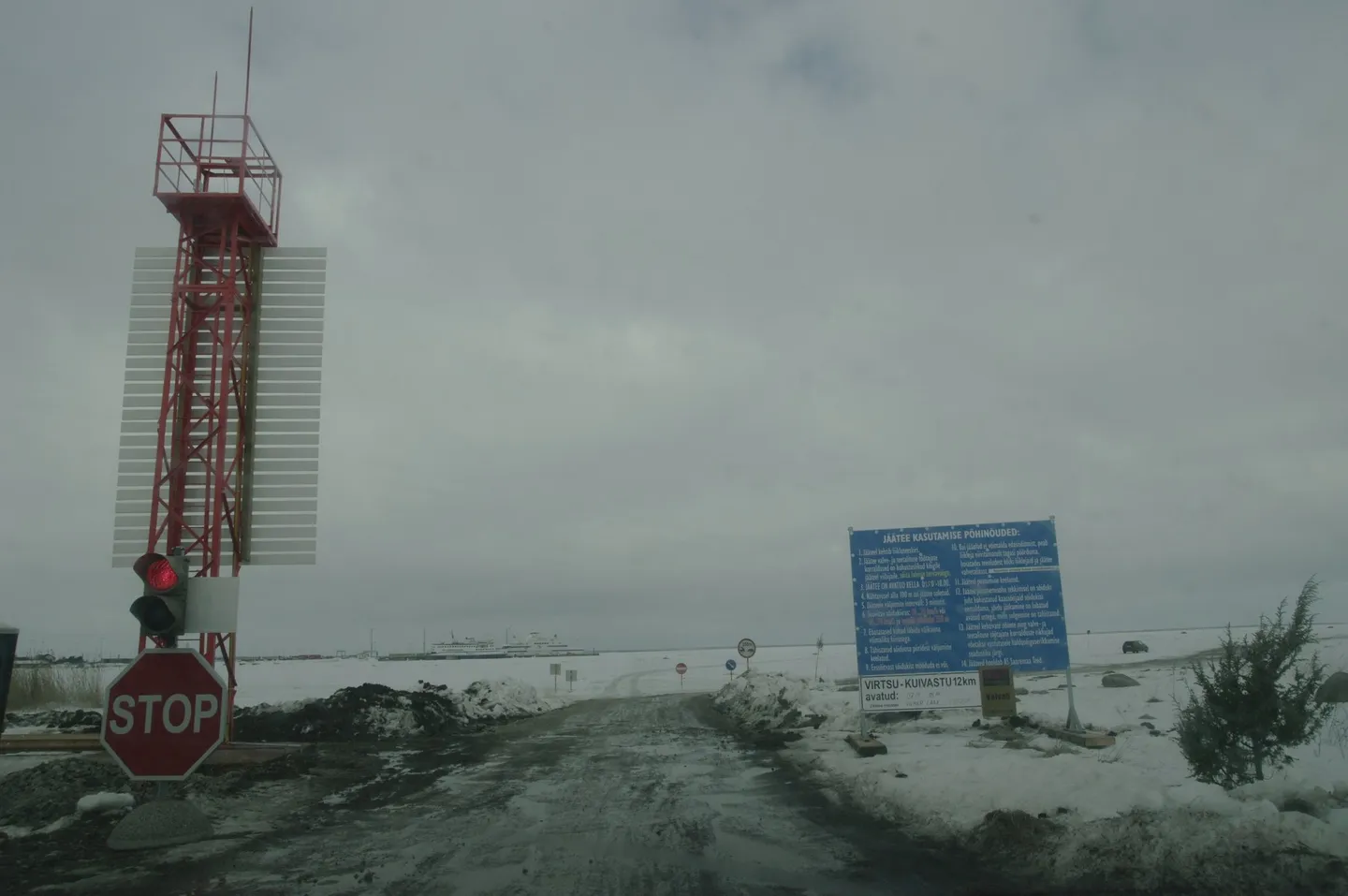
Daylight only. Ice roads are open only during the day, and they close when visibility drops below 300 metres. In 2026 the Hiiumaa–Saaremaa road was open from 8:30 to 17:00, and the last car could enter the ice at 16:30. Driving in a snowstorm, in fog or in the dark is prohibited.
Mind the speed band. The recommended speeds are up to 25 km/h, or 40 to 70 km/h. Between 25 and 40 km/h, the agency says, a moving car can set up a resonance wave in the ice that may break it. So you either crawl or you keep moving briskly, and you do not hover in between. Uneven sections are to be crossed slowly.
Keep your distance. Vehicles enter only at the marked entry points, at least two minutes apart, and keep at least 250 metres from the vehicle ahead. Overtaking is prohibited, and so is two-way traffic in the same lane. You may not leave the marked road.
Do not stop. Stopping on the ice road is prohibited. So is speeding.
Seat belts off. This is the rule that surprises visitors. On an Estonian ice road, seat belts must be unfastened, and the doors must be free to open easily.
Watch, and report. Save the phone number of the ice-road surveillance service from the board at the entry point before you drive on. Report dangerous changes in the ice, unmarked hazards or stopped vehicles to them at once. If the ice will not let you go on, turn back immediately and warn other drivers and the patrol.
Weight. The general rules page gives no single weight limit; it is set road by road. In 2026 all three sea roads, to Saaremaa, Kihnu and Vormsi, were for vehicles up to 2.5 tonnes, the same limit Postimees reported in 2013. The 2021 Peipus road allowed two tonnes.
The winter of 2026
The Hiiumaa–Saaremaa road was meant to run for up to 30 days. It lasted rather less. In mid-February it had to close when cracks formed as the sea level rose, and it reopened on a slightly changed route with small bridges laid over the cracks.
By then two more had opened. The 12 km road from Lao in Pärnu County to Kihnu opened on Saturday 14 February. The 10 km road to Vormsi opened the next day, the first official ice road there in years. On the sea, these were the first official ice roads since 2018; ERR put it as the first in eight years.
Vormsi showed what an ice road does to a small island. About 180 people live there in winter. With the ferry out of service for more than a week, the ice road brought in supplies and let residents drive to the mainland for fuel; it also brought visitors. On weekdays about 100 cars crossed, ERR News reported; one Saturday, more than 160 crossed within a couple of hours, and around 100 stickers were handed out to give residents priority in the queue. Not every visitor was ready for it. The 250-metre gap was not kept, speed limits were ignored, and some foreigners in low rental cars were turned back.
On 21 February all three roads closed for weather: water on the ice to Saaremaa, a snowstorm on the way to Kihnu, rising water and snow at Vormsi. The Hiiumaa–Saaremaa road was closed for good on 27 February, after 13 days in use. The last two closed at the start of March, when the access points went under seawater and the thaw began to eat the tracks. The final count, from the Transport Administration via ERR: 2,449 vehicles on the Saaremaa–Hiiumaa road, 2,104 to Kihnu over eight days, and 2,332 to Vormsi over ten.
There was no official road to Piirissaar. With about 30 permanent residents and the ice some 40 centimetres thick, the island managed with hovercraft trips run by the public transport centre and a spruce-marked track for ATVs and snowmobiles. Jarno Laur, the mayor of Tartu Parish, said the classic ice road had been more for satisfying the curiosity of people from the mainland.
Unofficial ice is not a road
Every winter that the sea freezes, people drive on it anyway. In 2026 the Transport Administration warned specifically against unofficial tracks, such as those to Vormsi, that nobody checks, and called driving on an ice road that has not been opened life-threatening. The official roads exist precisely because someone has drilled the ice that morning and someone is watching the track. Off it, nobody has.
Before you go
Do not plan a trip around one. Ice roads open only in some winters, often only for a week or two, and they can close within hours. In 2026 the agency’s own advice in January was that there would be none. If you are in western Estonia in a cold February, treat an open ice road as luck.
Check the live status. The Transport Administration announces openings each morning, and current status is shown on the ice road map of Tark Tee, its traffic information service. Its ice-roads page says plainly when the roads are closed for the season.
The ferry is the normal way across. The island ferries are ice-class and run year-round, according to the Transport Administration, and when an ice road is closed, that is how you cross. Ice can still disrupt them, as low water and sea ice did in 2026, so check the ferry operator before you set out.
Bring the right car. In 2026 the limit was 2.5 tonnes. Low cars struggled on rough ice, and some were sent back. Fill up before you leave the mainland; on Vormsi in 2026, fuel sometimes ran out.
Unbuckle, keep moving, keep your distance. Seat belts off, doors free, two minutes apart at the start, 250 metres on the ice, and either below 25 km/h or between 40 and 70. Do not stop, and do not go out on the ice at all unless the road is officially open.
Sources
- Transpordiamet (Estonian Transport Administration) — Ice roads
- Transpordiamet — Jääteed (Estonian version, updated 3 March 2026)
- Tark Tee — traffic information and ice road map
- ERR — Transpordiamet ei ava ka tänavu ühtegi jääteed (January 2026)
- ERR — Alexander Lott: Väinamere jääteed UNESCO kultuuripärandi kaitse alla (February 2026)
- ERR News — Ice road between Saaremaa and Hiiumaa to open in coming days (February 2026)
- ERR — AK. Nädal vaatas, kuidas käis Hiiumaa–Saaremaa jäätee rajamine (February 2026)
- ERR News — Gallery: Ice road opens between Estonia's biggest islands as cold snap continues (8 February 2026)
- ERR News — Behind the scenes of Estonia's newly opened Saaremaa–Hiiumaa ice road (February 2026)
- ERR — Galerii: transpordiamet avas laupäeval ametliku jäätee Kihnu (February 2026)
- ERR — Transpordiamet avab kõik kolm ametlikku jääteed (February 2026)
- ERR News — New ice road opens between Vormsi and mainland Estonia (February 2026)
- ERR News — Vormsi island's ice road tourism boost hindering local residents' access (February 2026)
- ERR — Transpordiamet sulges kõik ametlikud jääteed (February 2026)
- ERR — Saaremaa–Hiiumaa jäätee on selleks aastaks lõplikult suletud (February 2026)
- ERR News — Transport Administration closes ice roads as temperatures start to warm up (March 2026)
- ERR News — Hovercraft service opens on unofficial ice road on Lake Peipus (February 2026)
- ERR News — First ice road of winter opens on Peipsi Järv (February 2021)
- ERR News — Ice road opened connecting Saaremaa, Hiiumaa (March 2018)
- ERR — Haapsalu-Noarootsi vahele võib tulla jäätee (February 2018)
- ERR News — All ice roads in Estonia closed (February 2017)
- Postimees — Three ice roads open to traffic in Estonia (March 2013)
- Nordecon — Hiiu Teed OÜ constructs Europe's longest ice road (March 2011)
- ERR News — Virtsu-Kuivastu ferry running on schedule again after fault fixed (December 2023)
Every fact in this story comes from the sources above. Where they disagree, the text says so. Found a mistake? Write to hello@roadcutco.com.