Trollstigen: eleven hairpins up the Troll's Ladder
For centuries it was a path where cattle fell into the waterfall. The road was begun in 1916 and opened by the king in July 1936. Ninety years on, the mountain above it is the problem.
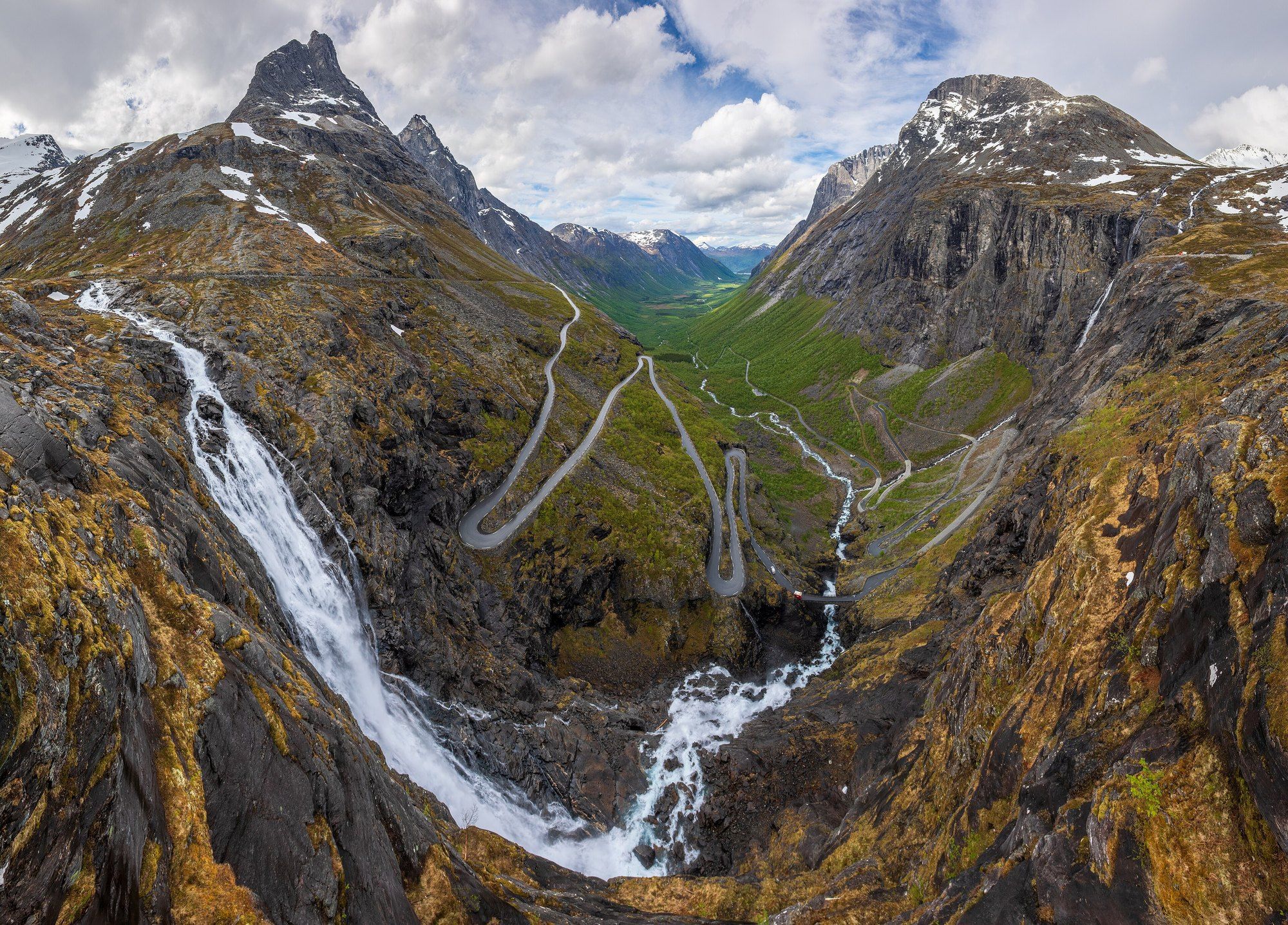
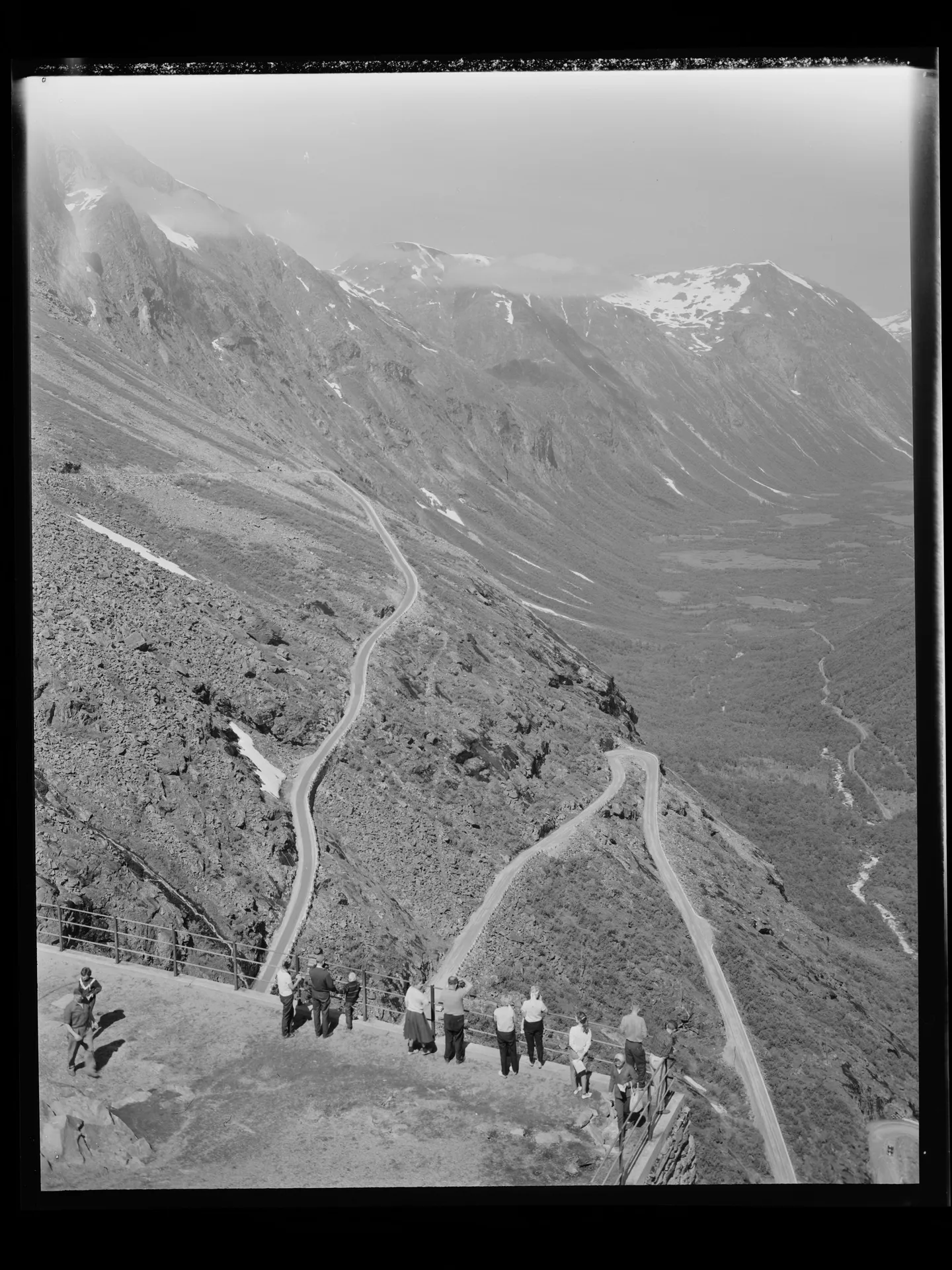
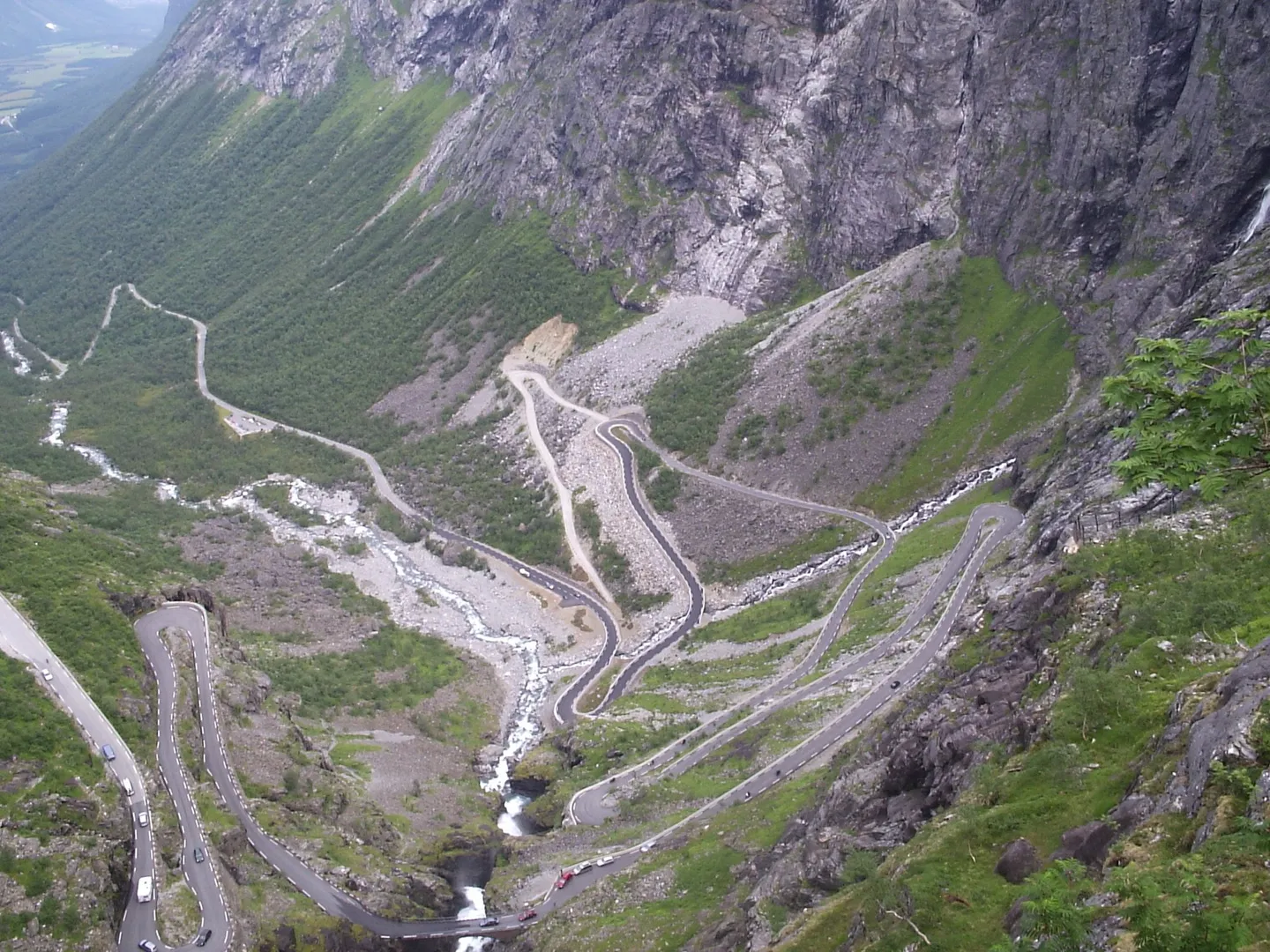
On 31 July 1936 a column of twenty-four cars set off from Valldal, on a new road over the mountain and down eleven hairpin bends into Isterdalen. King Haakon VII opened the new road that day, connecting Sunnmøre with Romsdal, and the ceremony itself was held at the Grand Hotel in Åndalsnes. The road was given the name Trollstigvegen — the road of the Troll’s Ladder.
Ninety years later, around a million people a year go up and down it by car or bus in a short summer season, according to the local newspaper Åndalsnes Avis. In recent years, though, the bigger story has been the rock above it.
A path where cattle fell
People were crossing this mountain long before there was a road. Åndalsnes Avis, in a history of the route, recalls that from 1533 to 1875 the Romsdal market was held at Devold, and that the steepest part of the crossing was known simply as “Stigen” — the ladder. There are many stories of cows that disappeared into Stigfossen, the paper says, and it was said to be a real feat to lead a horse down.
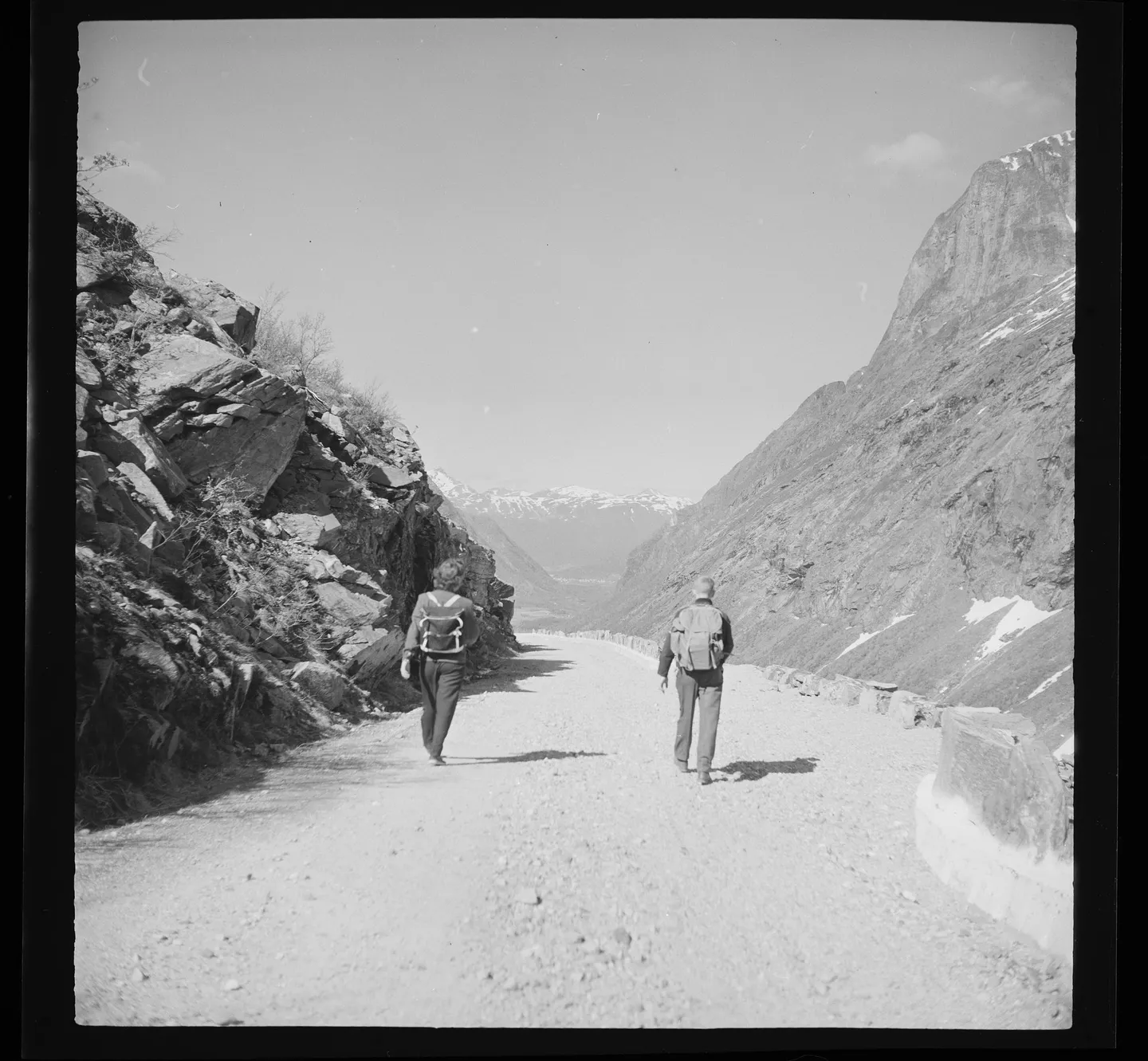
In 1893 the county authorities asked the Norwegian Public Roads Administration, Statens vegvesen, to look at the Stigen section. A bridleway, planned by the division engineer Nils Hovdenak, was begun in 1905, and by 1913 most of the old path had been improved to a riding road between 1.2 and 1.8 metres wide. Much of the original track is still there. Nasjonale turistveger, which runs Norway’s national scenic routes, says parts of the old pack trail remain visible and can still be walked; Åndalsnes Avis adds that some exposed sections are now secured with chains.
Twenty years to the top
On 20 June 1916 the Storting, Norway’s parliament, granted the first money for a road for vehicles: 250,000 kroner towards a 41-kilometre stretch from Holsbrua in Valldal to Soggebrua in Romsdalen. Store norske leksikon, the Norwegian national encyclopaedia, gives 1916 as the year work began.
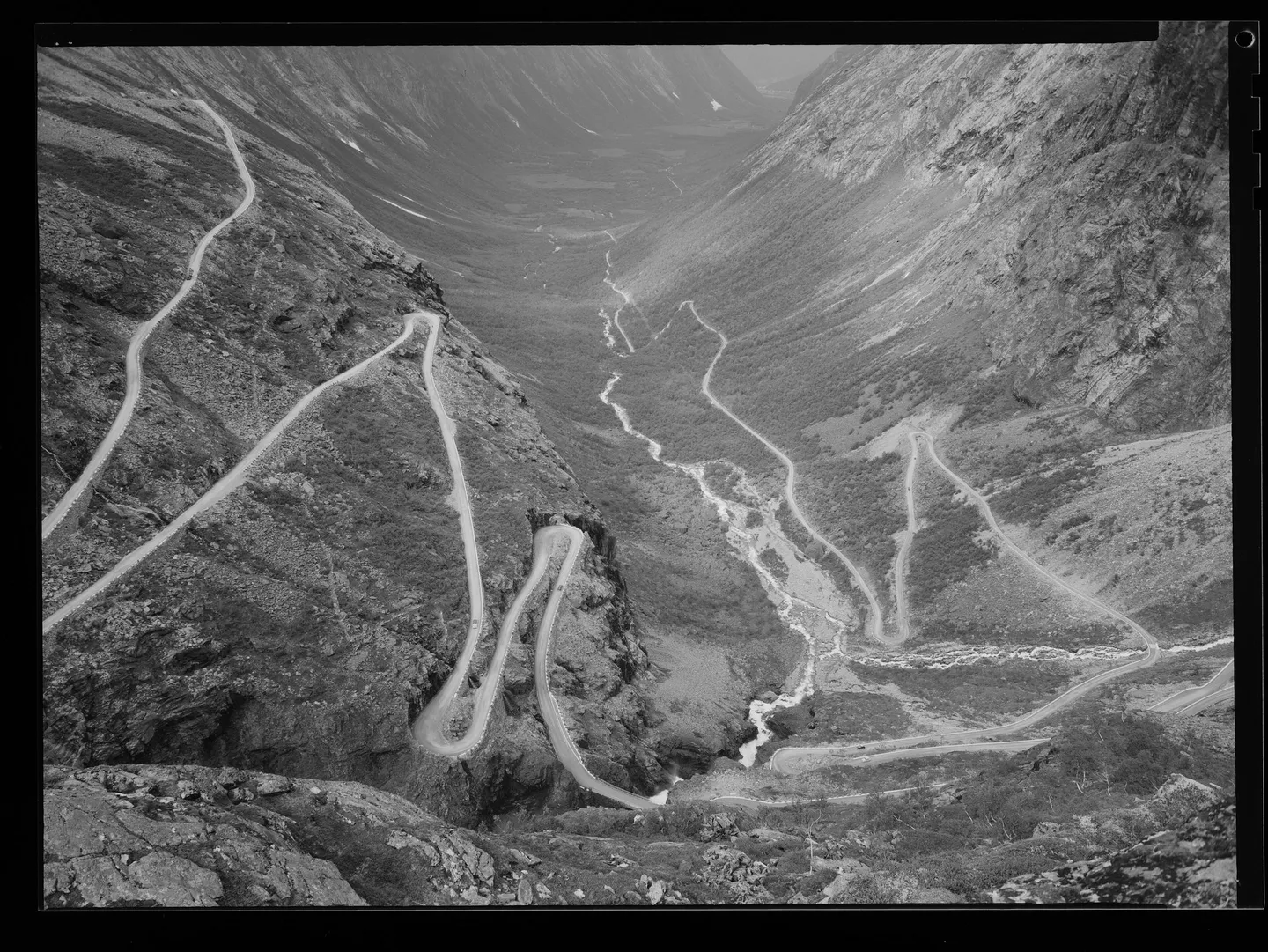
The politics took longer. Åndalsnes Avis reports that the debate did not end until 23 June 1925, when the county council of Møre decided to build the motor road — by 34 votes to 31. The road was to cost 1.8 million kroner, with the state paying 90 per cent.
What came out of it was narrow. When the road was finished in 1936, Åndalsnes Avis says, it was three to four metres wide; it has since been widened, in places to six metres, and has at least nineteen passing places. Most of it was cut and blasted into the mountain, and the hairpins turn on a diameter of about ten metres.
Eleven bends, eleven names
Each of the eleven hairpins has a name, taken from the people or work gangs who built the road. Åndalsnes Avis names three of them: Arthur Langdal, Martin Uri and Anton Fiva.
For more than eighty years every name was a man’s. In 2020 the eighth hairpin — the one directly above the bridge over the waterfall — was named Nikkasvingen, after Nikoline “Nikka” Myren Grønning, who had cooked for the road workers in the 1930s. She was 103. NRK reported that she was the first woman to have a bend on Trollstigen named after her, standing for all the camp cooks whose work had gone unrecognised. She told NRK the honour was for the women. In 2022 another bend was named after David Grøvdal, in recognition of 46 years spent maintaining the road.
Stigfossen and the bridge
Halfway up, the road crosses Stigfossen. Store norske leksikon puts the waterfall’s total drop at about 320 metres, nearly 180 of them sheer.
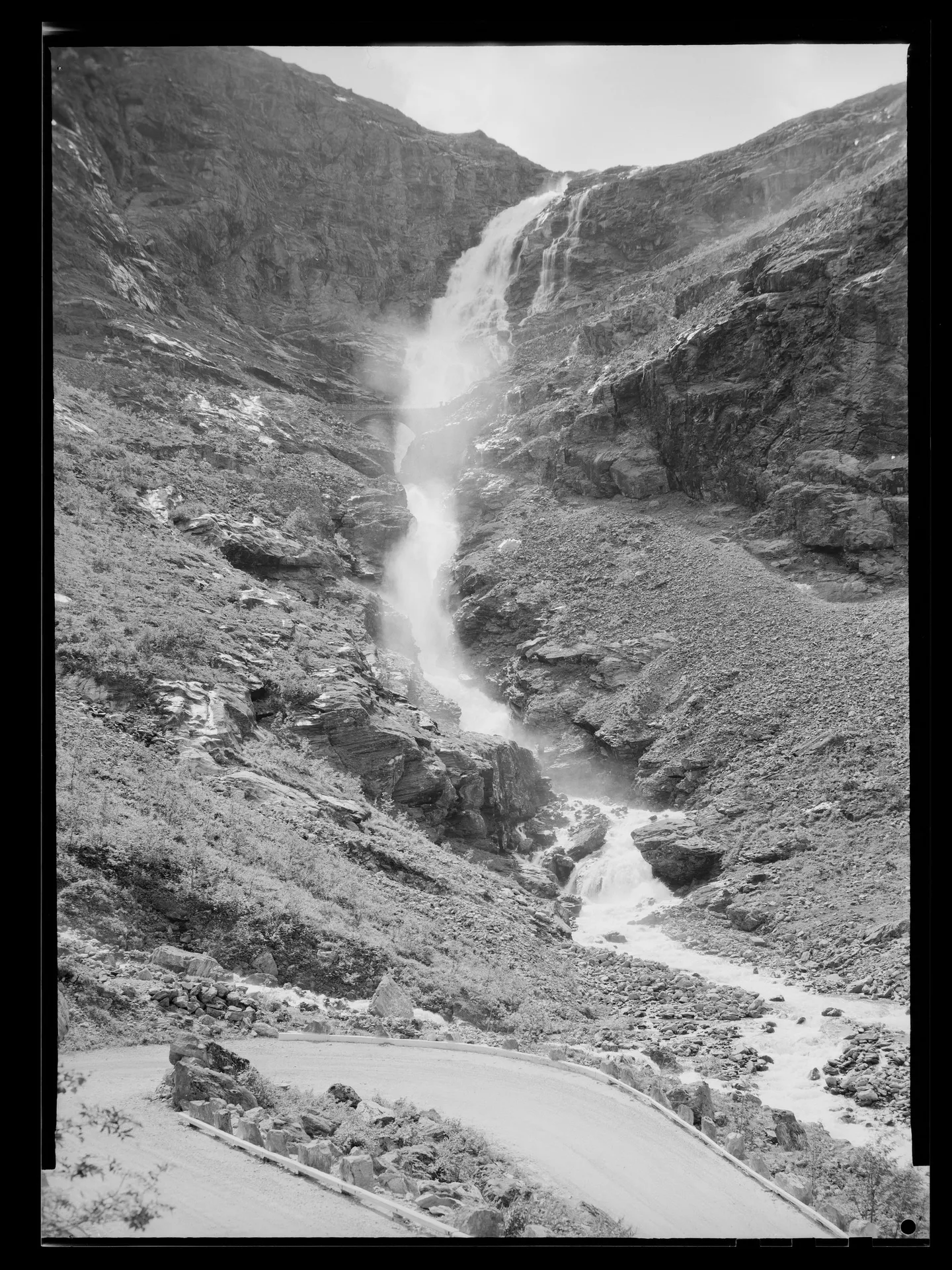
The road crosses it on Stigfossbrua, a stone arch bridge. Structurae, the international database of structures, dates it to 1935, the year before the road opened.
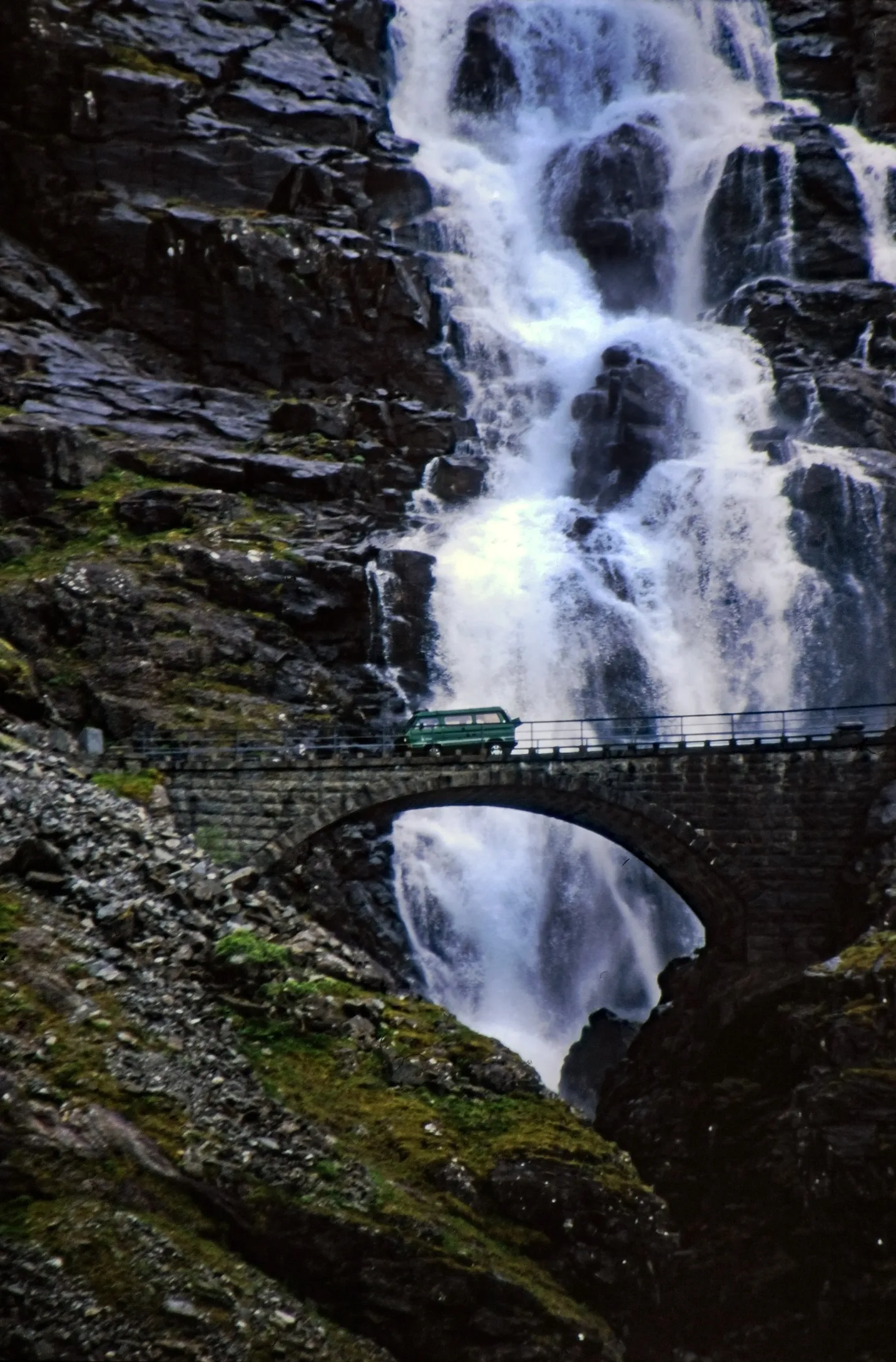
At the top, the road reaches the plateau and then its highest point, Alnesreset, at 868 metres according to Store norske leksikon.
A building for the edge
For decades the view was something people simply walked to the edge for.
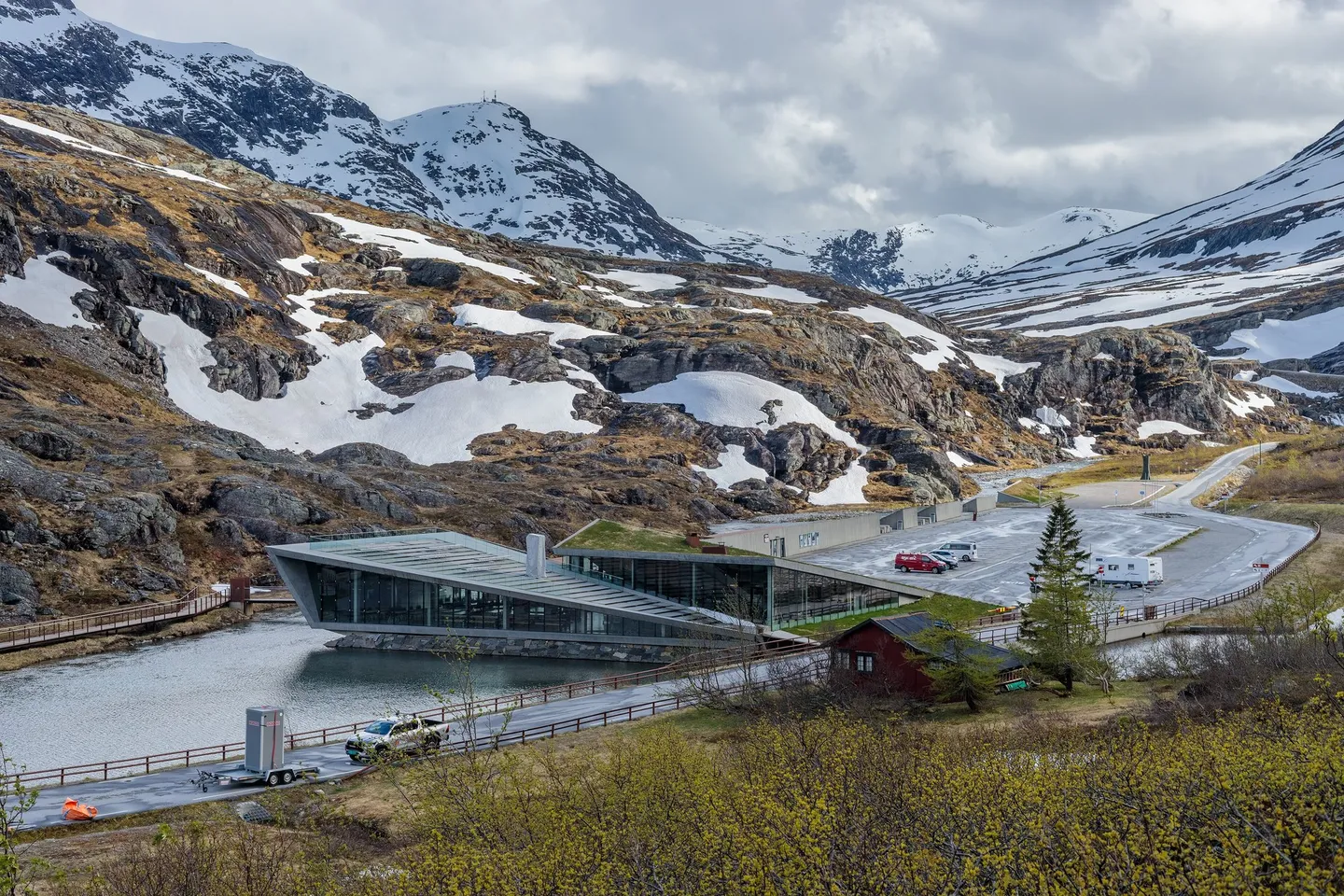
That changed with the national scenic route. In 2012 the plateau got a full set of buildings and platforms by the architects Reiulf Ramstad Arkitekter, with Multiconsult as landscape architect. Nasjonale turistveger describes a main building with a café and an information centre, and a second, mound-shaped one that houses service facilities, a kiosk and a souvenir shop — and also acts as a barrier against the river Istra when it runs high. The design magazine Wallpaper reported that the visitor centre was opening on the last weekend of June 2012.
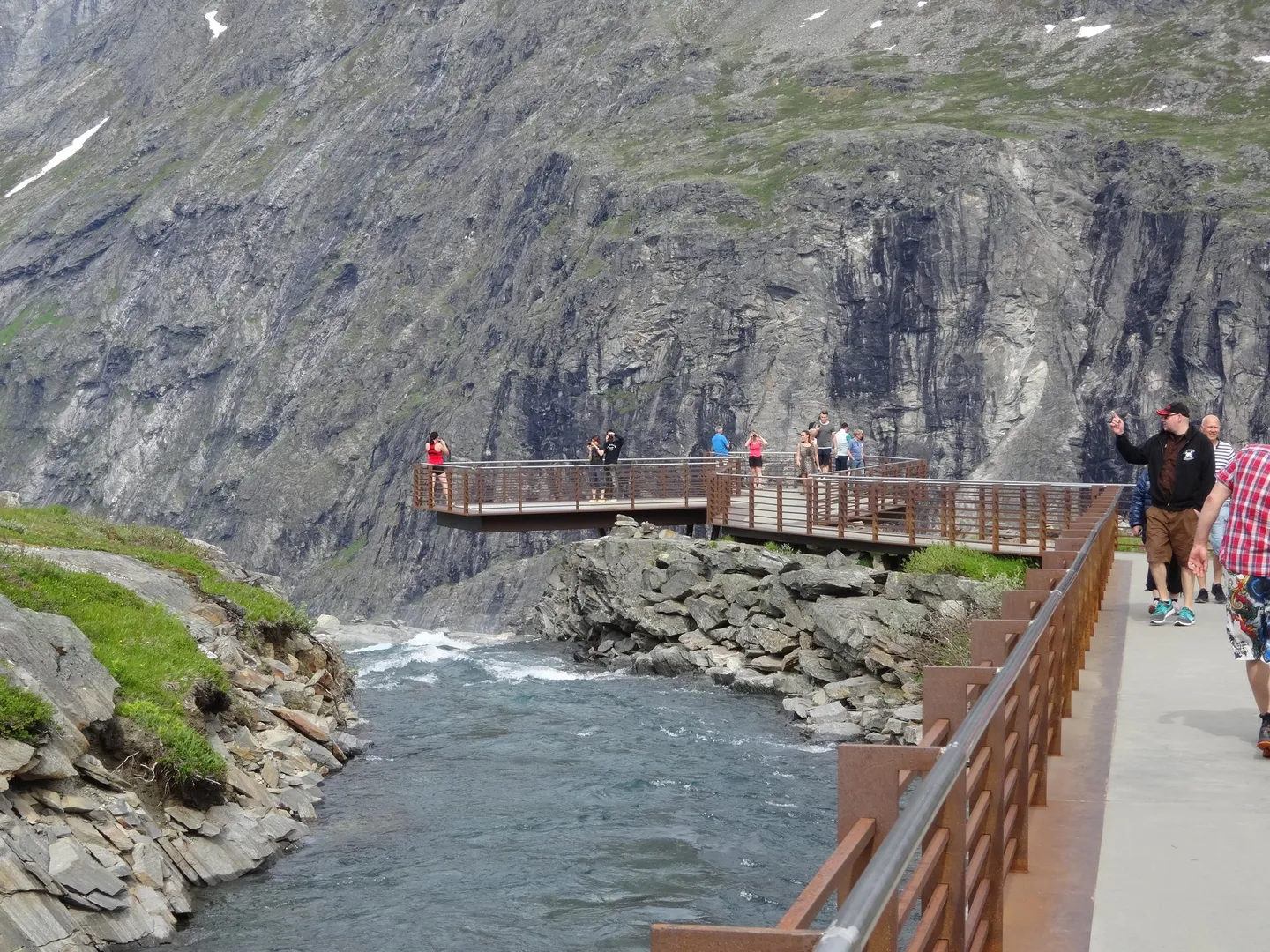
The main viewing platform juts out over an edge with a sheer drop of about 200 metres to the hairpins below, Nasjonale turistveger says, with viewing points for both the bold and the cautious. The materials are steel and concrete, chosen for the climate.
The climate did not entirely agree. At Easter 2022, NRK reported, a large avalanche came down from the mountain Bispen and hit the café on the plateau. When the county’s road crews arrived to clear the road after the winter, they found the building full of snow, with broken glass and furniture, and damage to the road and its guardrails. “Ski tracks inside the café are quite unusual,” the county’s construction manager, Roar Vikhagen, told NRK. The slide had come down where nobody had seen one before.
The rock above the road
In June 2024 the road had been open for only ten days when a stone came down the mountainside and went through the window of a car, landing on the passenger seat. On 20 June, after geologists had examined the site, the county closed Trollstigen for the rest of the year. The county road chief, Ole Jan Tønnesen, told NRK that they had to stop before someone lost their life. The plateau could still be reached from the Valldal side; the hairpins could not be driven.
The government put 40 million kroner into emergency rockfall protection, and the county, which owns the road, added another 10 million. Work began in July 2024 with a ditch to catch falling rock and continued with the cleaning and securing of a loose rock face at Kjelstadlinja. Trollstigen reopened at 10:00 on 11 July 2025, after more than a year. NRK put the cost of the work at 50 million kroner.
That was not the end of it. In the autumn of 2025 the rock cuttings were cleaned and inspected. On 16 September 2026 NRK reported that, from Monday 28 September, the road between Trollstigfoten in Isterdalen and the plateau would close from Monday to Friday, 07:00 to 18:00, for up to four weeks, so that bolts, rods and nets could be fitted to the rock cuttings west of Stigfossbrua. The road stays open at weekends, and the plateau can still be reached from Valldal.
Securing the road for good costs more. The county has studied permanent measures priced at 247 to 305 million kroner, depending on how long the road would be closed while the work is done. To pay for it, the county council voted on 21 April 2026, by 35 votes to 11, in favour of tolls on Trollstigen. The proposal NRK described in March 2026 was 150 kroner at each of two toll stations, at Øvstestølen and in Isterdalen — 300 kroner for a trip over — with collection starting around the summer of 2028 and running for about fifteen years.
Edmund Meyer runs the café and the campsite. For the road’s ninetieth anniversary, Romsdals Budstikke wrote that his grandfather started serving food up here and took part in opening Trollstigen with King Haakon VII; Meyer told the paper that everyone should have the chance to experience the road. When the road reopened in 2025 he told NRK he had had to take out loans, and expected two to three years to recover what had been lost.
Before you go
Season. Trollstigen is closed in winter. Fjord Norway says it is normally open from mid-May to October or November, depending on when winter returns. Nasjonale turistveger gives the earliest closing on its record as 5 October and the latest as 7 December, and the latest opening as 12 June. In 2026 the road opened at noon on 27 April, which NRK reported as the earliest opening on record; the previous earliest had been 8 May.
Autumn 2026. For up to four weeks from 28 September, the hairpins are closed on weekdays from 07:00 to 18:00 for rockfall work, and open in the evenings and at weekends. Check the road status with Statens vegvesen before you drive; the road can also close at short notice for bad weather.
Buses and long vehicles. Nasjonale turistveger says the length of buses on the Trollstigen section is restricted, with a maximum of 13.3 metres. The limit used to be 12.4 metres; in 2011, NRK reported, buses of up to 13.1 metres with a steered rear axle were allowed in on trial.
No toll — yet. Fjord Norway lists the road as toll-free. The county has voted for tolls, but NRK reported that collection could begin around the summer of 2028.
On the way to Geiranger. On the route from Bergen, Trollstigen comes between Åndalsnes and Valldal; from Valldal the road continues to the Linge–Eidsdal ferry and the Eagle Road down to the Geirangerfjord.
Drive it yourself
The day-by-day route, real costs and where to sleep are in the itinerary. The planner draws it on the map from wherever you start.
Sources
- Åndalsnes Avis — Vegen er målet: ferdsel i farlig fjell (Kulturminnet, 2024)
- Romsdals Budstikke — Trollstigen 90 år
- Store norske leksikon — Trollstigveien
- Store norske leksikon — Trollstigen
- Nasjonale turistveger — Geiranger–Trollstigen
- Nasjonale turistveger — Trollstigen rest area
- Nasjonale turistveger — Reiulf Ramstad Arkitekter
- Wallpaper — Trollstigen Visitor Centre by Reiulf Ramstad Architects (2012)
- Structurae — Stigfossbrua
- NRK — Nikka (103) er første kvinne som får Trollstigen-sving kalla opp etter seg (2020)
- NRK — Trollstigen kafé treft av snøras (2022)
- NRK — Trollstigen stengd ut året (2024)
- NRK — Trollstigen er stengd ut året grunna rasfare (2024)
- Møre og Romsdal fylkeskommune — Fv. 63 Trollstigen: strakstiltak skredsikring
- Møre og Romsdal fylkeskommune — Fv. 63 Trollstigen
- NRK — Trollstigen opna 11. juli etter å ha vore stengt for rassikring (2025)
- NRK — Rekordtidleg opning av turistikonet Trollstigen i 2026
- NRK — Det kan kome til å koste 300 kroner i bompengar (March 2026)
- NRK — Sier ja til bompenger i Trollstigen (April 2026)
- NRK — Stenger delar av vegen til Trollstigen (September 2026)
- NRK — Lange busser tillates i Trollstigen (2011)
- Fjord Norway — Information about the opening and closing of Trollstigen (2026)
Every fact in this story comes from the sources above. Where they disagree, the text says so. Found a mistake? Write to hello@roadcutco.com.