Vršič: the road Russian prisoners built over the Julian Alps
In 1915 the Austro-Hungarian army needed a winter supply road to the Soča front and built it with prisoners of war. Avalanches killed hundreds of them. A wooden chapel beside the road still remembers them.
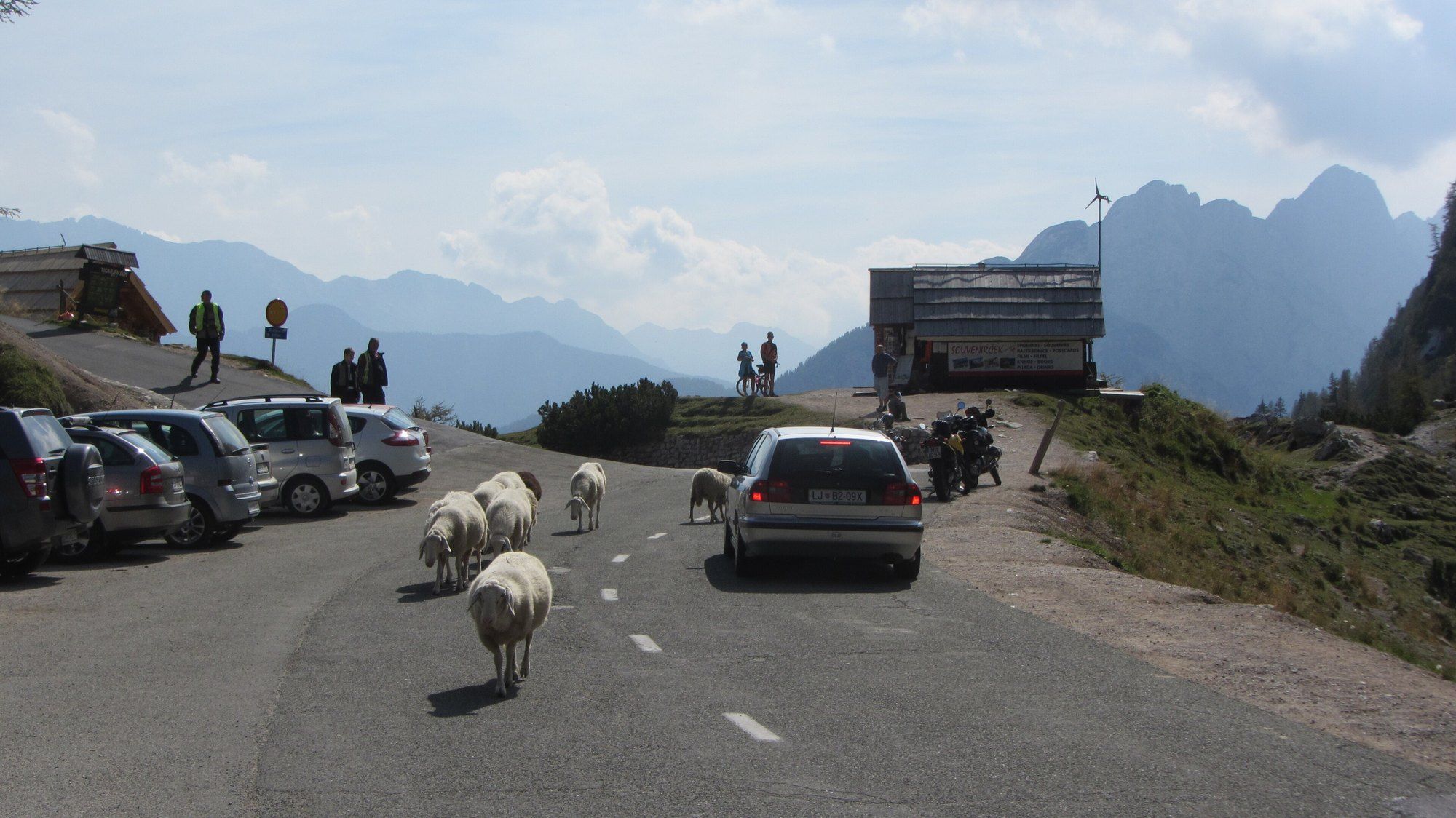
In May 1915 Italy declared war on Austria-Hungary, and a new front opened along the Soča river — the Isonzo in Italian and German. The Austro-Hungarian army needed a supply road over the Julian Alps to the valleys behind that front, and it needed one that could be kept open in winter. It built the road over the Vršič pass with prisoners of war.
The road they built is still the highest road pass in Slovenia, and still the way from Kranjska Gora to the Soča valley. On the way up, beside the road, stands a small wooden Orthodox chapel.
Built by prisoners
The Austrian military command in Villach brought in Russian prisoners of war to do the work — more than ten thousand of them, according to the chapter on the road in a 2018 study published by Slovenia’s Institute for the Protection of Cultural Heritage (ZVKDS). Triglav National Park gives “around 10,000”; an eyewitness writing in 1957 gave about 12,000; a minority of the literature says 3,000. They were not all Russian: the national park lists Russians, Ukrainians, Belarusians, Georgians, Italians, Serbs and Montenegrins among the workers.
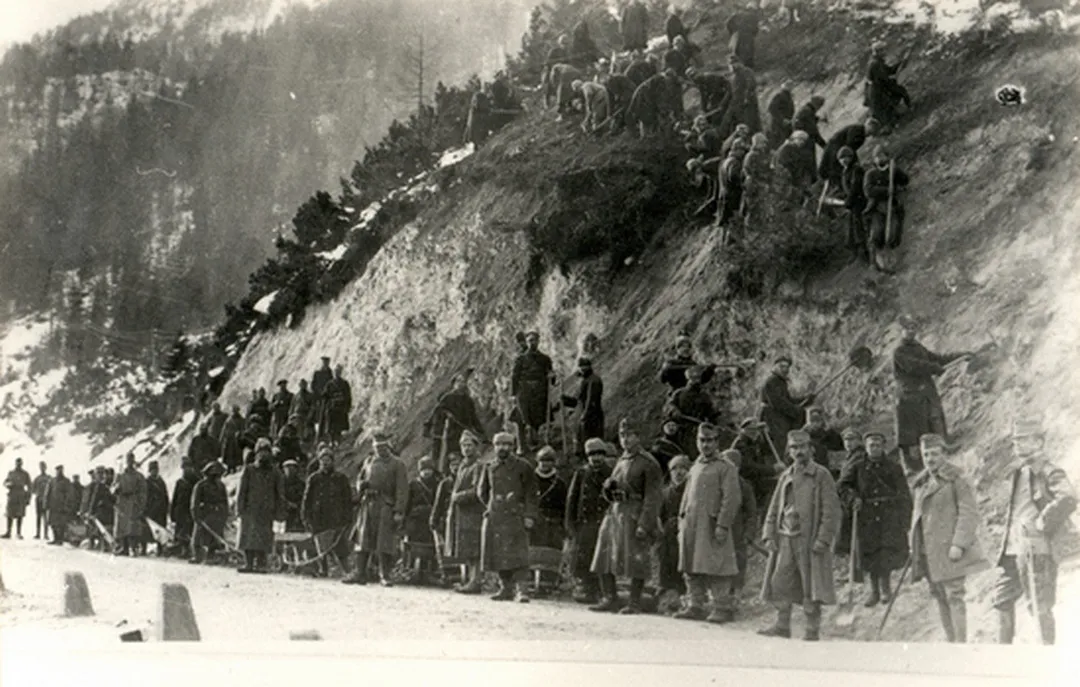
The road was built section by section from Kranjska Gora towards Trenta, in part along an existing steep track used for hauling timber. It was divided into twelve or thirteen sections, each with its own technical management. According to the ZVKDS study, a builder from Kranj, Josip Slavec, was responsible for the dressed-stone retaining walls, the bridges, the water troughs and the paved stretches. The hairpins were numbered from the start: the Austro-Hungarian war press office photographed “Serpentine Nr. 3” in 1915.
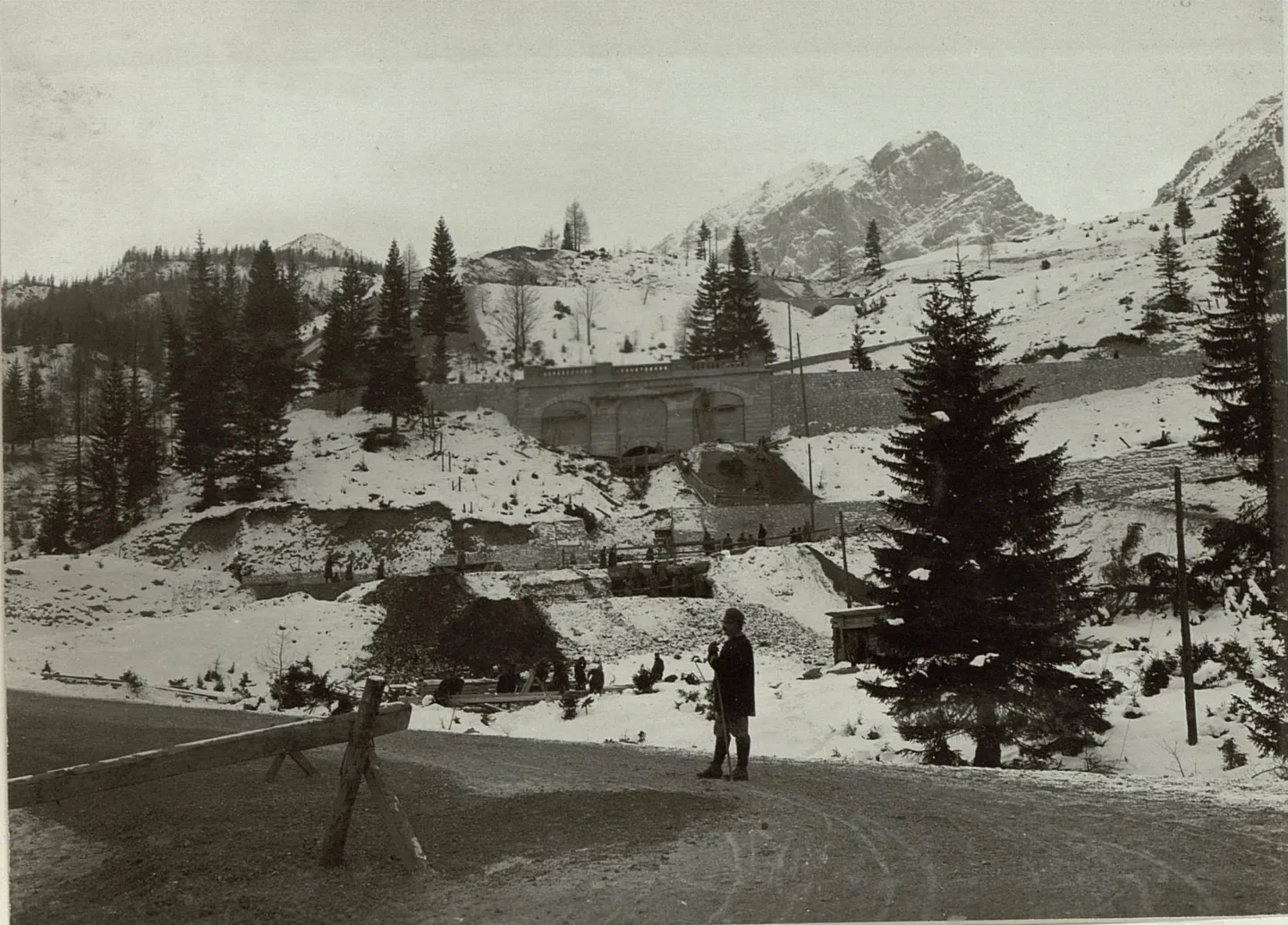
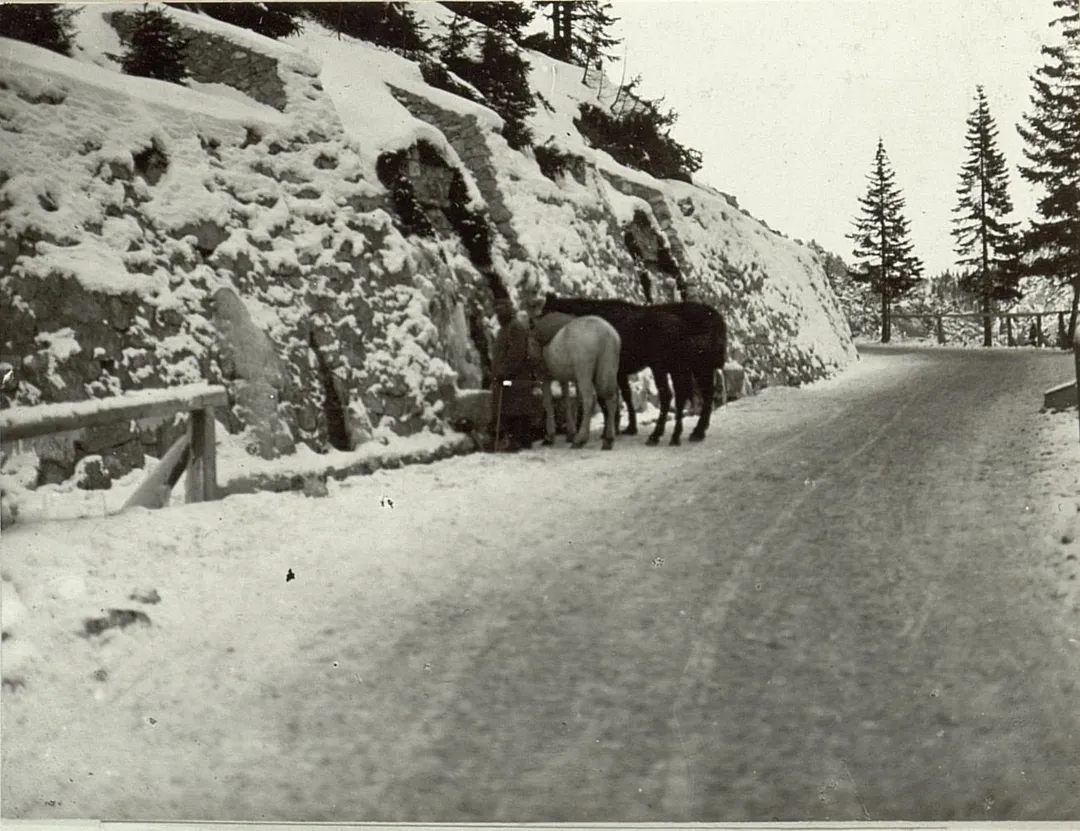
The plan was to name it the Erzherzog Eugen-Strasse, after Archduke Eugen, and to put up a monument to him on the pass. The avalanches stopped that. A concrete platform for the monument, according to the same eyewitness account, is still there.
March 1916
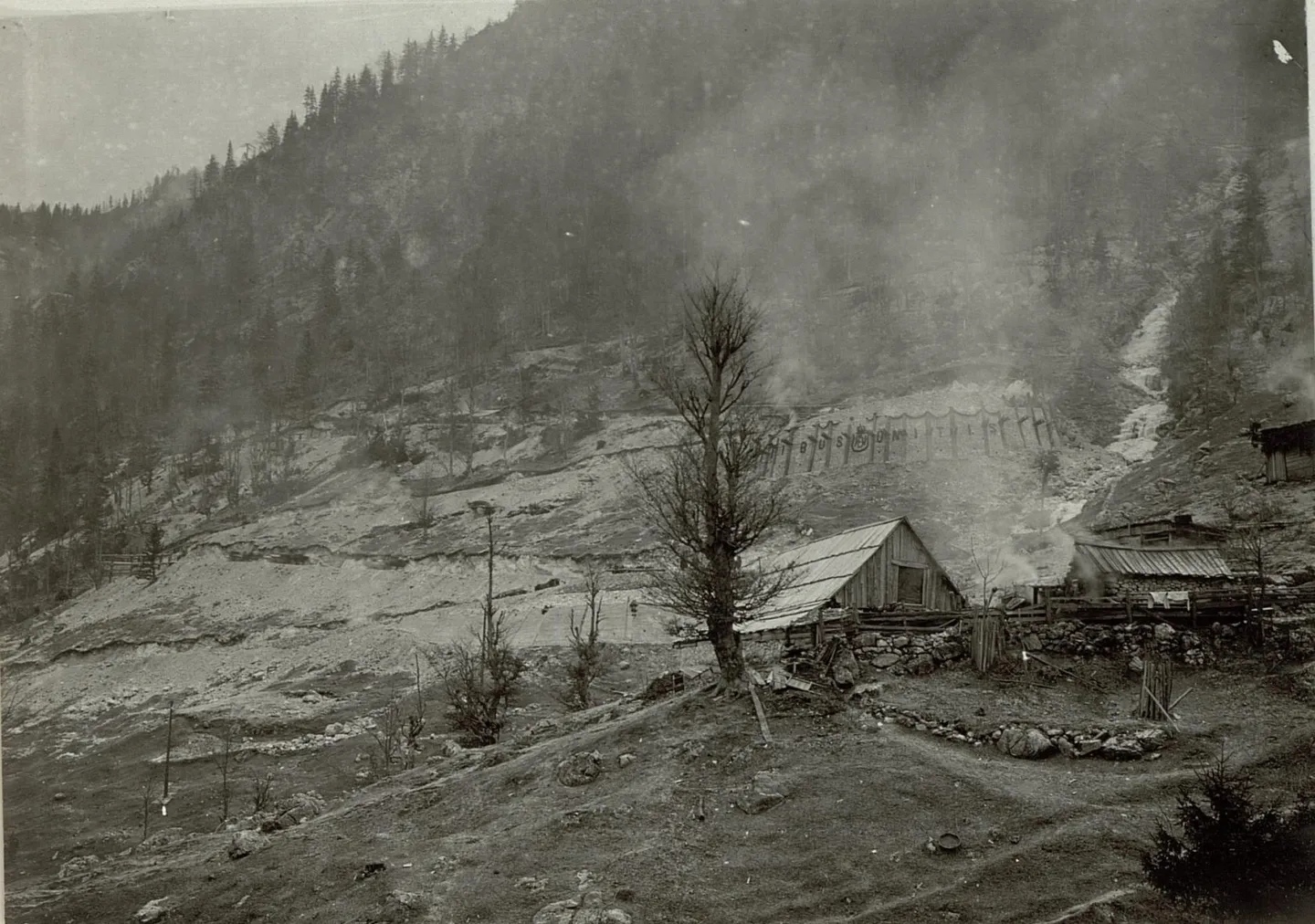
At about one in the afternoon on 8 March 1916, an avalanche came down from Mojstrovka. It crushed the roofs built to protect the road and buried the northern prisoners’ camp, which stood where the Erjavčeva koča mountain hut is today. Four days later, at 4:30 in the morning on 12 March, an earthquake set off several more avalanches.
How many people died is still not settled, and the numbers in circulation run from about a hundred to six hundred. The ZVKDS study sets out the versions side by side:
- The first military report, at 17:20 on 8 March, said three guards and about a hundred Russians had been buried. The next day’s report listed three dead, 5 guards and 67 Russians injured, and 12 guards and 71 Russians missing.
- The parish chronicle of Kranjska Gora gives 176 Russian prisoners and 40 guards.
- A count based on the parish priest Andrej Krajec, who buried the dead, gives 272 in all; the study calls it the most credible figure.
- Other published figures include 182 prisoners and 80 guards, 170 prisoners and 40 guards, and 300 prisoners and 10 guards. Local oral tradition says 600.
The author of that chapter concludes that the two March avalanches killed about two hundred people. Another avalanche, on 12 May 1917, buried the camp on the Trenta side and killed 30 prisoners and 6 guards; they were only dug out on 8 June.
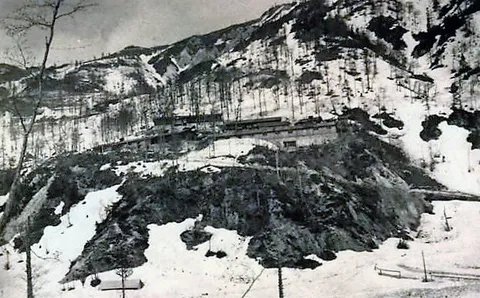
The historian Uroš Košir has counted at least 320 prisoners buried in the Vršič and Trenta area between 1915 and 1918 — 251 Russians, 48 Italians, 20 Serbs and one Montenegrin. Below Erjavčeva koča, nine group graves on four terraces hold 63 Russian prisoners killed on 8 March 1916.
The Russian Chapel
The chapel beside the road is dedicated to St Vladimir, built by the prisoners from wood, bark and stone. When it was built is itself disputed. The usual story is that the survivors built it in memory of the dead — the ZVKDS chapter dates it to 1917, and other sources to the summer of 1916. Triglav National Park and Košir’s research say it was already standing in January 1916, before the avalanche: the evidence is a photo-postcard of the almost finished chapel, posted on 4 February 1916.
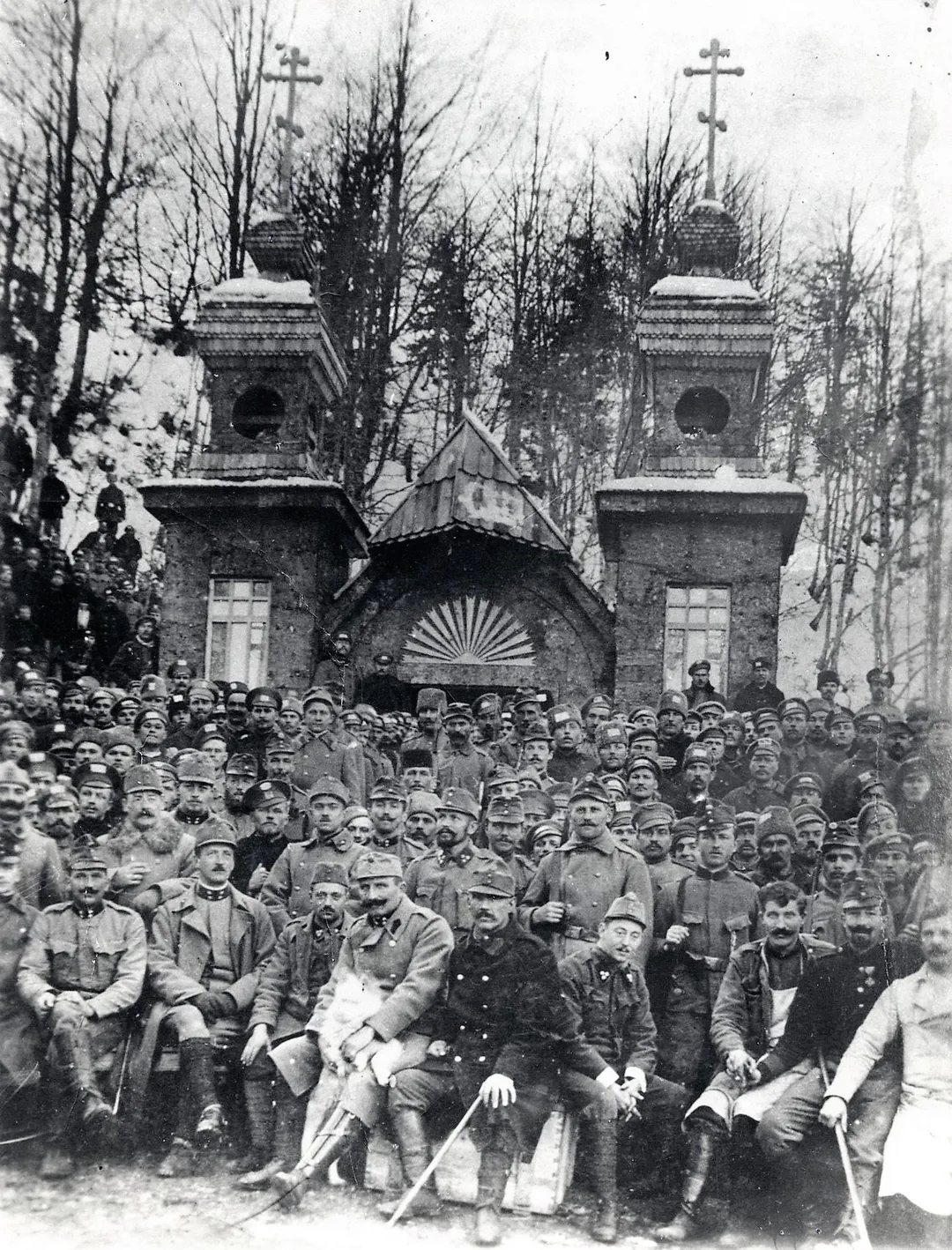
In 1937–38 a stone pyramid was built beside it, inscribed “To the sons of Russia”, and the remains of Russian prisoners from the war cemetery at Podlesje below Vitranc were moved into it. The chapel’s iconostasis was painted in 1956. It was damaged by the earthquake of 1998, restored in 2005–06, and has been a cultural monument of national importance since 2015.
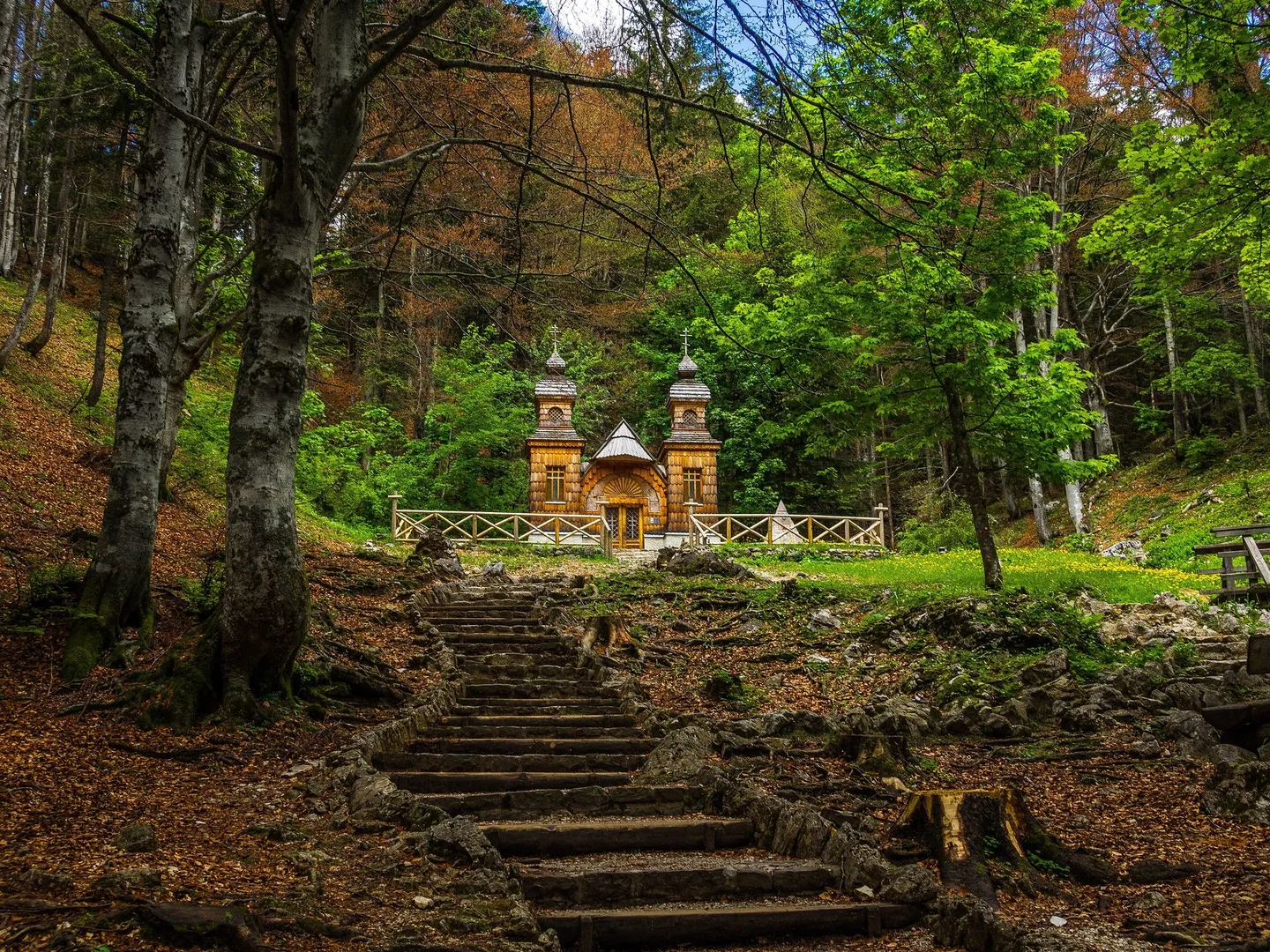
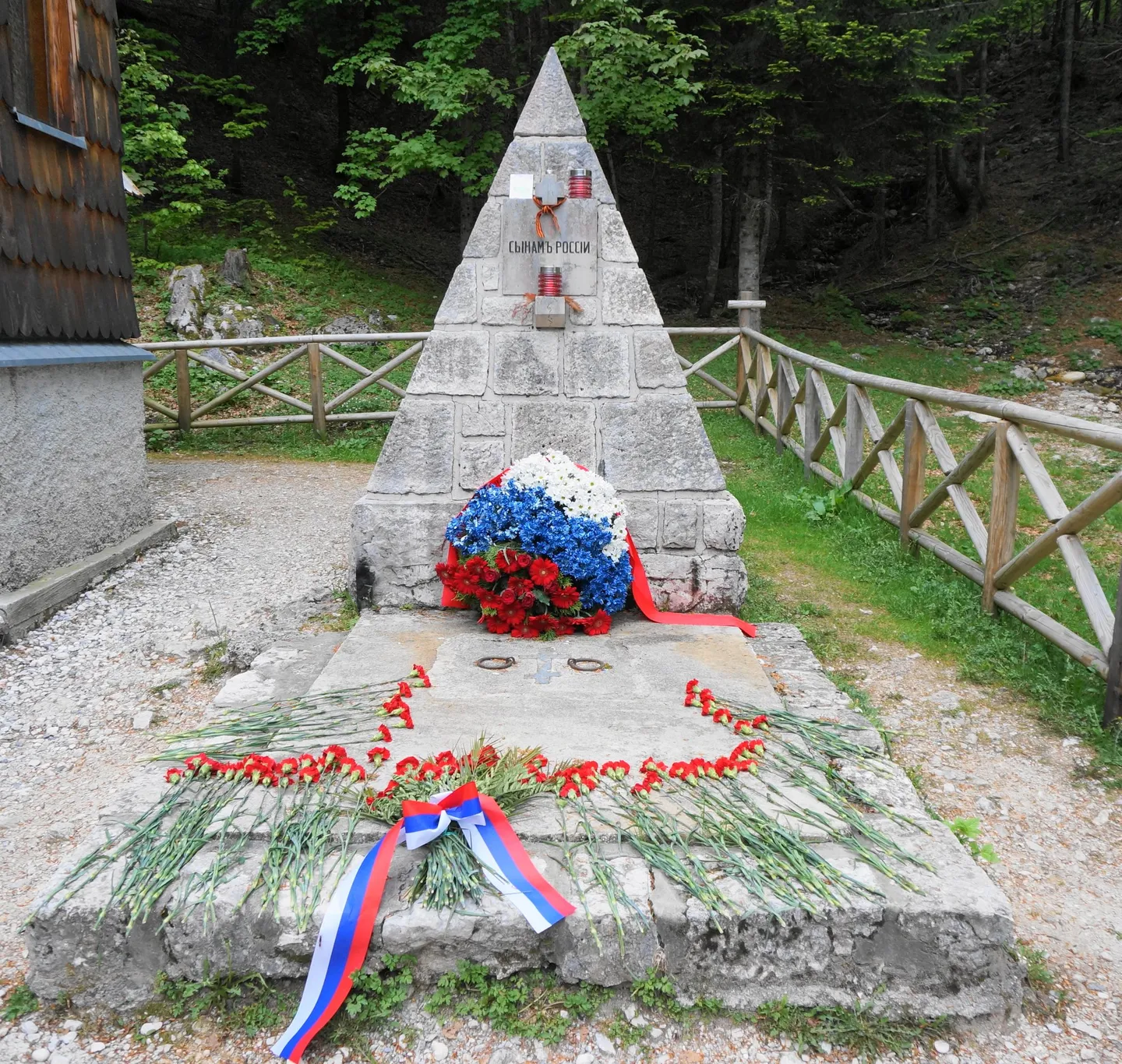
Russian émigrés began gathering at the chapel after the First World War. Today a ceremony there each year brings together Slovenian and Russian state and church representatives. The centenary in 2016 was attended by Vladimir Putin. On 25 July 2026, more than 420 people came to mark the chapel’s 110th anniversary. The road up from Kranjska Gora is known today as the Ruska cesta, the Russian Road.
The road today
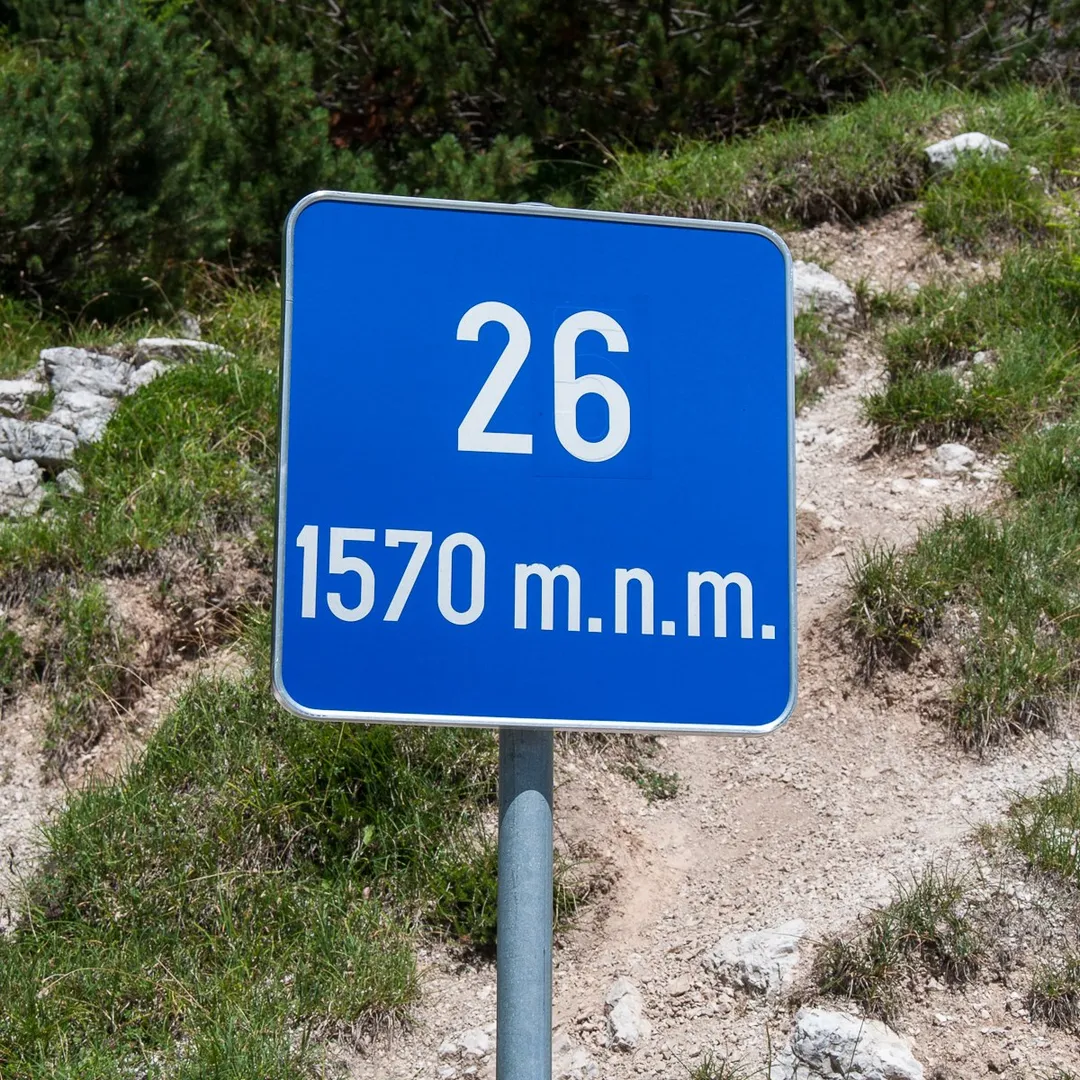
The pass is at 1,611 metres. There are 50 hairpins — 24 on the Kranjska Gora side and 26 on the Trenta side — and they are still numbered: the sign at hairpin 26 gives its altitude as 1,570 metres.
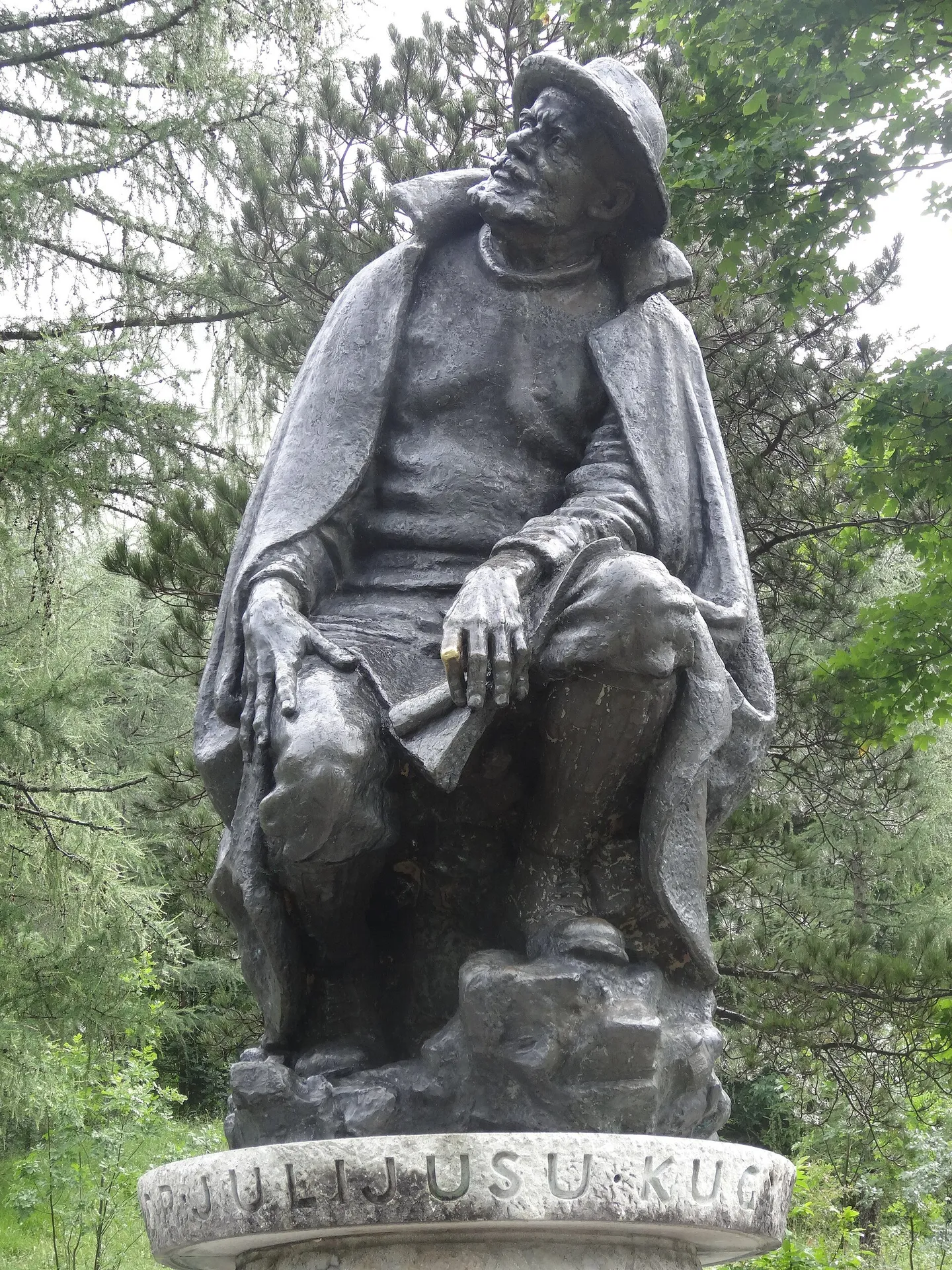
On the Trenta side, at hairpin 49, a bronze statue of the mountaineer and writer Julius Kugy (1858–1944) looks up at Jalovec. Further down, in Trenta, the Juliana alpine botanical garden was founded in 1926 by Albert Bois de Chesne, a landowner from Trieste. It is the oldest alpine garden in a natural setting in Slovenia, and it turns a hundred this year.
On the north face of Prisojnik, a rock formation looks like a woman’s face. Legend makes her the Ajdovska deklica, the Heathen Maiden, turned to stone for foretelling that a hunter’s son would shoot the legendary Goldhorn. She is best seen from the Poštarski dom hut, and from Erjavčeva koča.
Before you go
No parking at the top. From 15 June 2026 a new traffic regime applies: the lane that was used for parking at the summit is closed for good, and drivers are asked to park lower down, at the Russian Chapel or at Erjavčeva koča. A barrier in the valley counts the traffic; passing it is free.
Or take the bus. A free shuttle bus runs between Kranjska Gora and Bovec from 1 June to 30 September, more often in high summer.
Size limits. Vehicles over 7.5 tonnes are banned, and buses longer than 12.5 metres cannot use the pass.
Winter. The pass is not automatically closed in winter, but snow, avalanche risk or roadworks often restrict or close it; when the road is closed, cars can reach only as far as the Koča na Gozdu hut at 1,226 metres. Current conditions are on promet.si, the official Slovenian traffic portal.
Drive it yourself
The day-by-day route, real costs and where to sleep are in the itinerary. The planner draws it on the map from wherever you start.
Sources
- ZVKDS — Vojni ujetniki carske Rusije v prvi svetovni vojni na slovenskem ozemlju (Nadbath, Mlekuž, Boštjančič eds., 2018)
- Triglav National Park — The Russian Chapel
- The Walk of Peace — Russian Chapel
- Gorenjski glas — Resnica o Ruski kapelici (2025)
- Družina — Ruska kapela pod Vršičem (2025)
- Triglavska zakladnica — Russian Chapel
- Primorske novice — Pri Ruski kapelici pod Vršičem (2026)
- Kranjska Gora tourist board — Vršič pass and the Russian Road
- Soča Valley — Mountain pass Vršič (1611 m)
- Soča Valley — Monument to Dr Julius Kugy
- Triglav National Park — The Julius Kugy memorial
- Juliana Alpine Botanical Garden — About Juliana
- Julian Alps — Ajdovska deklica, the pagan girl
- Komunala Kranjska Gora — Prelaz Vršič
- Občina Bovec — new traffic regime on Vršič (2026)
- RTV SLO — Na Vršiču nov režim (2026)
Every fact in this story comes from the sources above. Where they disagree, the text says so. Found a mistake? Write to hello@roadcutco.com.