The Great Dolomite Road: built for soldiers and hotel guests, then a front line
Austria wanted it to move artillery, a Meran hotelier wanted it to bring motorists, and six years after it opened in 1909 the war between Italy and Austria-Hungary ran right across it.
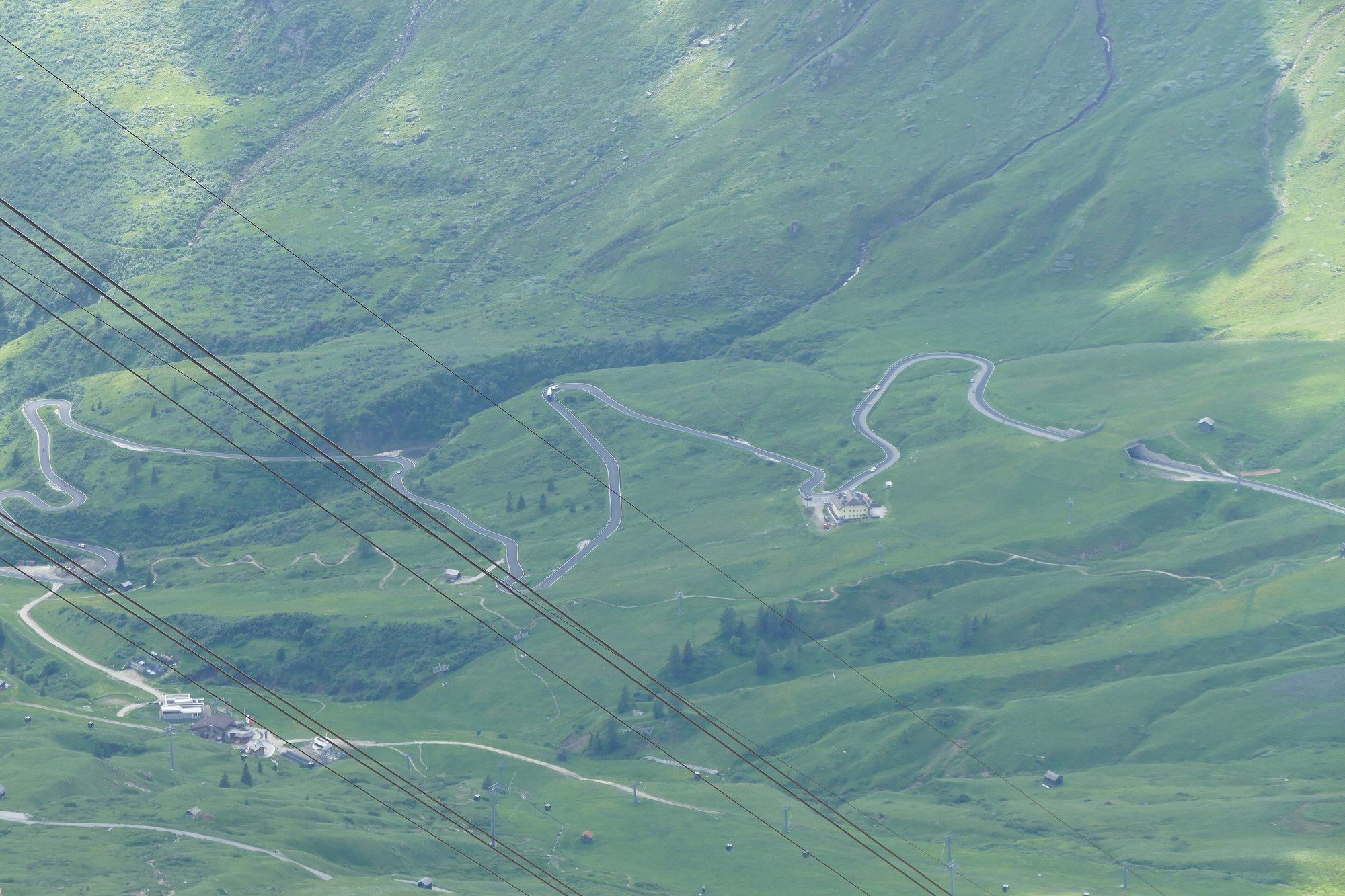
In September 1909 a party of guests was driven from Bozen to Cortina d’Ampezzo over a road that had only just been finished. A concert in Cortina was timed to the Alpenglühen, the evening light on the peaks. The ceremony the next morning began at eight, so that the autumn fog would have lifted by the time the guests arrived. The press had been invited, and the reports were glowing: “a comfortable, broad, engineered road”, 141 kilometres long, that entered “the magnificent Eggental gorge, a wild ravine of porphyry”.
The Great Dolomite Road — the Große Dolomitenstraße, the Grande Strada delle Dolomiti — was a piece of engineering, a military project and a hotel marketing campaign all at once. Six years later, part of it was a battlefield.
A soldier’s road first
The story starts with a lost war. In 1866 Austria gave up Venetia, and with it the only railway between Vienna and Bozen that ran on Austrian ground. The line that replaced it, through the Puster valley, was finished in 1871 and ran uncomfortably close to the new Italian border. The army wanted roads into the Dolomites from the north to protect it.
The historian Christoph Pöll of the University of Innsbruck, whose study of the road’s origins is the most detailed we found, reads the evidence in the road itself: its average gradients of six to seven per cent are gentle for a mountain road, and gentle is what you need if horses are to haul artillery and supplies up it.
And then a hotelier’s
The army wanted the road. The tourist trade made it happen. From the mid-1890s the Bozen and Meran sections of the German and Austrian Alpine Club campaigned for it, and at the end of the decade they were joined by a lobby around one man: Theodor Christomannos, a lawyer in Meran who built a luxury hotel at the Karerpass.
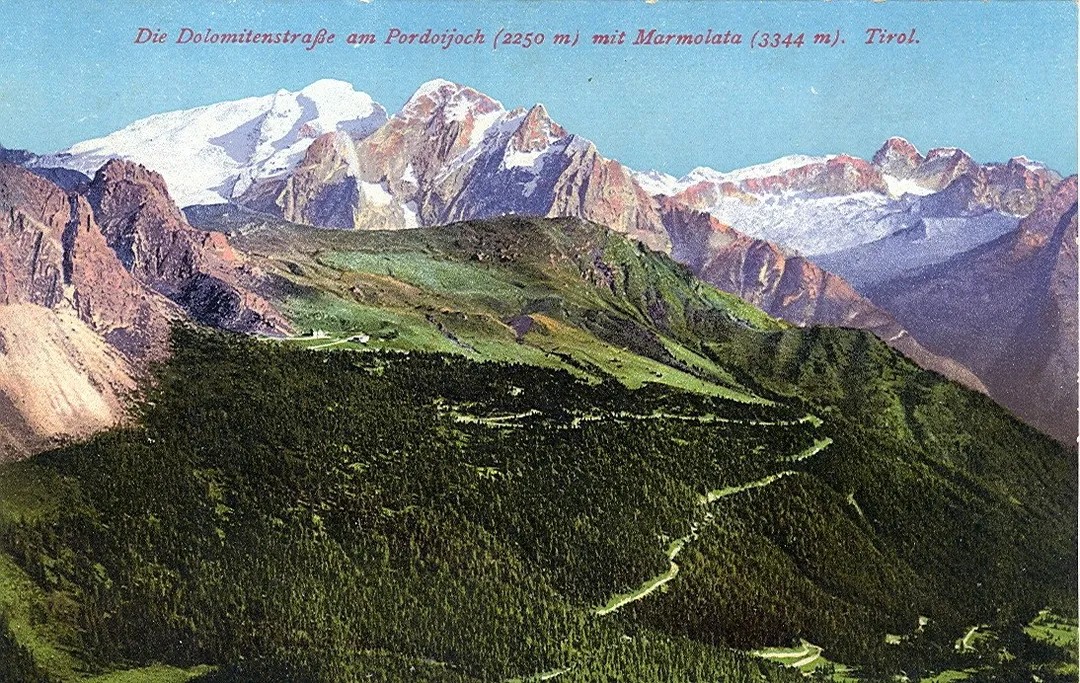
In 1897 the missing sections were added to the Tyrolean road-building programme. The Pordoi road was built from 1900 to 1905, the stretch from Buchenstein to Arabba from 1900 to 1904. The Falzarego, the hardest part, only opened to traffic in 1909, and with it the whole road.
When exactly is less certain than you would think. Pöll puts the opening ceremony on the morning of 11 September 1909, after an evening of celebrations in Cortina; other accounts give 13 September, which is the date one of the big newspaper reports appeared.
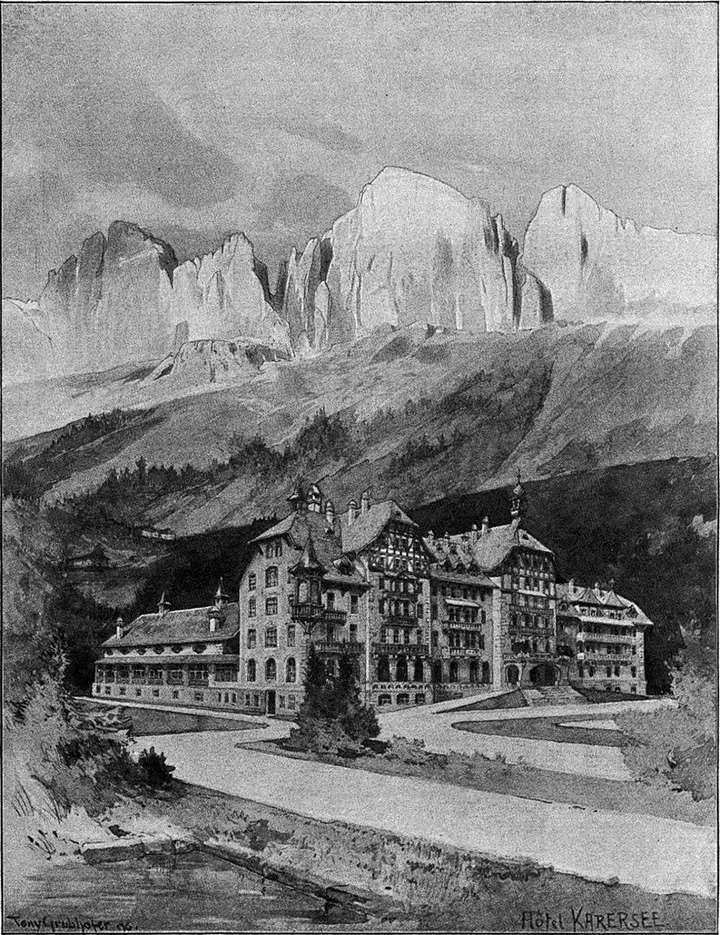
Christomannos’s hotel tells you what the road was for. By Pöll’s account, citing guidebooks of the day, the Karersee Hotel had 180 rooms with electric light and heating, lifts, a music room, a reading room, a billiard room and a wine cellar — and motor excursions to Bozen and Cortina could be booked at the desk. By 1910 Cortina’s main hotels had more than 430 beds, in a village of about a thousand people. The new hotels were built around the car: garages, workshops, fuel, and in Toblach, Bozen and Cortina you could hire a car with a chauffeur.
Not everyone drove. In 1910 the trip from Bozen to Cortina took about nine hours in the postal motor coach and about three days in a horse-drawn one. Guidebooks in 1914 were already telling motorists to go slowly, among other reasons because cattle were driven along the road.
Christomannos did not see much of what he had built. He died in 1911.
The front line
In 1915 the war between Italy and Austria-Hungary reached the Dolomites, and the Great Dolomite Road, in the words of the Lagazuoi open-air museum, “was overlapped at several points by the front line and thus used for war purposes”.
The Falzarego pass became no man’s land between the two front lines. The first Italian attacks came on 5 July 1915. The Italian advance stopped at the Valparola pass; on 20 October 1915 Alpini troops occupied a ledge halfway up the face of the Piccolo Lagazuoi, and the mountain war turned into a war underground. Five mines were blown on the Lagazuoi, four Austrian and one Italian. The Italian one went off on 20 June 1917, at the end of a tunnel almost a kilometre long.
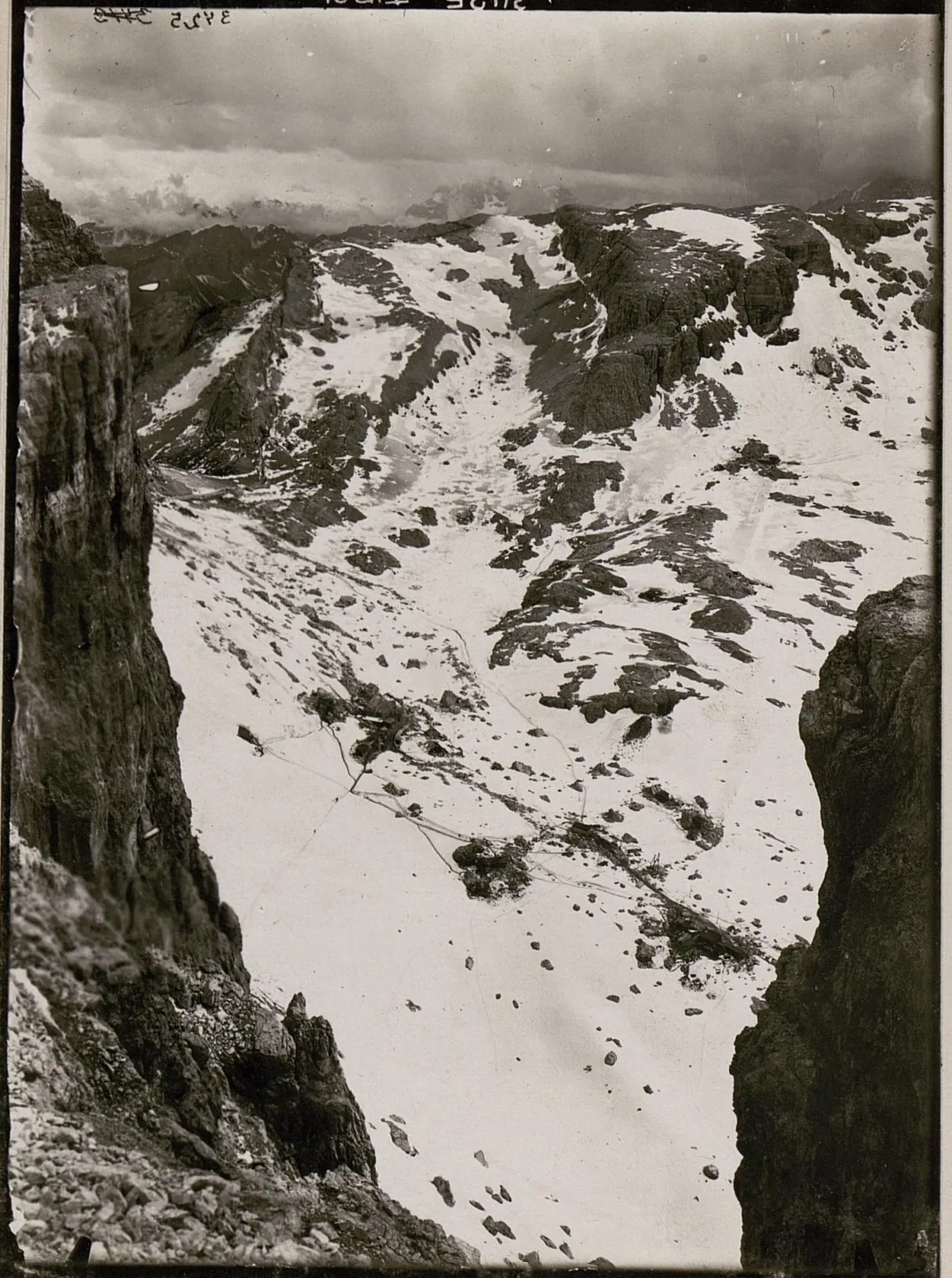
Nearby, the Col di Lana was fought over for months. On 18 April 1916, after the explosion of a 5,500-kilogram mine, Italian troops took the summit. The Great War Museum in Cortina gives the price from Italian war ministry records: 2,495 Italian soldiers killed, 1,018 missing or taken prisoner, 8,478 wounded. About 1,600 Austro-Hungarian and German soldiers died there too.
The Dolomite front ended not in battle but in retreat: after the defeat at Caporetto, the Italian army abandoned it on 1 November 1917.
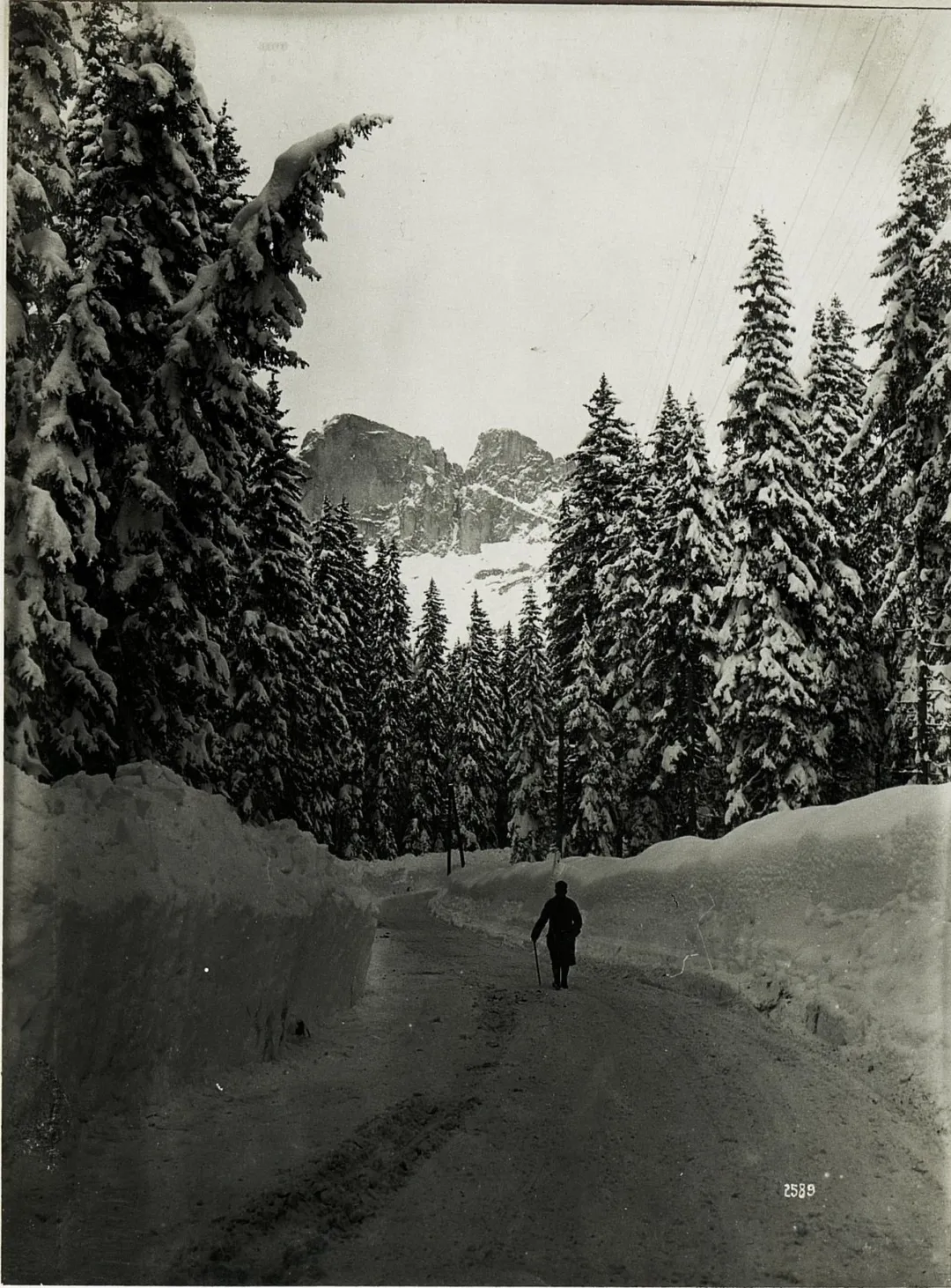
After the war, South Tyrol went to Italy. The road stayed, but, as Pöll notes, it slipped out of Austrian memory along with the luxury travel that had paid for it.
The road today
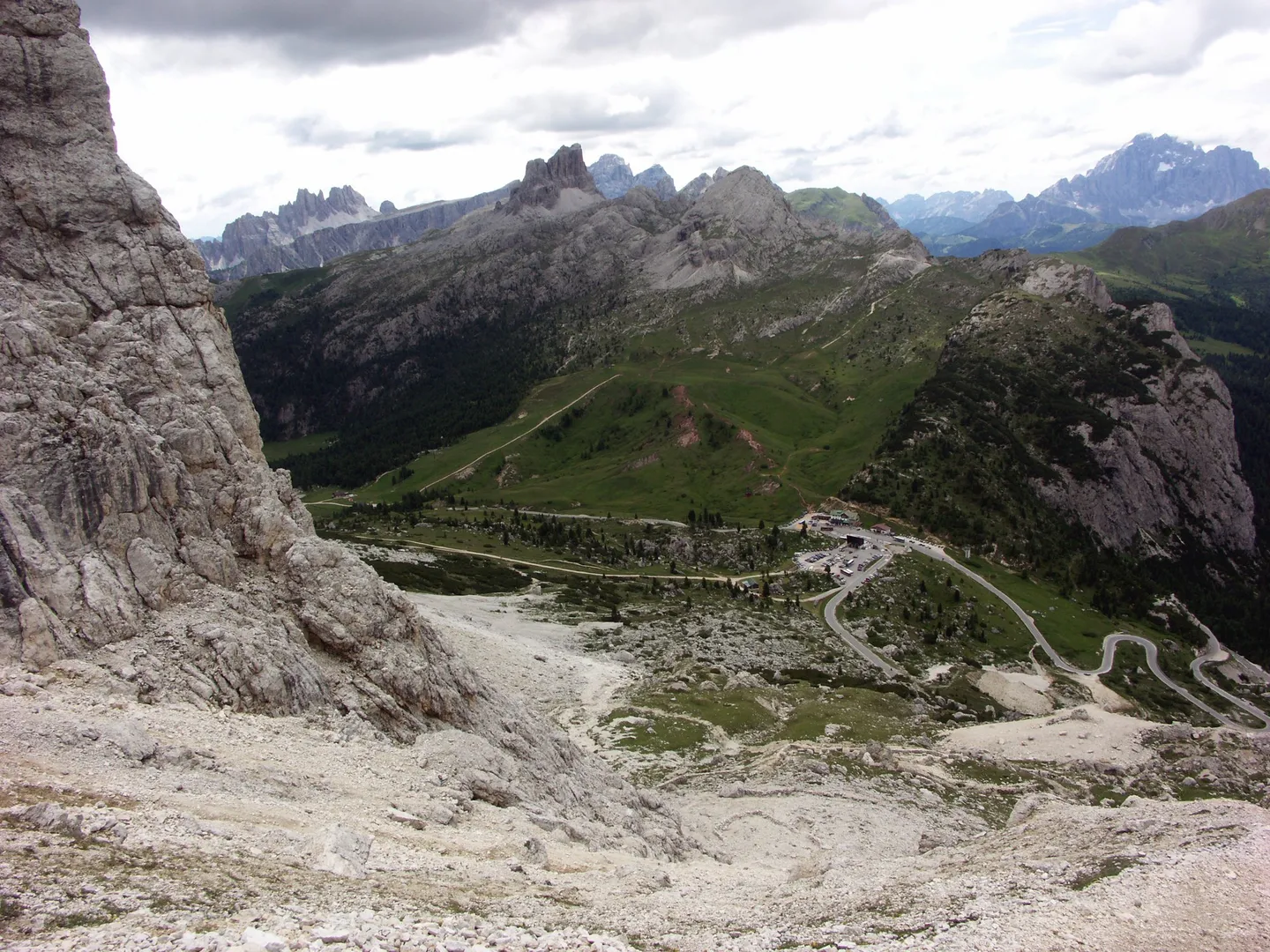
Today the classic route runs about 110 kilometres from Bolzano to Cortina. It climbs out of Bolzano through the Eggental gorge, passes the Karersee — Lago di Carezza — and crosses three passes: Costalunga or Karerpass at 1,745 metres, the Pordoi at 2,239 metres, and the Falzarego at 2,105 metres (some sources give 2,109). The stretch from Canazei to Cortina is numbered SS48 on Italian maps.
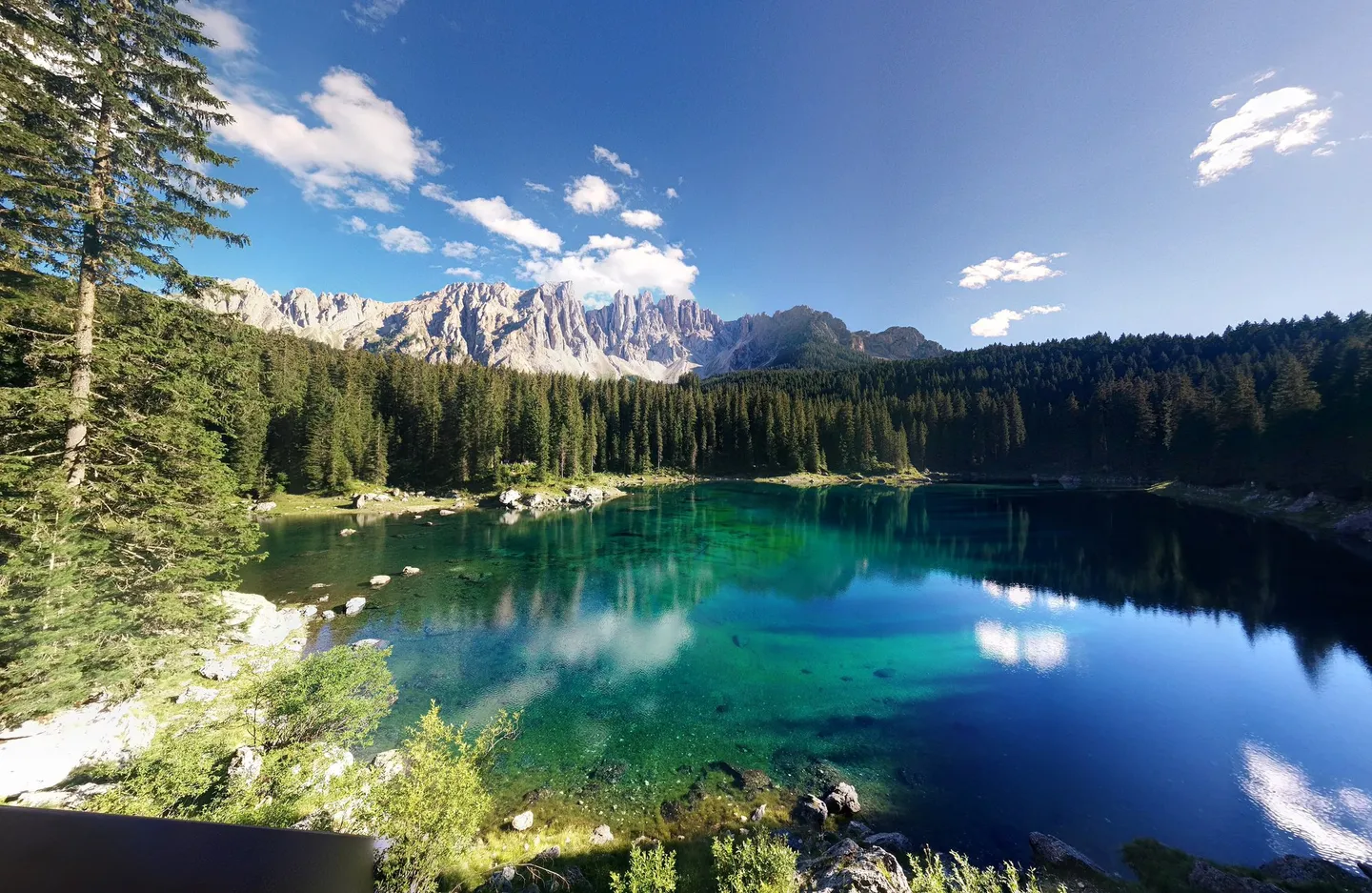
Since 26 June 2009 — almost exactly a century after the road opened — the Dolomites have been a UNESCO World Heritage Site, for “the beauty and uniqueness of their landscape and their geological and geomorphological importance”. Three of the nine protected mountain groups border the road: the Rosengarten and Latemar above Carezza, the Marmolada, seen from the Pordoi, and the Tofane above the Falzarego.
Things worth knowing
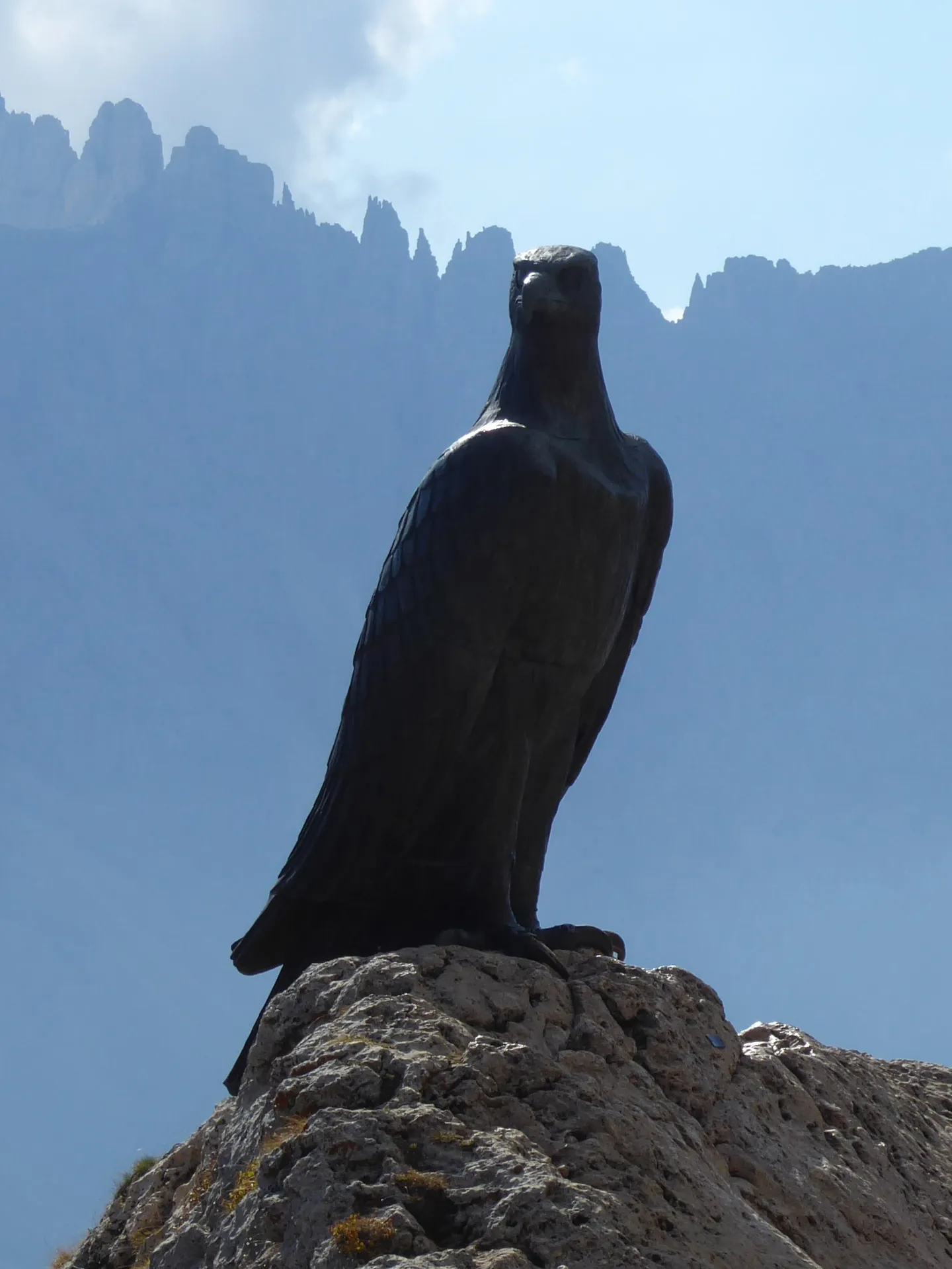
The eagle on the Rosengarten. Christomannos has a monument that most drivers never see: a bronze eagle at about 2,300 metres on the Hirzlweg below the Rosengarten. The original of 1912 is gone. The eagle there today was made by the sculptor Maria Delago and unveiled on 12 July 1959; it broke on the way up the mountain, and she repaired it where it now stands.
The false king. The Falzarego has a legend attached to its name: a king who betrayed his people, the fautzo rego, turned to stone in the walls of the Lagazuoi. The linguists have a duller explanation — the Ladin word for a sickle, pointing to the mowing of meadows. The pass has a sporting footnote too: Fausto Coppi beat Gino Bartali here in the 1946 Giro d’Italia.
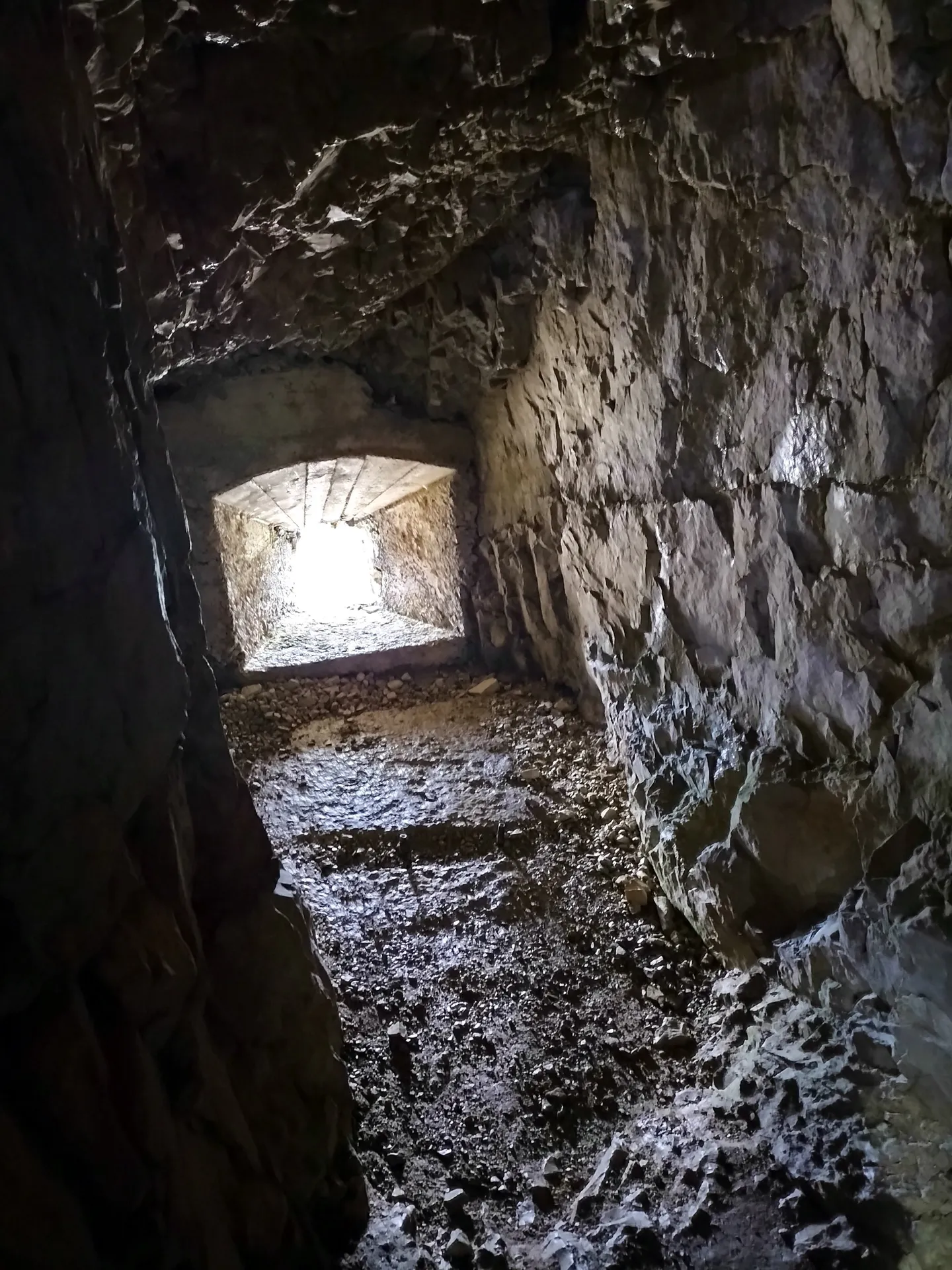
You can walk through the war. The Italian mine tunnel on the Lagazuoi is open to visitors: more than a kilometre long, dropping 639 metres, with a helmet, a head torch and gloves required. The usual way is to take the cable car up from the Falzarego and walk down through the tunnel — two and a half to three hours in all, the museum says, and a good choice on a day of bad weather.
Before you go
Two cable cars. On the Pordoi, the Sass Pordoi cable car goes to 2,950 metres in four minutes; in 2026 it runs from 14 May to 1 November, and a return ticket costs €32. The Lagazuoi cable car on the Falzarego runs from 6 June to 18 October in 2026, every fifteen minutes, with the last car up at 16:40.
Pass traffic may be limited in future. South Tyrol has been studying limits on traffic over the Dolomite passes, starting with the Gardena pass, which is not on this route. As of August 2026 there are no restrictions; a real-world test is planned to decide whether a traffic-calming zone can begin in summer 2027. We found no official announcement for the Pordoi or the Falzarego.
The itinerary. The day-by-day route, where to stay and what the drive costs are in our three-day itinerary, linked below.
Drive it yourself
The day-by-day route, real costs and where to sleep are in the itinerary. The planner draws it on the map from wherever you start.
Sources
- Christoph Pöll — Straßenbau und Tourismus: die Große Dolomitenstraße und die Großglockner Hochalpenstraße, historia.scribere 5 (2013), Universität Innsbruck
- Lagazuoi — The Great Dolomites Road
- Lagazuoi — The Falzarego Pass
- Lagazuoi — The Lagazuoi Open-Air Museum
- Lagazuoi — The Lagazuoi Tunnels (route 6)
- Cortina Delicious — The Lagazuoi Front
- Museo della Grande Guerra Cortina — Col di Lana
- Fondazione Dolomiti UNESCO — The Dolomites UNESCO World Heritage Site
- Fondazione Dolomiti UNESCO — The nine systems of the Dolomites
- Val di Fassa — Karerpass
- Montagna.tv — La Grande Strada delle Dolomiti (2024)
- Il Sole 24 Ore — La strada che scoprì le Dolomiti (2019)
- Eggental — Das Christomannos-Denkmal
- Sass Pordoi — Info, times and prices
- Lagazuoi — Cable car information and prices
- Marktgemeinde Kastelruth — Grödner Joch traffic notice (17 Aug 2026)
Every fact in this story comes from the sources above. Where they disagree, the text says so. Found a mistake? Write to hello@roadcutco.com.