North Coast 500: the road trip that was invented
In 2015 a charity joined the roads of the far north of Scotland into one 516-mile loop and gave it a name. Ten years later it is worth almost £100 million a year — and most locals see the damage.
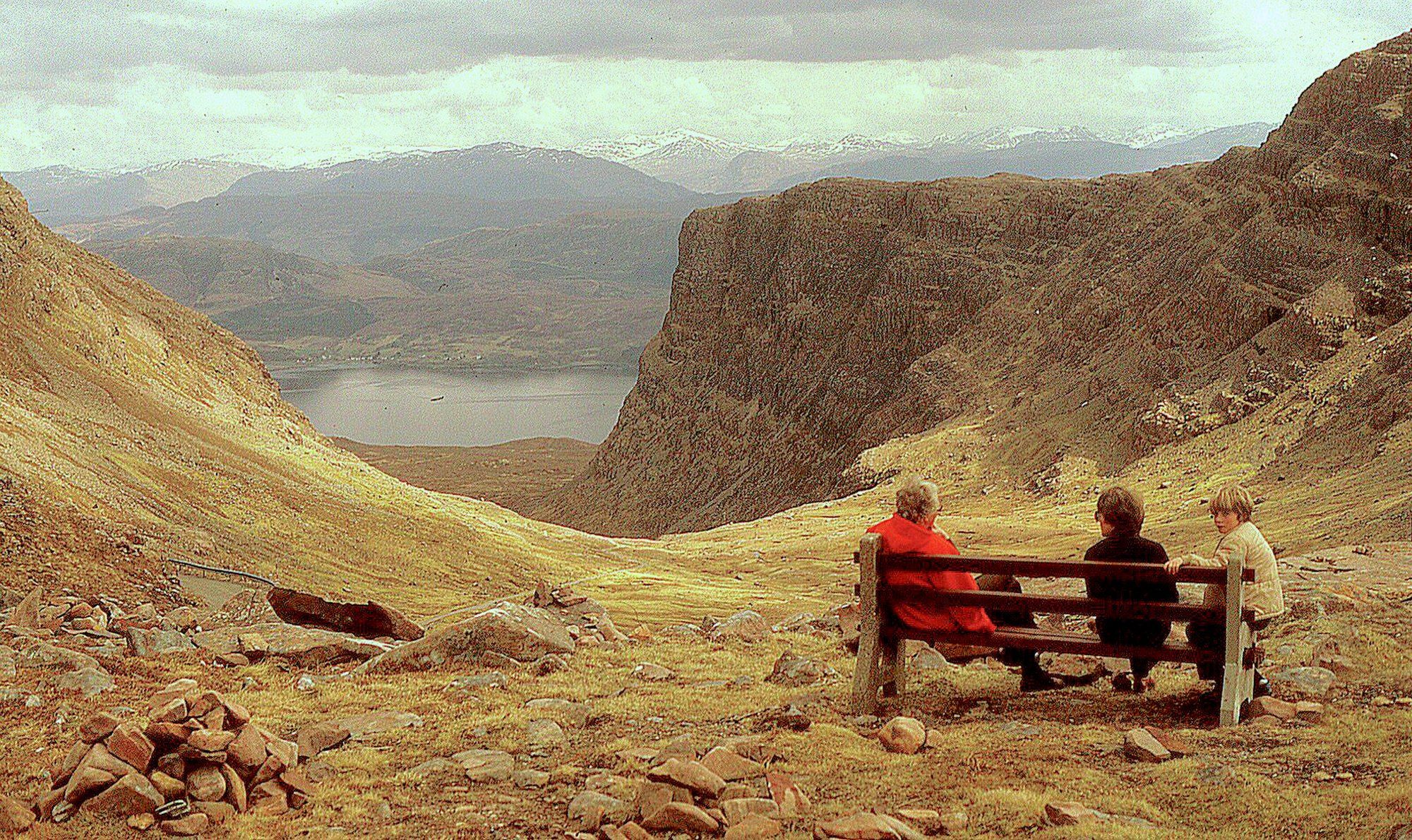
Most of the great roads in this series were built by an emperor, a king or an army. The North Coast 500 was not built at all. Almost every mile of it already existed. What was new in 2015 was the name — and a map that joined the roads of the far north of Scotland into one loop of 516 miles, starting and ending in Inverness.
It worked. In 2026 an economic study put the route’s value at almost a hundred million pounds a year. The same study found that most of the people who live along it see the damage it does.
A route drawn on a map
The idea came from the North Highland Initiative, a charity whose patron, its website says, is King Charles III. When The Scotsman reported the plan on 2 March 2015, it called the route “the brainchild” of an initiative “set up by Prince Charles to showcase the area”, and compared it to Route 66 and Australia’s Great Ocean Road. The chairman of the initiative, David Whiteford, promised “an experience of 500 miles, with more than 500 things to do”; the chairman of VisitScotland, Mike Cantlay, saw “no reason NC500 can’t prove to be just as popular” as Route 66.
Before the launch, the organisers had asked the Moffat Centre at Glasgow Caledonian University to test the idea. The route’s managing director, Tom Campbell, later said the centre “provided us with a proof of concept… They found it would be of global significance, which gave us the confidence to launch it.”
The exact launch day is hard to pin down: the route was announced in March 2015, and the local paper, the John O’Groat Journal, wrote that summer that it had been officially launched in May. By August the same paper was reporting that the travel magazine Now Travel had ranked the three-month-old route fifth among the world’s coastal road trips — just behind the Pacific Coast Highway.
The oldest road on the newest route
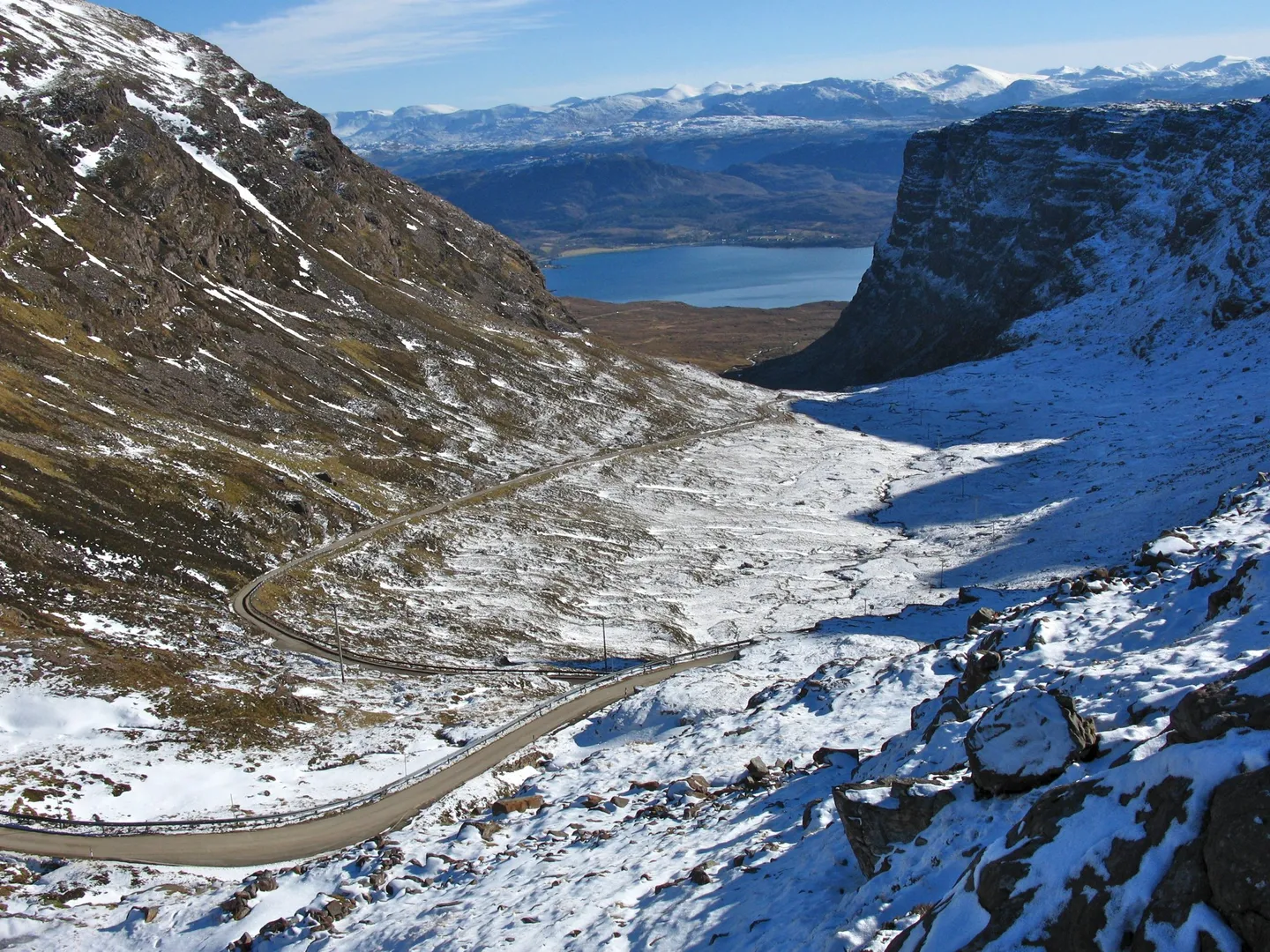
The route may be new, but its most famous road is not. Bealach na Bà, the Pass of the Cattle, climbs from Tornapress over the mountains to Applecross. Before it was a road it was a track, used by monks and later by cattle drovers. According to a 2020 article in The Scotsman, work began under contract on 4 May 1818 and the road was finished in 1822, under a scheme in which the government paid 75 per cent and the landowner the rest. Local tradition, the same article says, holds that the first contractor lasted three months before he “went insane”.
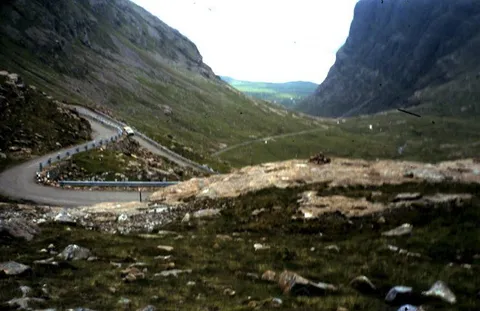
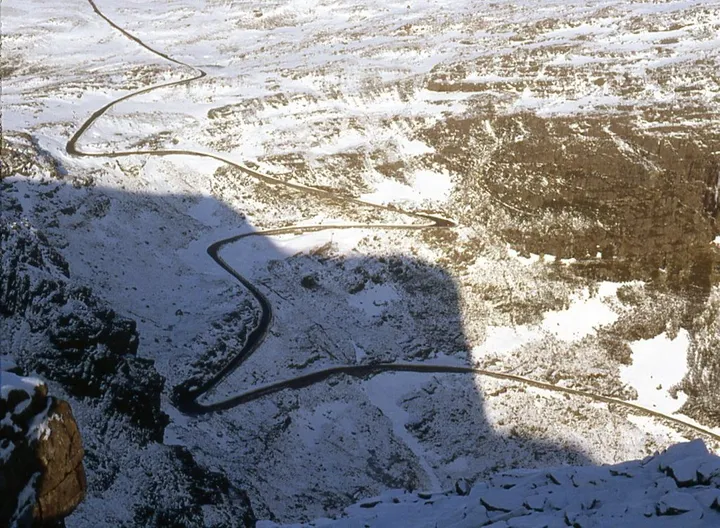
The Scotsman and Countryfile both give its height as 2,054 feet, about 626 metres. The steepest sections reach 20 per cent. The sign at the bottom is, The Scotsman notes, possibly the only one in the country that warns that the road may be unsuitable for learner drivers.
One car wide
Much of the North Coast 500 is single-track road: one lane for both directions, with passing places. The Highway Code tells drivers to “pull into a passing place on your left, or wait opposite a passing place on your right”, and to “give way to road users coming uphill whenever you can”. The route’s operator adds its own rules: passing places are marked by a white diamond or square sign; they are not for parking; do not drive in convoy; and drive at a speed that lets you stop in half the distance you can see to be clear.
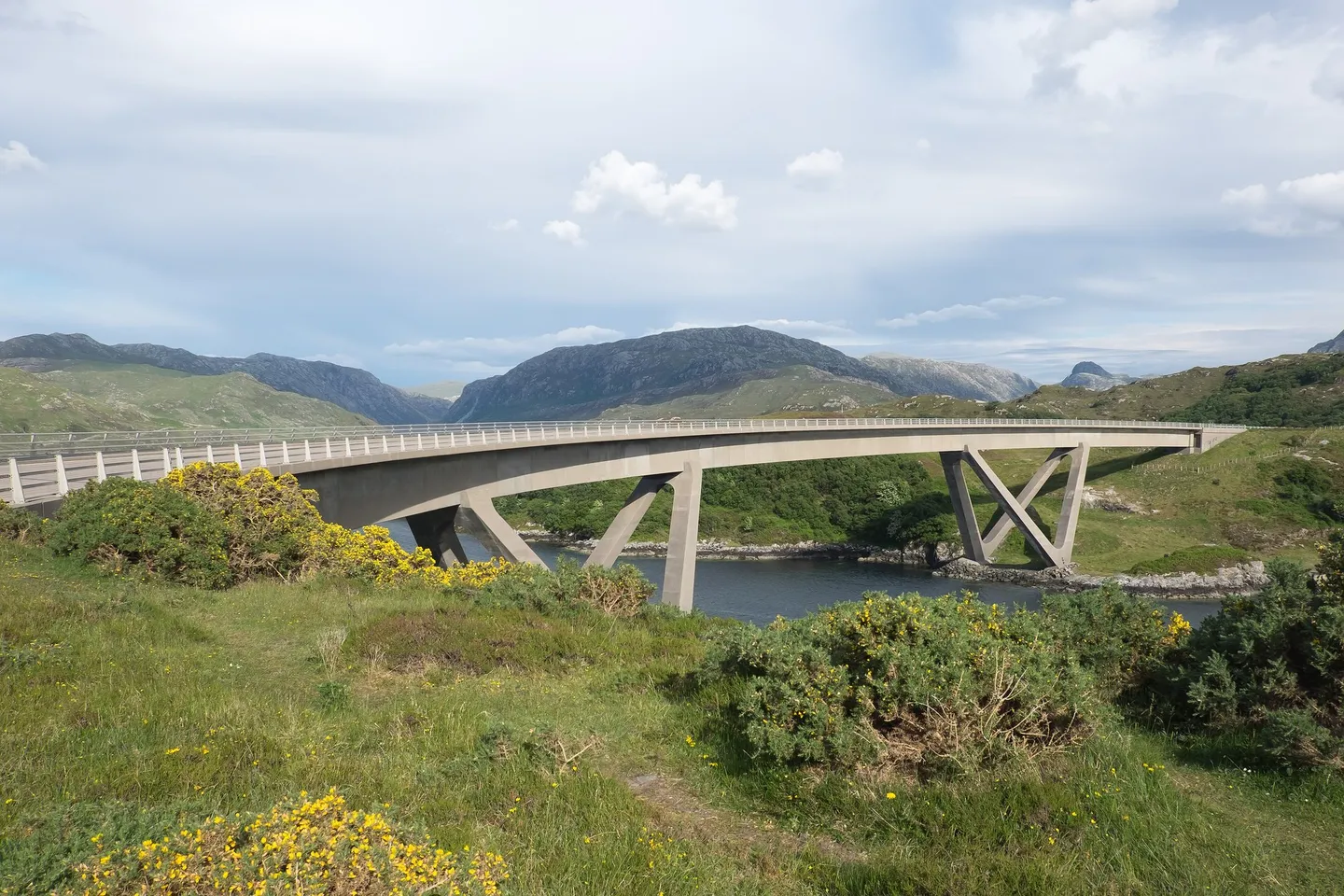
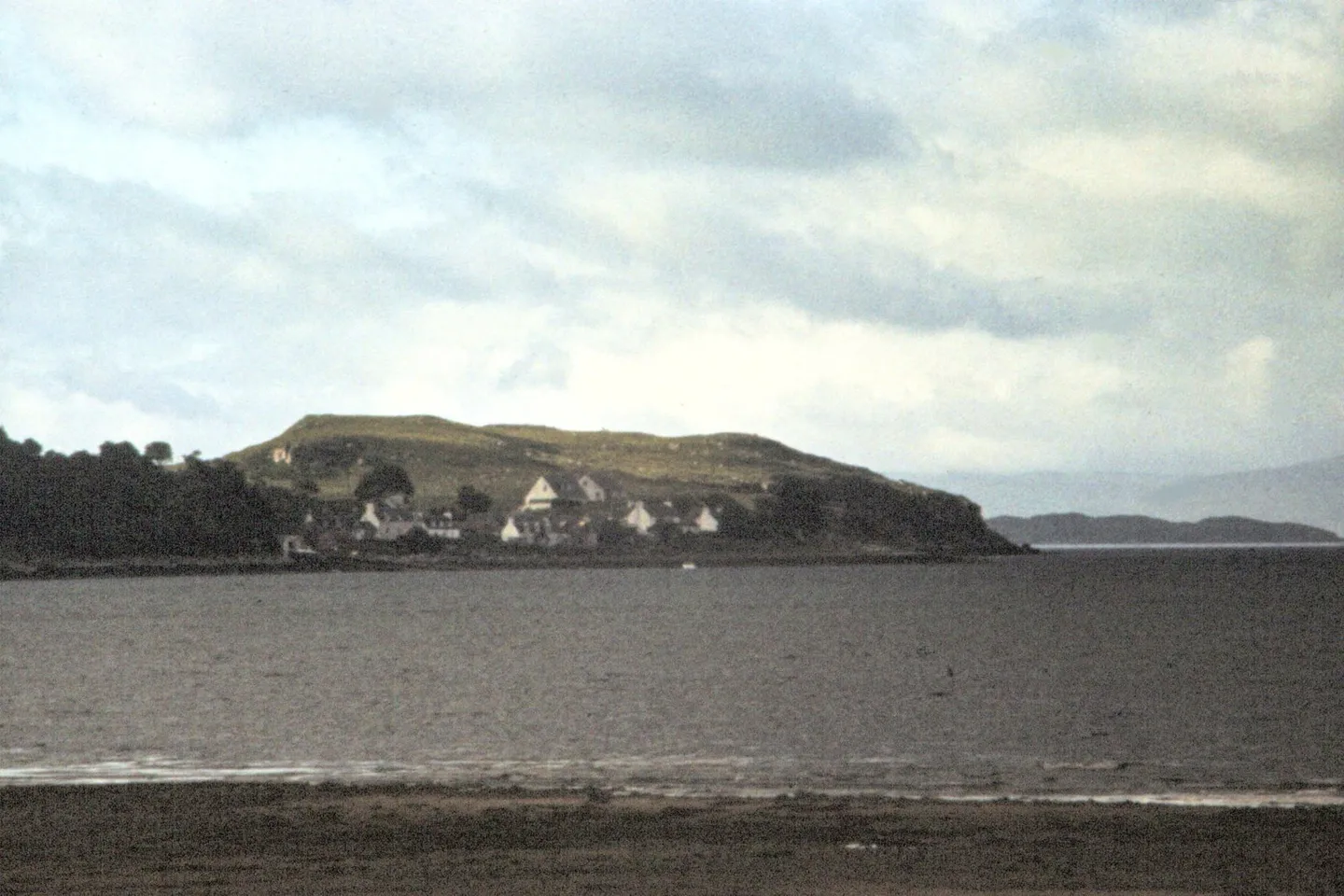
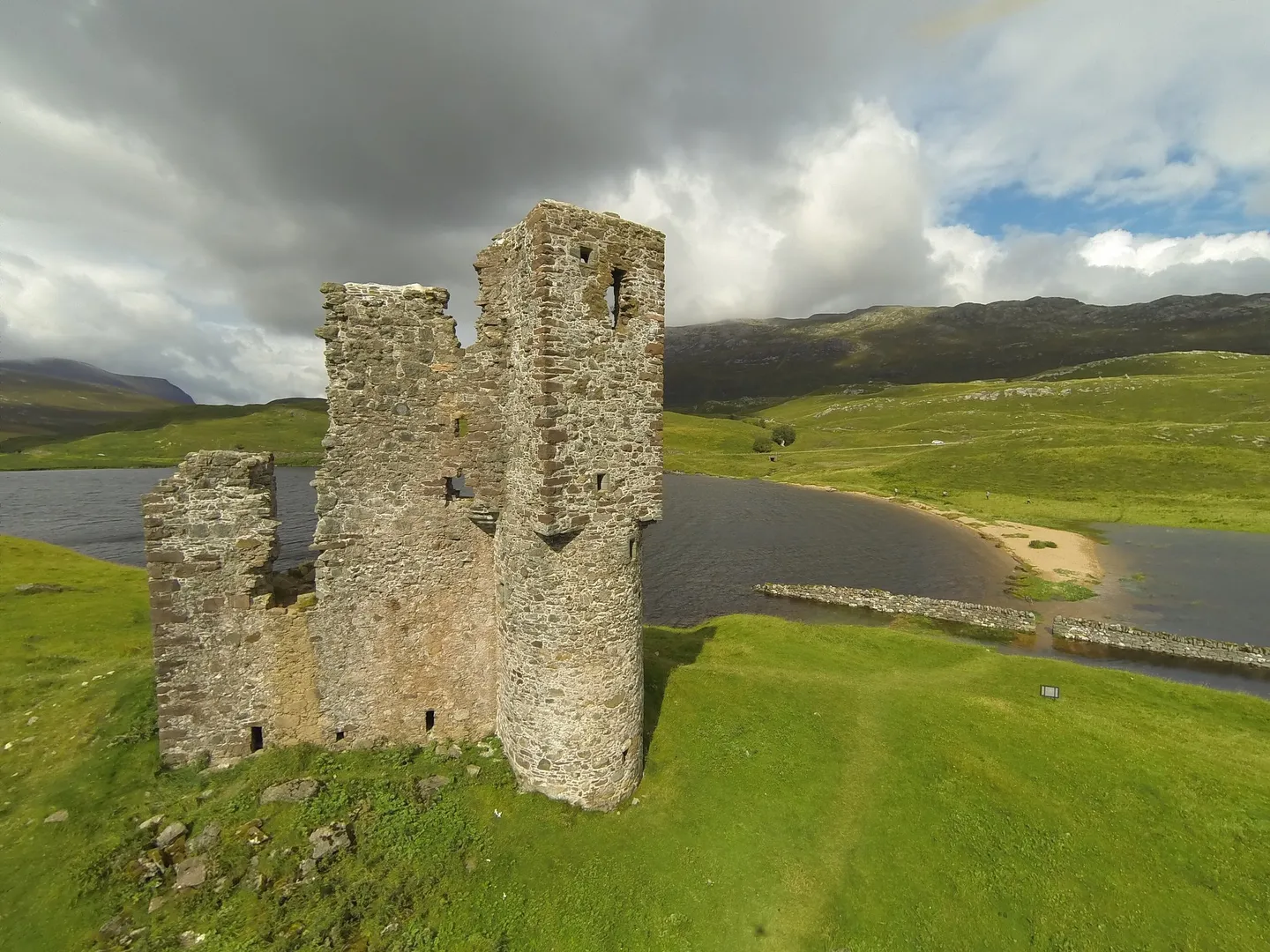
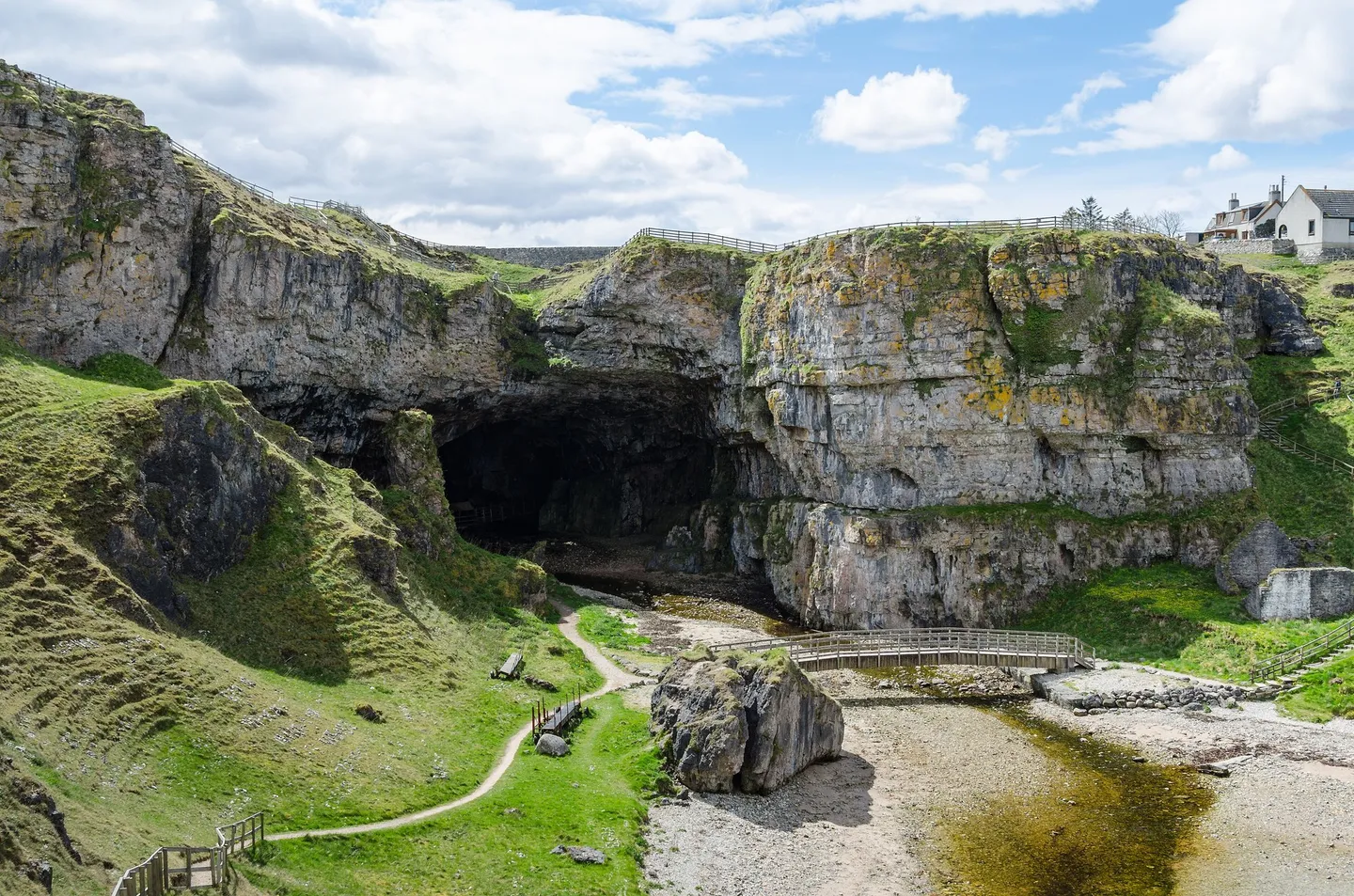
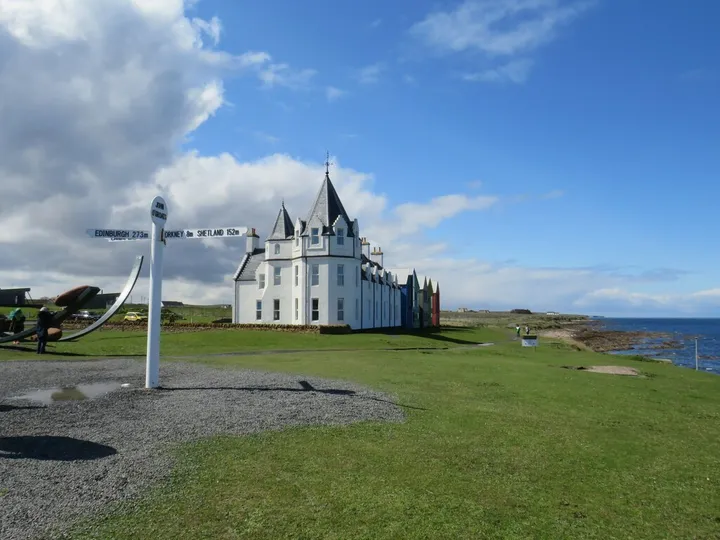
On the north-west coast the route crosses a sea loch on the Kylesku Bridge, passes the ruin of Ardvreck Castle on Loch Assynt, and reaches the sea cave at Smoo, outside Durness. Then it turns east, along the top of Scotland, to John o’ Groats.
What success did
The first full evaluation came in 2019. The Moffat Centre found that in 2018 the route had added £22.89 million to the economy of the north Highlands and supported 180 full-time equivalent jobs. Room occupancy in the area had risen from 52 per cent in 2014 to 78 per cent, and the average room rate from £46 to £82.
The second came in May 2026, from BiGGAR Economics for the company that now runs the route. It put the value in 2025 at £98.8 million and around 1,335 jobs. About a third of travellers use a campervan or motorhome. And it asked the people who live along the route what they thought.
- 85 per cent of residents see litter “often” or “daily”; just over half say the same about human waste.
- More than half see dangerous driving very often — against fewer than one in ten visitors.
- 61 per cent strongly disagreed that the company acts in the best interests of the local area.
The report also notes that in 2025 the travel guide Fodor’s put the route on its “No List” of places travellers are advised to avoid because of over-tourism. Clare Winskill, the company’s executive chair, told STV that the residents’ criticism was “something we need to work hard to change”. Highland Council said it was exploring a visitor levy.
The council had already started paying for the pressure. In 2021 it set aside £1.5 million for visitor management and hired access rangers. By mid-August that year, across the whole Highland region — not only on the route — they had counted about 5,500 tents pitched outside official sites, 2,276 fires and nearly 2,000 places where people had used the outdoors as a toilet.
One figure in the 2026 report is telling: only about one visitor in five had heard of the North Coast 500 from the company that markets it. Almost a third had heard of it by word of mouth.
Before you go
Time. The route’s operator recommends at least five days, ideally seven or more, and says booking accommodation in advance is essential, even in winter.
Big vehicles. The operator advises motorhomes bigger than a standard VW T5 conversion — about 16 to 18 feet long — not to drive Bealach na Bà (take the A832 instead) or the B869 at Drumbeg (take the A894).
Camping. Scotland’s right to wild camp does not apply to motor vehicles. Rooftop tents are allowed only on formal campsites, and an overnight stop in a formal lay-by is allowed only if everything stays inside the vehicle.
Midges and signal. Bring repellent from June to September, and carry directions: there are long stretches without a phone signal.
Drive it yourself
The day-by-day route, real costs and where to sleep are in the itinerary. The planner draws it on the map from wherever you start.
Sources
- North Highland Initiative — Tourism
- The Scotsman — Huge drive to promote 'Scotland's Route 66' (2015)
- John O'Groat Journal — North Coast 500 named among top five coastal road trips (2015)
- Glasgow Caledonian University — North Coast 500 success, says Tom Campbell
- The Scotsman — The man who went mad building Scotland's most terrifying mountain road (2020)
- Countryfile — Britain's steepest roads
- The Highway Code — Rules 103 to 158
- North Coast 500 — Road safety
- North Coast 500 — Motorhome and campervan advice
- North Coast 500 — Planning your adventure
- Inverness Courier — North Coast 500 boosts north Highland economy by £22m (2019)
- BiGGAR Economics — Building a Sustainable Future: an impact assessment and ESG framework for the NC500 (2026)
- STV — NC500 generates almost £100 million but most locals report issues (2026)
- Highland Council — Visitor Management Plan, report TC/08/21
Every fact in this story comes from the sources above. Where they disagree, the text says so. Found a mistake? Write to hello@roadcutco.com.