Kraków to Zakopane Road Trip: The Tatras (3 Days)
A 3-day drive from Kraków to Zakopane through the Pieniny gorge and into the Tatra mountains — salt mine, wooden churches, Morskie Oko, with real costs and toll advice.
Rough estimate — fuel + nights at typical rates. Get an exact figure in the calculator.
The route on video
Poland’s mountains surprise people who assumed the country was flat. The Tatras are a proper alpine range — granite, above the treeline, snow into May — and they sit two hours south of one of Europe’s best-preserved medieval cities. Roughly 260 km over three days joins the two, with a limestone gorge and a handful of wooden churches in between.
The practical news is good: Poland is in the European Union and in Schengen, so if you are coming from another EU country there is no border to plan around, and a car hired almost anywhere in the EU can drive here without special paperwork. Two things still catch people out. The currency is the złoty (PLN), not the euro, and prices quoted in euro usually carry a poor rate. And you cannot drive to Morskie Oko, the lake most visitors come for — the last stretch is closed to cars, and the walk is longer than it looks. You drive on the right.
Day 1 — Kraków, the salt mine, and south (90 km)
Start on foot in Kraków. The old town and the Wawel castle hill above the Vistula are on the UNESCO World Heritage list, and the Rynek Główny is among the largest medieval market squares in Europe. Half a day is the minimum; a full one is better, and the car can wait.
On the way out, stop at the Wieliczka Salt Mine, a working mine from the thirteenth century until recent decades, with chapels, chandeliers and entire chambers carved out of rock salt hundreds of metres underground. It is also UNESCO-listed, visited by guided tour only, and busy enough that a slot is worth booking ahead.
Then drive south into the Beskids. Break the run at one of the wooden churches of southern Małopolska — timber-framed Gothic churches, several of them UNESCO-listed, standing in villages that give no other sign of being remarkable. Sleep around Nowy Targ or in the Pieniny foothills.
Day 2 — The Dunajec gorge into the mountains (110 km)
The Dunajec cuts a gorge through the Pieniny limestone on the Slovak border, and the traditional way through it is on a wooden raft steered by boatmen in embroidered waistcoats — a genuinely old trade rather than a costume act. It runs in season and takes a couple of hours; the rafts finish downstream, so check how you get back to the car before you set off.
Above the gorge, Niedzica Castle looks across the reservoir at the dam. From there the road runs west along the northern edge of the Tatras to Zakopane, and the mountains fill the windscreen for the last half hour. Stay two nights.
Day 3 — Zakopane and the Tatra valleys (60 km)
Zakopane is a mountain town with its own architecture: the Zakopane style, steep shingled roofs and carved timber, invented here in the 1890s as a deliberately Polish alternative to imported alpine design. Krupówki is the main street and is exactly as busy as you would expect. The Gubałówka funicular climbs the ridge opposite the range and gives the best free-standing view of the Tatras without any walking.
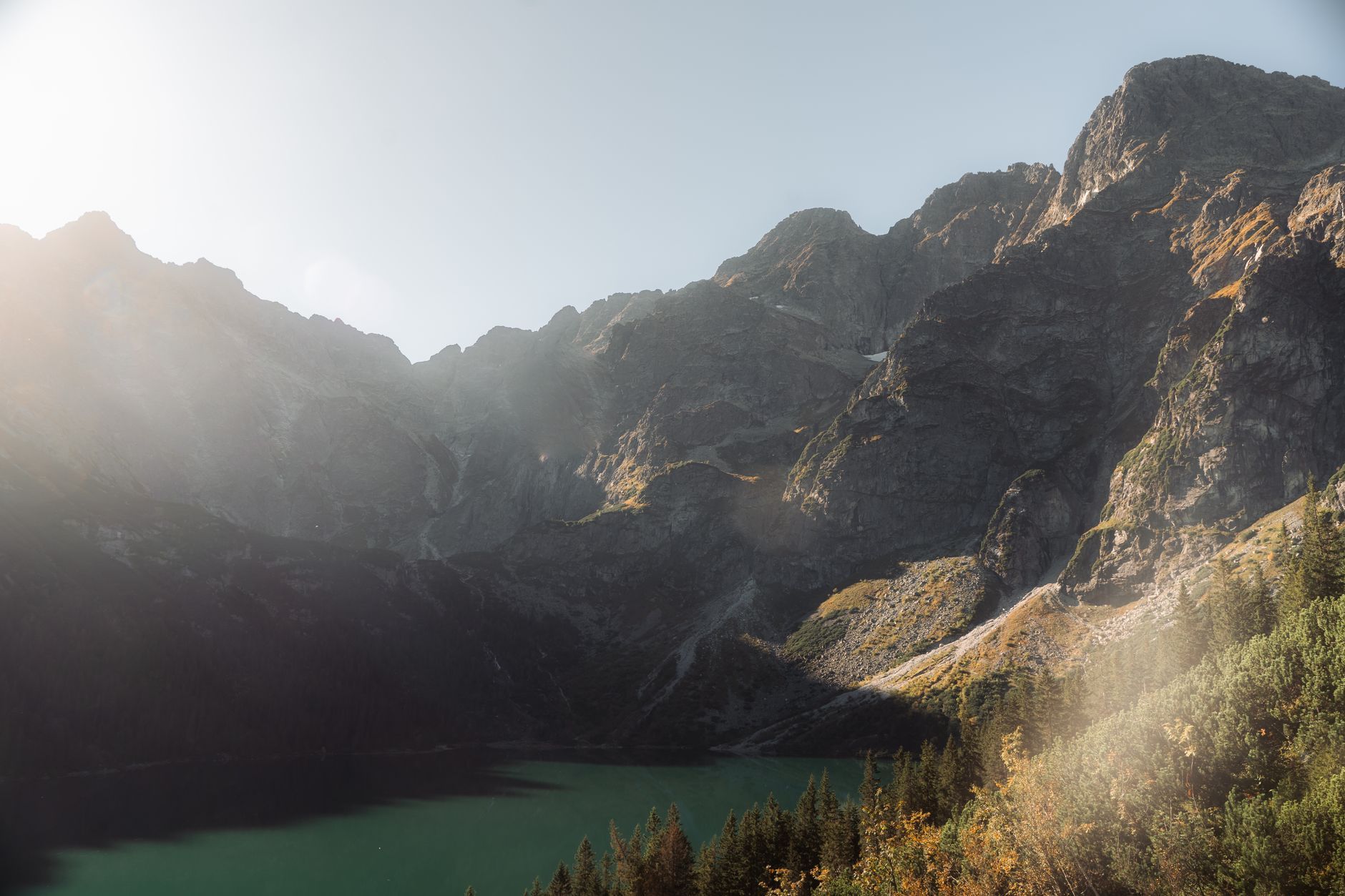
For the mountains themselves, drive to Palenica Białczańska and leave the car: the road to Morskie Oko — a glacial lake under the highest peaks — is closed to traffic, and it is about 9 km each way on tarmac, uphill on the way in. Horse-drawn carts cover part of it for a fee. The alternative, and the better drive, is the Chochołowska or Kościeliska valley on the western side, where the parking sits at the mouth of the valley and the walking is gentler.
Costs
Use the cost calculator to price fuel and nights for your dates. Poland is inexpensive by western European standards and this is a short route. Budget for accommodation, fuel for about 260 km, car rental, and tickets for Wieliczka, the Dunajec raft, the Gubałówka funicular and entry to Tatra National Park, each charged separately. Zakopane fills up at weekends and through the winter season, so book beds ahead rather than on arrival.
Where to stay on this route
Pick your dates and see what is available in Zakopane.
See places to stay — Zakopane →Affiliate link — we may earn a commission at no extra cost to you.
🚦 Know before you go
Vignette. Poland has no vignette for cars. Most of its motorway network is free for cars; a few concession-operated sections are still paid at booths, and none of them are on this route.
Tolls. No toll on this drive. The road south from Krakow to Nowy Targ and Zakopane is an ordinary national road, not a tolled motorway.
Good to know. The one that catches people out is not a toll but a road closure: the last stretch to Morskie Oko is closed to cars, so the lake means roughly 9 km of walking each way from the car park at Palenica Bialczanska, or a horse-drawn cart for part of it. Poland uses the zloty (PLN), not the euro, and Tatra National Park charges its own entry fee.
Estimate your exact costs in the cost calculator. Prices are approximate — check official sites before you travel. Some links are affiliate links.
Plan this trip
Where to sleep
Hotels & B&Bs → Holiday homes & apartments → Campsites (bookable) → Campervan & overnight spots →Tours & tickets
Find things to do →Affiliate link — we may earn a commission at no extra cost to you.
New road trips in your inbox
One email when we publish a new European route — the full guide, map and real costs. No spam, unsubscribe anytime.