Barcelona to Costa Brava Road Trip (3 Days)
A 3-day drive from Barcelona to Costa Brava: route, stops, where to sleep and real costs.
Rough estimate — fuel + nights at typical rates. Get an exact figure in the calculator.
The route on video
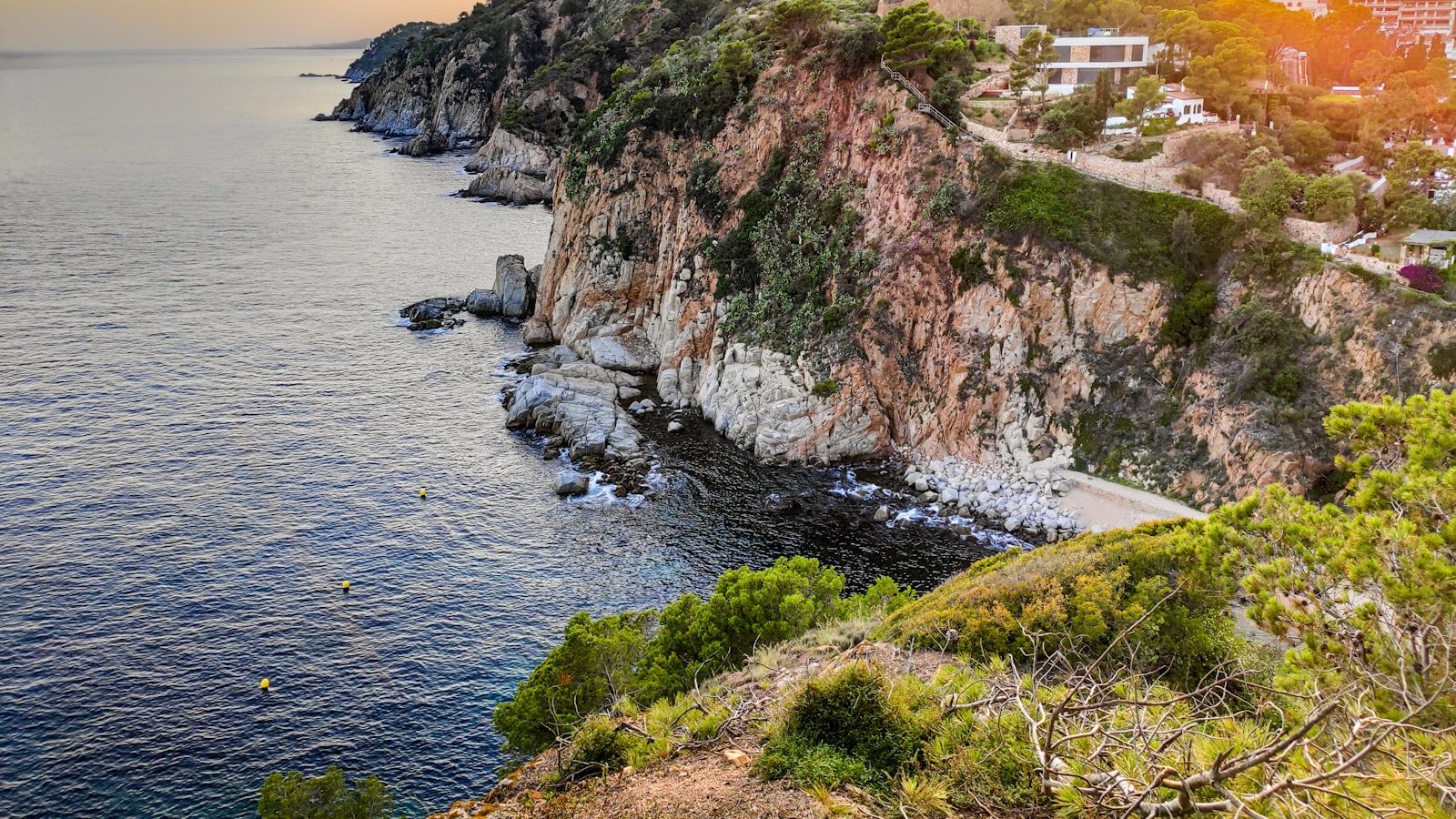
From Barcelona the Costa Brava runs northeast, up the Catalan coast toward the French border — rugged headlands, pine-backed coves and whitewashed fishing towns. Skip the fast AP-7 inland and take the coastal roads for the views.
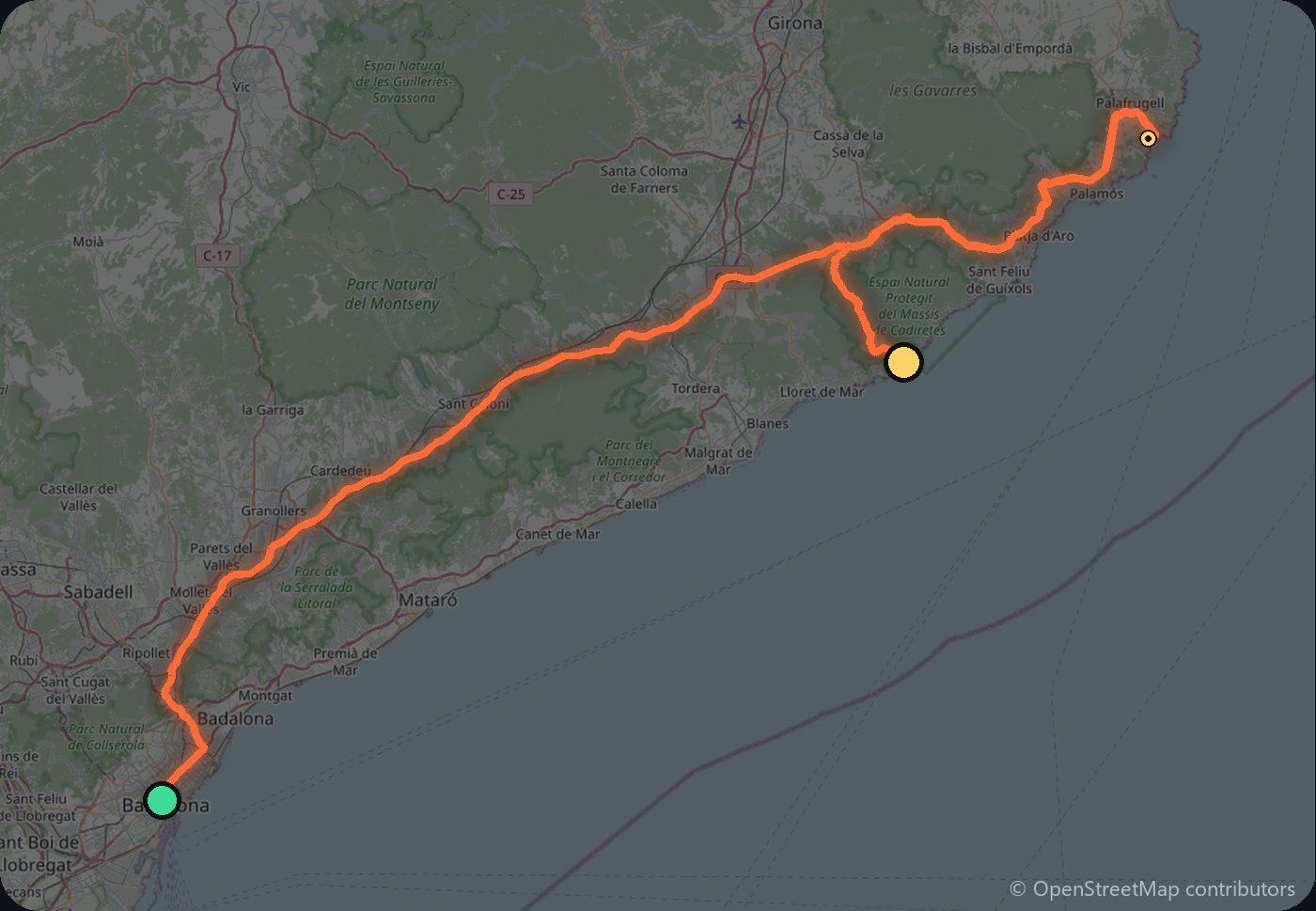
Day 1 — Barcelona to Tossa de Mar (90 km)
Head north out of the city and up the coast to Tossa de Mar, with its walled medieval old town (the Vila Vella) above the beach. The stretch on from Tossa — the GI-682 corniche to Sant Feliu de Guíxols — is one of the most spectacular coastal drives in Spain, a slow ribbon of hairpins above the sea.
Day 2 — The Empordà coves: Calella de Palafrugell and Begur (50 km)
The prettiest heart of the Costa Brava. Base around Calella de Palafrugell and Tamariu, tiny whitewashed coves, with the hilltop town of Begur and its castle just inland. Park up high and walk down to the calas; roads to the coves are narrow and fill fast in summer.
Day 3 — North to Cadaqués and Portlligat (75 km)
The final leg into the wild far north near the French border. Cadaqués, reached by a twisting mountain road, is the whitewashed village that drew Dalí — visit his house at neighbouring Portlligat. Parking is limited; leave the car above town and walk in.
Costs
Keep this cost calculator handy for accurate estimates on fuel, potential tolls, and estimated parking fees for your specific itinerary: cost calculator
Where to stay on this route
Pick your dates and see what is available in Costa Brava.
See places to stay — Costa Brava →Affiliate link — we may earn a commission at no extra cost to you.
🚦 Know before you go
Tolls. No tolls remain on this route: the AP-7 Barcelona–Girona and the C-32/C-33 coastal motorways all lost their tolls in September 2021, so driving to the Costa Brava is now free.
Good to know. Spain uses no vignette and this corridor is toll-free, but if you detour onto any still-tolled AP road elsewhere you pay at a booth by card/cash or via a Via-T transponder.
Estimate your exact costs in the cost calculator. Prices are approximate — check official sites before you travel. Some links are affiliate links.
Plan this trip
Where to sleep
Hotels & B&Bs → Holiday homes & apartments → Campsites (bookable) → Campervan & overnight spots →Tours & tickets
Find things to do →Affiliate link — we may earn a commission at no extra cost to you.
New road trips in your inbox
One email when we publish a new European route — the full guide, map and real costs. No spam, unsubscribe anytime.