Rome to the Amalfi Coast Road Trip (5 Days)
A 5-day drive from Rome to the Amalfi Coast — day-by-day route, the SS163 rules, ZTL zones, Pompeii tickets, parking and real costs.
Rough estimate — fuel + nights at typical rates. Get an exact figure in the calculator.
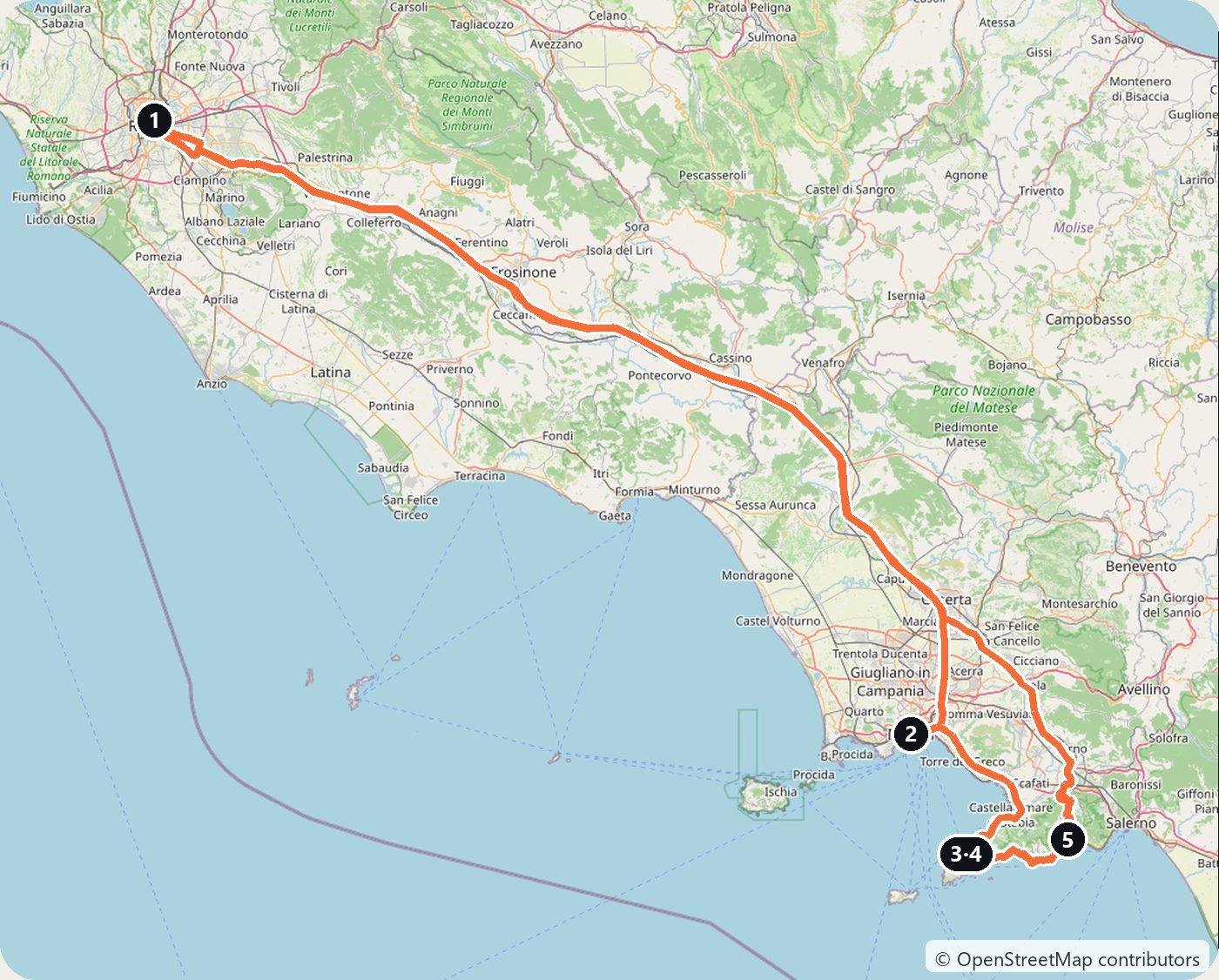
Rome to the Amalfi Coast is one of the most rewarding short road trips in Europe: ancient cities, coastal switchbacks and some of the best food in Italy — about 600 km of driving there and back.
Three things decide how smoothly it goes. City centres are camera-controlled zones (ZTL) — in Rome, Naples and, on summer evenings, Sorrento — so you park outside them and walk. The coast road, the SS163, has its own rules in the season. And Pompeii tickets carry your name and are capped per day, so you buy them before you go.
Day 1 — Rome to Naples (230 km)
Pick up the car on the edge of Rome (city-centre traffic is not worth it) and head south on the A1. Rome’s historic centre is a ZTL: on weekdays from 6:30 to 18:00 and on Saturdays from 14:00 to 18:00, cameras at the gates fine unauthorised cars — the fine was €83 in 2024 — and self-drive rental cars are not on the exemption list.
Break the drive in Naples for pizza and a walk through the historic centre. The historic centre of Naples is a UNESCO World Heritage Site (1995), and the art of the Neapolitan pizzaiuolo is on UNESCO’s list of intangible heritage (2017). Its oldest streets, the Centro Antico, are another ZTL with camera gates (most of them active daily from 9:00 to 17:00), so park outside it.
Sleep in Naples or push on to Sorrento, about 50 km further. Naples gives you the evening in the city; Sorrento wakes you up on the coast.
Day 2 — Naples to Sorrento (50 km)
A short hop, so spend the morning at Pompeii on the way — about 26 km from Naples on the A3, and 26 km more to Sorrento. The A3 Napoli–Pompei–Salerno is a toll road (€2.30 for a car on the main barrier tariff) and its toll booths have not accepted Visa or Mastercard since 1 May 2024 — carry cash or another card.
At Pompeii, tickets are personal and there is a daily limit of 20,000 entries. The ancient city alone costs €20, or €25 with the suburban villas, plus a €2 booking fee; buy on the park’s official ticket site before you go. From mid-March to mid-October the morning (9:00–13:00) is capped at 15,000 entries and the afternoon at 5,000, and the site is open 9:00–19:00 (last entry 17:30); in winter it is 9:00–17:00 (last entry 15:30). The park has no car park of its own: use the paid municipal spaces (blue lines) or a private car park.
If you would rather climb a volcano, Vesuvius is the alternative: tickets for the crater path (Gran Cono) are sold only online, released in 10-minute slots up to 30 days ahead, and at the moment the path does not complete its full loop.
Sorrento is the ideal base for the coast — easier parking than Positano and cheaper beds. From 1 April to 25 October its centre is a ZTL in the evening (19:30–04:00), so ask your hotel to register your car if you are staying inside it.
Day 3 — The Amalfi Drive (Sorrento → Positano → Amalfi)
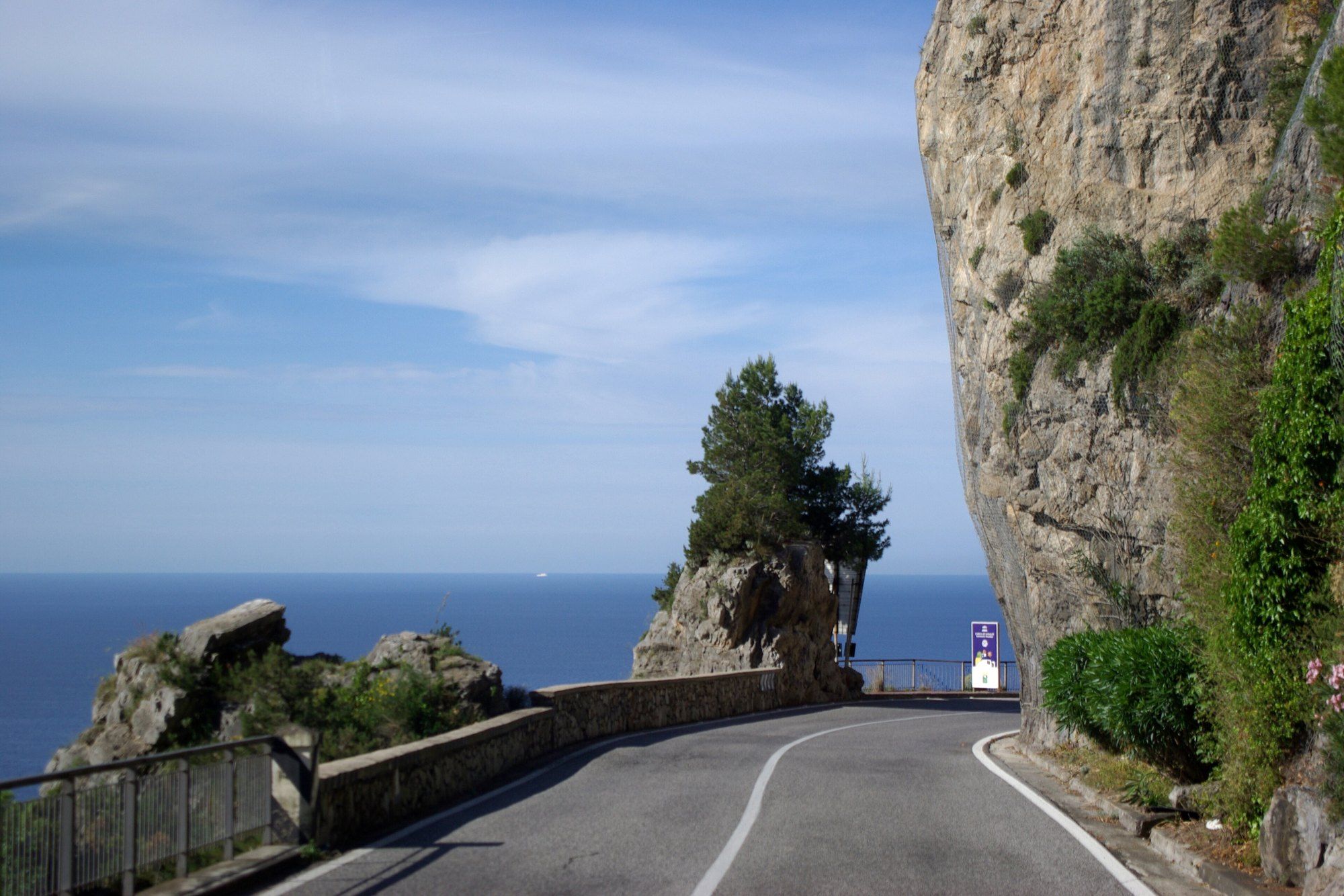
The famous coastal road: about 15 km from Sorrento to Positano and 17 km more to Amalfi, by map. Start early to beat traffic on the narrow SS163. In the season the road runs under ANAS ordinances: no overtaking and a 50 km/h limit, vehicles over 10.36 m long, 2.55 m wide or 4 m high are banned, and campers and caravans may not drive it from 6:30 to midnight — leave a camper in Sorrento and take the bus.
On set dates the SS163 between Positano and Vietri also runs on alternate number plates from 10:00 to 18:00: on odd dates, cars whose plate ends in an odd digit may not drive, and on even dates, those ending in an even digit. In 2026 that applied from 30 March to 6 April and from 24 April to 2 May; in earlier years it also covered summer weekends and every day in August. Motorcycles and scooters are exempt, and hotel guests with a booking may drive on their arrival and departure days. Check the dates for your year before you go.
Stop in Positano for the view. Parking is scarce and private garages are expensive. Walkers can take the Path of the Gods (Sentiero degli Dei) high above the coast, from Bomerano in Agerola to Nocelle above Positano — about three hours on foot.
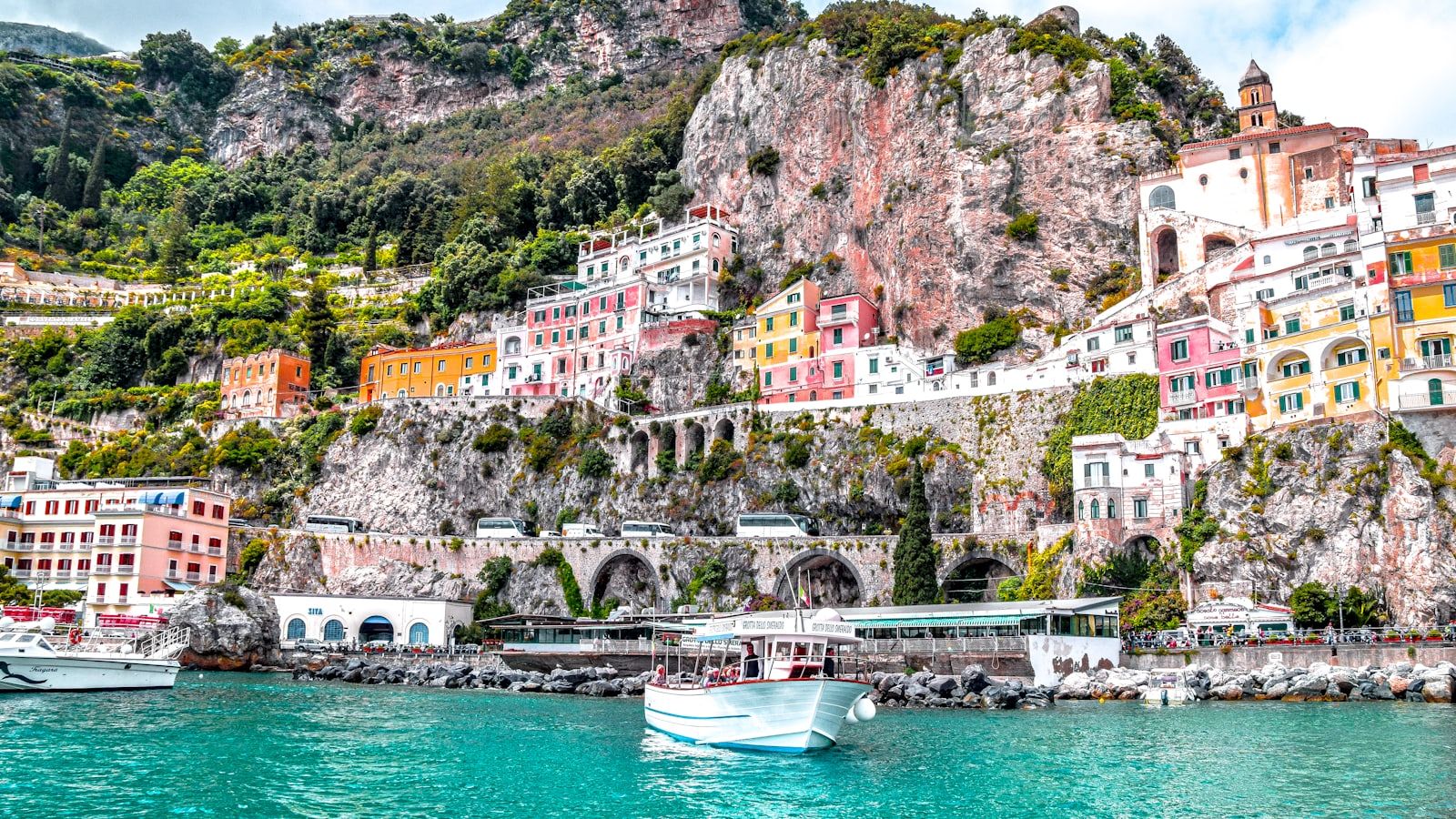
Then Amalfi town itself, once one of Italy’s maritime republics alongside Pisa, Venice and Genoa. Climb the great staircase to the Duomo di Sant’Andrea, whose crypt keeps the apostle’s relics, with the Chiostro del Paradiso beside it. Parking is tight and pricey — arrive before 9am. The Luna Rossa car park is cut into the rock with its entrance on the SS163: 177 car spaces, no vehicles over 2 m tall and no LPG or methane cars, with the prices posted at the entrance.
If you would rather not drive the coast at all, SITA SUD buses run along it all year, and Travelmar ferries link Amalfi with the coastal towns.
Day 4 — Ravello and the hills
Head up to Ravello, about 7 km above Amalfi, for gardens and the quietest views on the coast. Villa Rufolo is a 13th-century complex whose garden Wagner, in 1880, saw as the magic garden of Parsifal; tickets are €8, sold on site, and from early November it is open daily 9:00–17:00. The gardens of Villa Cimbrone are open to the public every day (€10). A slower day away from the crowds.
Day 5 — Back to Rome
Return along the A3/A1. Drop the car back in Rome.
What it costs
Use the cost calculator to price fuel and nights for your exact dates. As a rough guide: ~€60–110/night for accommodation, plus fuel for the ~600 km round trip and coastal parking fees. Tolls are roughly €16–18 each way on the A1 between Rome and Naples (check Autostrade per l’Italia’s calculator for your exact exits) and €2.30 on the A3. Pompeii is €20–25 plus the booking fee, Villa Rufolo €8 and Villa Cimbrone €10. Booking a car early saves the most.
This trip is also in the free Roadcut trip planner: change the number of days and where you sleep each night, pick your vehicle to see the fuel cost, check the weather on the road, and open each day in Google Maps, Apple Maps or Waze.
Where to stay on this route
Night by night, in the towns this itinerary sleeps in.
- Night 1Hotels in Naples →Hotels in Sorrento →
- Night 2Hotels in Sorrento →
- Night 3Hotels in Amalfi →Hotels in Positano →
- Night 4Hotels in Ravello →
The search opens with sample dates a month from today — change them to yours on Booking. Affiliate link — we may earn a commission at no extra cost to you.
The route on video
Get this itinerary by email
The days and the nights in your inbox, with a link back here when you are ready to book.
We use your address only to send this itinerary, unless you tick the box. Privacy
⚡ By electric car on this route
82 charging stations within 1.5 km of the road.
For most of them OpenStreetMap does not record the power, so we cannot say where the fast chargers are — check your charging app before you set off.
According to OpenStreetMap and operators’ websites. Fast = a DC plug or 50 kW and more; not every station has its power filled in, so there may be more. See them on the planner map → · EV charging →
🚦 Know before you go
Tolls · Ferries · Good to know
Tolls. Italy has no vignette but the A1/A3 autostrada charges per-km tolls (approx €18–20 Rome to Salerno), paid by taking a ticket at the entry booth and paying cash/card or Telepass at the exit.
Ferries. No ferry is required, but a car-free ferry from Salerno or Sorrento to Positano/Amalfi is a popular way to skip the notoriously congested SS163 coast road.
Good to know. The coastal towns (Positano, Amalfi, Ravello) each run their own ZTL limited-traffic zones, so park in a paid garage outside the centre rather than risk a camera fine, especially in a rental car whose fines are forwarded with an admin surcharge.
Estimate your exact costs in the cost calculator. Prices are approximate — check official sites before you travel. Some links are affiliate links.
Plan this trip
Where to sleep
Hotels & B&Bs →Holiday homes & apartments →Campsites (bookable) →Campervan & overnight spots →Tours & tickets
Find things to do →Affiliate link — we may earn a commission at no extra cost to you.
New road trips in your inbox
One email when we publish a new European route — the full guide, map and real costs. No spam, unsubscribe anytime.